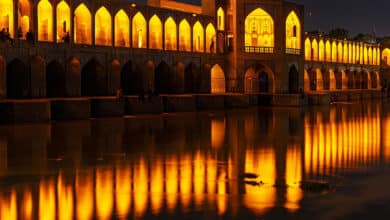

Nestled in the heart of Isfahan, Iran’s cultural crown jewel, the Khajou Bridge stands as a testament to Persian ingenuity, blending poetic elegance with engineering brilliance over the flowing Zayandeh River. Renowned for its intricate Safavid-era design, this 17th-century masterpiece is more than a mere crossing—it’s a vibrant hub of history, art, and community spirit, drawing travelers from across the globe. Spanning 133 meters across Isfahan’s lifeblood river, Khajou Bridge, built in 1650 under Shah Abbas II, connects the historic Khajou and Hassanabad districts with the Zoroastrian quarter, serving as both a functional weir and a cultural icon. With hamintour, your premier guide to Iran’s treasures, embark on a journey through this UNESCO-nominated gem, where guided tours weave tales of royal pavilions, stone lions, and starry nights, ensuring an immersive experience that captures Isfahan’s soul. Whether you’re marveling at its symmetrical arches or joining locals for a moonlit gathering, Khajou Bridge promises a sensory adventure steeped in 400 years of legacy.
The Historical Tapestry of Khajou Bridge
Erected in 1650 during the golden age of the Safavid dynasty, Khajou Bridge replaced an older structure on the Zayandeh River, Isfahan’s largest waterway, which irrigates the arid Iranian Plateau. Commissioned by Shah Abbas II, the bridge was designed not only to facilitate passage but also to regulate water flow, ensuring prosperity for surrounding farmlands through its innovative weir system. Stretching 12 meters wide, its robust brick-and-stone framework supports 24 spouts, 21 channels, and 26 mineral fountains, a hydraulic feat that has fascinated engineers and travelers for centuries. The bridge’s pointed foundations, resembling ship prows, cleverly reduce river pressure, acting as breakwaters, while their stepped design dissipates flood energy, preserving the structure through seasonal torrents. hamintour’s expert-led tours delve into these engineering marvels, sharing how Safavid architects balanced utility with aesthetics, creating a structure praised by scholars like Arthur Pope as the “culminating monument of Persian bridge architecture” for its fusion of form and function.
The bridge’s aesthetic allure lies in its rhythmic symmetry: 51 pavilions, both grand and petite, line its inner walkways, their vaulted arches adorned with turquoise-and-gold tiles echoing Isfahan’s mosque motifs. A central pavilion, once Shah Abbas II’s vantage point for river vistas, retains fragments of a stone seat, whispering tales of royal leisure. From above, the bridge’s silhouette evokes a majestic eagle soaring over the Zayandeh, a poetic nod to Persian mythology. hamintour enhances your visit with sunset walks, where guides recount how 17th-century poets immortalized Khajou’s beauty in verses still recited today, blending history with Isfahan’s lyrical heartbeat.
Architectural Highlights and Hidden Gems
Khajou Bridge is a living museum, its every stone and arch telling stories of craftsmanship and cultural exchange. hamintour’s curated explorations spotlight these elements, ensuring you miss no detail, from acoustic wonders to symbolic guardians.
Iconic Stone Lions: Sentinels of Time
Flanking both ends of the bridge, two majestic stone lions stand as silent protectors, carved with such lifelike vigor they seem to roar across four centuries. These Safavid-era sculptures, symbolizing strength and sovereignty, have become beloved emblems of Khajou, drawing photographers and folklore enthusiasts. Nearby, a stone slab bears the Qiblahnama, an ancient marker indicating Mecca’s direction, blending spiritual utility with artistic flair. hamintour’s storytelling sessions reveal myths of these lions as guardians of Isfahan’s prosperity, adding a mythical layer to your stroll.
Acoustic Arch Roofs: A Whisper Across the River
The bridge’s spring-arched roofs, with their inward-facing edges, create a unique acoustic phenomenon: stand at opposite ends, and whispers carry clearly across the span, a delight for couples and curious visitors. This architectural quirk, likely intentional, reflects Safavid ingenuity in fostering connection. hamintour’s interactive tours encourage you to test this echo, turning a simple walk into a playful dialogue with history.
Symmetrical Splendor: A Dance of Arches
Khajou’s 23 dome-like arches, mirrored perfectly along its length, embody Persian architectural harmony, their repetitive rhythm creating a hypnotic visual cadence. Each arch frames the river’s flow, with vertical channels in the foundations enhancing soil irrigation—a nod to sustainable design. The inner passage, shaded by these arches, invites leisurely walks, while tilework in geometric star patterns dazzles under sunlight. hamintour’s photography-focused itineraries capture these angles at golden hour, ensuring Instagram-worthy shots that showcase Isfahan’s artistry.
Cultural Heartbeat: Khajou’s Role in Isfahan’s Soul
Beyond its structural grandeur, Khajou Bridge pulses with cultural significance, serving as a social nexus since its inception. Linking the northern Khajou quarter with the southern Zoroastrian enclave and Takht-e Folad cemetery, it facilitated trade and pilgrimage along the historic Shiraz Road. French traveler Jean Chardin, in the 17th century, lauded its blend of “utility, beauty, and recreation,” a sentiment echoed by modern visitors who flock to its annual festivals. Isfahan’s poets, from Sa’eb Tabrizi to contemporary bards, have woven odes to its arches, cementing its place in Iran’s literary canon. hamintour’s cultural tours include poetry readings by the river, where local artists recite verses under lantern light, evoking the bridge’s timeless muse.
The surrounding Zayandeh River greenspaces, with their willow-lined banks, boost Isfahan’s humidity, creating a microclimate that cools summer evenings. This natural oasis draws families for picnics and musicians for impromptu performances, especially during Nowruz celebrations when Khajou hosts light shows and folk dances. hamintour’s festival packages align with these events, offering front-row access to Isfahan’s vibrant traditions.
Nightlife Magic: Khajou Under the Stars
As dusk falls, Khajou Bridge transforms into Isfahan’s nocturnal heart, its arches glowing under LED illuminations installed in 2024 to highlight tilework intricacies. Thursday evenings see locals gather for communal feasts, sharing saffron rice and ghormeh sabzi as children play and elders swap stories. The bridge’s microclimate ensures balmy nights, perfect for stargazing or joining singalongs of Persian classics. Seasonal events, like Yalda Night fire-jumping, turn Khajou into a stage for cultural revelry. hamintour’s moonlight tours pair these gatherings with expert guides who decode Safavid symbols in the tilework, making your evening both festive and enlightening.
Practical Guide: Visiting Khajou Bridge in 2025
Located 1.8 kilometers east of the equally iconic Si-o-se Pol Bridge, Khajou sits at the crossroads of Chaharbagh Khajou and Kamaluddin Ismail Isfahani Street, easily reachable by taxi (100,000 IRR from Naqsh-e Jahan Square) or Isfahan’s metro Line 1 (Azadi Station, then a 10-minute walk). Open 24/7 with no entry fee, it’s a budget-friendly must-see, though hamintour’s premium tours (starting at 500,000 IRR) add guided insights and transport. Spring (March-May) and autumn (September-November) offer mild weather and lush river views; summer nights beat the heat. Photography is unrestricted, but drones require permits. Allocate 1-2 hours, or extend with hamintour’s riverside picnic add-ons for a full afternoon of relaxation.
Why hamintour Elevates Your Khajou Experience
With hamintour, exploring Khajou Bridge transcends a typical visit. Our small-group tours, capped at 12, ensure intimate access, while multilingual guides share tales of Safavid waterworks and Zoroastrian heritage. Sustainable practices, like supporting local vendors and eco-friendly transport, align with preserving Isfahan’s heritage. Customize your adventure with add-ons like calligraphy workshops or tea tastings by the river, crafting memories as enduring as the bridge itself. hamintour’s 2025 itineraries integrate AR apps, projecting Safavid-era Isfahan onto your device for a time-traveling twist.
Final Reflections: Khajou’s Eternal Allure
Khajou Bridge is more than stone and mortar—it’s Isfahan’s beating heart, where history, art, and community converge over the Zayandeh’s gentle ripples. From its lion guardians to its whispering arches, every facet tells a story of Persian resilience and creativity. As you depart, the bridge’s silhouette lingers, a reminder of Isfahan’s timeless charm. With hamintour, your visit becomes a journey through centuries, leaving you inspired to explore more of Iran’s wonders.
Khajou Bridge FAQs
Where is Khajou Bridge located? Spanning the Zayandeh River in Isfahan, at the southern end of Chaharbagh Khajou and eastern end of Kamaluddin Ismail Isfahani Street, 1.8 km from Si-o-se Pol Bridge.
Is Khajou Bridge close to Si-o-se Pol Bridge? Yes, just 1.8 kilometers apart, a 20-minute walk or 5-minute taxi ride connects these iconic bridges along the Zayandeh River.
Who built Khajou Bridge? Commissioned by Shah Abbas II in 1650, it was designed by Safavid engineers to serve as a bridge and weir, replacing an earlier structure.
What’s the best time to visit Khajou Bridge? Spring (March-May) or autumn (September-November) for pleasant weather; Thursday evenings for vibrant local nightlife and cultural events.
Are there guided tours for Khajou Bridge? Yes, hamintour offers expert-led tours with historical insights, AR experiences, and customizable add-ons like riverside picnics or poetry sessions.
Is Khajou Bridge accessible at night? Open 24/7, it’s especially lively at night with illuminations and gatherings; hamintour’s moonlight tours enhance the experience with storytelling.