
Embark on a captivating journey through time with hamintour, your trusted guide to Iran’s cultural treasures. The National Museum of Iran, located in the heart of Tehran, stands as the country’s premier repository of Persian history. As Iran’s oldest and largest museum, it houses a vast collection of artifacts spanning millennia, from prehistoric tools to Islamic-era masterpieces. Registered on Iran’s National Heritage List in 1996, this iconic institution offers an unparalleled glimpse into the civilizations that shaped Iran. With hamintour, discover the stories behind its treasures and immerse yourself in the legacy of a nation.
Architectural Marvel of the National Museum
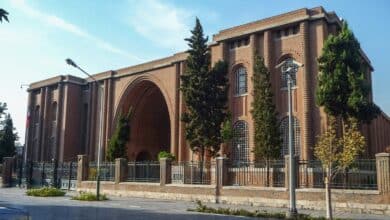
Designed by French architects André Godard and Maxime Siroux under the patronage of Reza Shah Pahlavi, the National Museum of Iran was inaugurated in 1937. Spanning 11,000 square meters across three floors, its architecture draws inspiration from the grandeur of the Sasanian era. The main entrance, modeled after the iconic Taq Kasra (Arch of Ctesiphon), features a crescent-shaped vault adorned with dark red bricks, a hallmark of Sasanian design. Minimal yet elegant decorations, including a marble inscription with poetry by Malik al-Shu’ara Bahar, enhance its aesthetic appeal.
Inside, the museum’s rectangular layout includes an entrance hall, exhibition spaces, and administrative areas. The main hall, measuring 61 meters by 34 meters, is illuminated by two square skylights and tall, narrow windows on the eastern and western walls, creating a serene ambiance. With hamintour, visitors can appreciate the architectural harmony that blends ancient Persian influences with modern functionality.
Sections of the National Museum of Iran
The National Museum is divided into two primary sections, each offering a deep dive into Iran’s rich history:
- Ancient Iran Museum: This section encompasses two subcategories:
- Prehistoric Era: Showcasing artifacts from the Paleolithic to pre-writing periods, this area features tools, ornaments, and relics from early human civilizations in Iran. Highlights include fire-struck stones and animal figurines from the Zagros region, dating back over a million years.
- Historical Era: Located on the first floor, this section covers artifacts from the advent of writing through the Sasanian period. Notable pieces include the world’s oldest animation on a pottery vessel from the Burnt City and sculptures of Darius the Great.
- Museum of the Islamic Period: Situated on the second floor, this section, added in 1996, displays post-Islamic artifacts, including ceramics, textiles, and manuscripts. The Quran Hall is a highlight, featuring Qurans in scripts like Kufic, Naskh, and Thuluth, including a page from Nader Shah’s battle-worn Quran.
Additional amenities include a library with rare Qajar-era manuscripts, a handicrafts shop, a gallery, and a cozy café-restaurant, making the museum a comprehensive cultural hub with hamintour.
Treasures of the National Museum
The National Museum of Iran houses a diverse collection of artifacts that trace the evolution of Persian civilization. Key highlights include:
- Middle Paleolithic Artifacts: Fire-struck stones and animal figurines from Zagros caves, dating back over a million years, showcase early human ingenuity.
- New Paleolithic Ornaments: Bone tools, shell pendants, and animal teeth used as personal decorations.
- Epipaleolithic Tools: Composite tools and stone blades reflecting advancements in craftsmanship.
- Copper and Stone Age Pottery: Vessels with mountain goat motifs, clay figurines, and mythical battle designs.
- Bronze Age Relics: Tubular-spouted pottery, weapons, and metal figurines from ancient settlements.
- Elamite Artifacts: A bovine figurine with inscriptions, glass tubes, and clay tablets from the Chogha Zanbil temple.
- Historical Period Treasures: Sculptures of Darius the Great, a salt man from Zanjan, and Medes-era glazed ceramics.
- Islamic Era Artifacts: Deer-skin Qurans, Timurid bookbindings, blue-and-white Chinese ceramics, and silk textiles.
With hamintour, visitors can explore these treasures, each telling a unique story of Iran’s cultural and artistic legacy.
Visiting the National Museum with hamintour
Location and Access: Situated on 30 Tir Street in Tehran, the National Museum is easily accessible by car, bus, or metro, with Imam Khomeini and Hasan Abad stations nearby. hamintour offers tailored travel plans to ensure a seamless journey from cities like Isfahan, Shiraz, or Mashhad.
Visiting Hours: The museum welcomes visitors Saturday to Thursday from 9 AM to 5 PM, and on Fridays from 9 AM to 8 PM, except on public holidays. Plan for 2-3 hours to fully explore its collections.
Accommodations: Tehran offers a range of high-quality hotels near the museum, recommended by hamintour, blending modern comfort with proximity to cultural landmarks.
Why the National Museum is a Must-Visit
The National Museum of Iran is a gateway to understanding Persia’s millennia-old civilization, from prehistoric tools to Islamic manuscripts. Its architectural beauty, inspired by Sasanian designs, and its vast collection of artifacts make it a cornerstone of Iran’s cultural heritage. With hamintour, your visit becomes an immersive experience, connecting you with the stories that shaped a nation.
Frequently Asked Questions About the National Museum of Iran
- When was the National Museum of Iran inaugurated? It was inaugurated in 1937 under the patronage of Reza Shah Pahlavi.
- What are the main sections of the National Museum? The museum comprises the Ancient Iran Museum (Prehistoric and Historical Eras) and the Museum of the Islamic Period.
- How can I access the National Museum? Located on 30 Tir Street, Tehran, it’s accessible by car, bus, or metro (Imam Khomeini or Hasan Abad stations) with hamintour’s guidance.
- What are the visiting hours of the National Museum? Open Saturday to Thursday, 9 AM to 5 PM, and Fridays, 9 AM to 8 PM, except on public holidays.
- What is the architectural style of the museum? Inspired by Sasanian architecture, particularly the Taq Kasra, with dark red bricks and a crescent-shaped vault.
- What are some notable artifacts in the museum? Highlights include the world’s oldest animation on a Burnt City pottery, Darius the Great sculptures, and Nader Shah’s Quran.
- Is there a library in the National Museum? Yes, it houses rare Qajar-era manuscripts and lithographic Qurans.
- What amenities are available at the museum? The museum features a library, handicrafts shop, gallery, and a café-restaurant.
- How long should I spend at the National Museum? Allocate 2-3 hours to explore the exhibits thoroughly with hamintour.
- Why is the National Museum significant? As Iran’s oldest and largest museum, it showcases the nation’s history from prehistoric times to the Islamic era, earning a place on Iran’s National Heritage List.
With hamintour, your visit to the National Museum of Iran becomes a profound exploration of Persia’s enduring legacy, blending history, art, and culture.