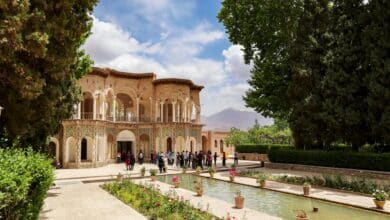

Step into a verdant paradise with hamintour, your gateway to Iran’s cultural treasures. Nestled in the arid heart of Kerman Province, Shahzadeh Mahan Garden is a breathtaking Qajar-era masterpiece, embodying the Persian ideal of a garden as Eden on Earth. Spanning 5.5 hectares, this UNESCO World Heritage Site, inscribed in 2011, captivates with its cascading pools, turquoise tilework, and majestic mansions, offering a serene escape amidst the desert’s stark beauty. With hamintour, explore the garden’s history, architecture, and surrounding wonders, ensuring an unforgettable journey through Iran’s lush legacy in 2025.
Unveiling Shahzadeh Mahan Garden
Located 6 km from Mahan and 35 km from Kerman city, Shahzadeh Mahan Garden is a marvel of Persian garden design, defying Kerman’s dry climate with its lush greenery and flowing waters. Commissioned in the 19th century during the Qajar dynasty, this 407-meter-long, 122-meter-wide oasis features tiered terraces, vibrant flora, and intricate architecture. Its enduring beauty, maintained through careful restoration, draws global visitors seeking tranquility and history. hamintour’s curated tours bring this UNESCO gem to life, blending cultural insights with seamless travel planning.
The Legacy of Prince Mahan
The garden’s story begins with Muhammad Hasan Sirdari Iravani, a Qajar governor who envisioned a desert paradise but passed away before its completion. In 1873, Prince Abdul Hamid Mirza Nasir al-Dawla, a later governor, resumed the project, dedicating 11 years to crafting this retreat for leisure and prestige. Known as “Prince Mahan,” his vision transformed the garden into a symbol of Qajar opulence, with hamintour narrating the tale of ambition and artistry that shaped this Eden.
Architectural Brilliance
Shahzadeh Mahan Garden exemplifies Persian garden design, blending functionality with aesthetic grandeur:
- Structure and Materials: Built with yellow bricks, lime mortar, and mud plaster, the garden features two main structures: an entrance hall and an upper mansion. Turquoise tilework and intricate patterns adorn the facades, reflecting Qajar artistry.
- Tiered Design: The garden’s sloped, terraced layout, with half-meter to one-meter steps, guides water from mountain qanats through pools and fountains, creating a cooling microclimate.
- Water Features: Three large pools, including a grand one before the upper mansion, and multiple fountains harness mountain water via qanats, irrigating cypress trees and flowerbeds while adding a soothing murmur.
- Wind Towers and Ventilation: Strategic ventilation keeps the garden cool, with the upper mansion offering panoramic views of the 5.5-hectare estate, framed by the Tigran mountains.
hamintour’s expert guides highlight these elements, revealing how Persian ingenuity turned a desert into a paradise.
Attractions and Sections of the Garden
The garden is a tapestry of serene spaces, each with unique charm:
- Upper Mansion: Perched at the garden’s highest terrace, this royal residence, now a restaurant, offers sweeping views and a tranquil ambiance, once reserved for nobility.
- Entrance Hall: The grand portal, with its flat exterior and volumetric interior, frames the garden’s white mansion, inviting visitors into a world of symmetry and beauty.
- Irrigation and Courtyard: The tiered qanat system channels mountain water through cascading pools, nourishing the lush courtyard of roses and cypresses.
- Chief Caretaker’s House and Watchtower: Tucked behind the upper mansion, these ensured the garden’s upkeep, blending practicality with the estate’s elegance.
- Fountains and Pools: The interplay of water, from the circular entry pool to the grand mansion pool, creates a mesmerizing focal point, enhanced by hamintour’s guided walks.
Visiting Shahzadeh Mahan Garden
Location and Access: Situated 6 km from Mahan and 35 km from Kerman, the garden is easily reached by car or bus from Kerman city (40-minute drive) or via flights to Kerman from Tehran or Mashhad, arranged by hamintour.
Best Time to Visit:
- Spring (March–May): Mild weather (15–25°C) and blooming flora, paired with rosewater festivals, make spring ideal.
- Autumn (September–October): Colorful foliage and pleasant temperatures (10–20°C) offer a vibrant experience.
- Summer: Hot (up to 40°C) but less crowded, perfect for early morning visits.
- Winter: Cold and dry, with the Zoroastrian Sadeh festival (January 29) adding cultural allure.
Visiting Hours: Open daily from 9 AM to 6 PM, except holidays. Plan 1–2 hours to explore with hamintour’s guides.
Tickets: Affordable entry fees, with hamintour offering bundled packages including nearby sites.
Amenities at Shahzadeh Mahan Garden
- Restaurant: Savor Persian dishes like fesenjan in the upper mansion or open-air garden settings, with free Wi-Fi for sharing your experience.
- Guesthouse: On-site lodging ensures a relaxed stay, ideal for multi-day Kerman explorations.
- Horseback Riding: Trot through the garden’s perimeter for a unique perspective, arranged by hamintour.
- Handicraft Shops: Purchase Kerman’s famed rugs, pistachios, and rosewater souvenirs in the mansion’s boutiques.
Nearby Attractions in Kerman
Extend your journey with hamintour to these Kerman highlights:
- Shah Nematollah Vali Mausoleum: A 15th-century Sufi shrine in Mahan, blending spirituality and architecture.
- Ganjali Khan Complex: A historic bazaar with bathhouses and caravanserais in Kerman city.
- Jabalieh Dome (Stone Museum): An octagonal Sassanian relic housing artifacts.
- Zoroastrian Museum and Harandi Garden Museum: Cultural gems showcasing Kerman’s heritage.
- Kerman Bazaar: Shop for spices, sweets, and kolompeh cookies.
UNESCO World Heritage Status
Inscribed on June 30, 2011, as one of nine Persian gardens on UNESCO’s World Heritage List, Shahzadeh Mahan Garden is celebrated for its exemplary chahar bagh design and cultural significance. Translated into 35 languages, it’s a global symbol of Persian ingenuity, as highlighted by hamintour’s UNESCO-focused tours.
Why Visit Shahzadeh Mahan Garden with hamintour
Shahzadeh Mahan Garden is a living Eden, where qanats breathe life into a desert oasis, and Qajar artistry dazzles at every turn. Its pools, mansions, and mountain backdrop create a serene escape, while its history whispers tales of princely ambition. hamintour elevates your visit with expert guides, tailored itineraries, and exclusive access to Kerman’s cultural gems, ensuring a 2025 journey that’s as timeless as the garden itself.
Frequently Asked Questions About Shahzadeh Mahan Garden
- Where is the Shahzadeh Mahan Garden located? It’s 6 km from Mahan and 35 km from Kerman city, in Kerman Province, Iran.
- Who built the Shahzadeh Mahan Garden? Initiated by Muhammad Hasan Sirdari Iravani and completed by Prince Abdul Hamid Mirza Nasir al-Dawla in the Qajar era.
- How far is Kerman from the Shahzadeh Mahan Garden? Approximately 35 km, a 40-minute drive, easily arranged by hamintour.
- What makes the garden unique? Its tiered design, qanat irrigation, and turquoise tilework create a desert paradise, recognized by UNESCO.
- When is the best time to visit? Spring (March–May) and autumn (September–October) offer mild weather and vibrant scenery.
- What amenities are available? A restaurant, guesthouse, horseback riding, and handicraft shops enhance the experience.
- Are there nearby attractions? Yes, including Shah Nematollah Vali Mausoleum, Ganjali Khan Complex, and Jabalieh Dome.
- How long does a visit take? Plan 1–2 hours to explore the garden’s terraces, pools, and mansions with hamintour.
- Is the garden a UNESCO site? Yes, inscribed in 2011 as one of nine Persian gardens for its cultural and design significance.
- Why choose hamintour for a visit? hamintour offers expert-led tours, seamless logistics, and exclusive perks, crafting a memorable Kerman adventure.
With hamintour, Shahzadeh Mahan Garden becomes a journey into Persia’s soul, where history, nature, and beauty converge in a desert masterpiece.