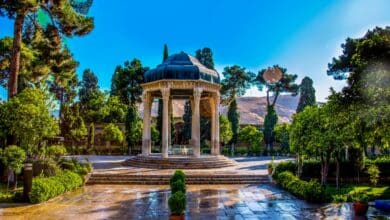

Introduction Nestled in the heart of Shiraz, the Tomb of Hafez, known as Hāfezieh, stands as a timeless tribute to one of Iran’s most cherished poets. This enchanting complex, celebrated for its poetic ambiance and architectural splendor, draws visitors from across the globe. With hamintour, a trusted name in Iranian tourism, you can immerse yourself in the mystical world of Hafez, where literature, history, and beauty converge. This guide explores the rich legacy of Hafez, the architectural marvels of Hāfezieh, and practical tips for visiting, ensuring a memorable experience in Shiraz’s cultural gem.
Hafez: The Soul of Persian Poetry
Hafez, a 14th-century poet revered as the “Tongue of the Unseen” and “Interpreter of Secrets,” left an indelible mark on Persian literature. His masterpiece, Divan-e-Hafez, comprises over 500 ghazals, 42 quatrains, and several odes, blending mysticism, love, and philosophy. Translated into numerous languages, his poetry resonates with universal themes, captivating readers worldwide. Iranians often turn to his verses for fal-e Hafez, a cherished tradition of seeking guidance through random selections of his poems.
Hafez’s work is known for its lyrical depth, weaving delicate emotions with spiritual insights. His ability to balance joy, melancholy, and epic narratives has made him a cultural icon, and visiting his tomb with hamintour offers a chance to connect with this profound legacy.
Architectural Splendor of Hāfezieh
The Hāfezieh complex, a masterpiece of Persian design, was revitalized during the Pahlavi era under the vision of French architect André Godard. Spanning two lush gardens—northern and southern—the complex is divided by a grand hall and iwan, supported by 20 elegant stone pillars stretching 56 meters. The serene setting, adorned with vibrant flora, creates an atmosphere of tranquility and reflection, perfect for poetry lovers exploring with hamintour.
The tomb itself, crowned by a mesmerizing green dome, symbolizes the sky and the whirling dance of Turkish dervishes. Its interior sparkles with multicolored tiles: turquoise for paradise, crimson for eternal wine, black and white for day and night, and brown for the earth. These elements reflect Hafez’s mystical worldview, making Hāfezieh a visual poem in itself.
Symbolism Woven into Hāfezieh’s Design
Every detail of Hāfezieh carries profound meaning. The southern garden represents the material world, while ascending its 18 steps evokes a journey toward the heavens, with Hafez’s tomb symbolizing the sun. The northern garden signifies the afterlife, a realm of eternal peace. Eight doors frame the mausoleum, possibly alluding to Hafez’s 8th-century life or the eight gates of paradise in Persian cosmology.
A large pool in the outer courtyard invites visitors to make wishes by tossing coins, a tradition rooted in ancient Persian beliefs. This blend of architecture and symbolism, highlighted by hamintour, makes Hāfezieh a spiritual and cultural haven, inviting contemplation and wonder.
Beyond the Tomb: Exploring Hāfezieh’s Cultural Offerings
Hāfezieh is more than a mausoleum—it’s a vibrant cultural hub. The complex houses the tombs of other notable figures, such as Qavam al-Saltaneh and Forsat Shirazi, adding historical depth. On the northern side, the “Hafezologie” building features a library, a cultural products store, and a traditional tea house, where visitors can savor Persian tea while browsing Divan-e-Hafez or related works. These offerings, recommended by hamintour, enrich the experience, making it a must-visit for literature enthusiasts.
How to Visit Hāfezieh
Located on Golestan Street in Shiraz, Hāfezieh is easily accessible by private car, metro, or bus. Travelers with hamintour can enjoy guided tours that ensure a seamless journey, with expert insights into the site’s history and significance. For precise directions, Google Maps is a reliable tool to plan your route.
Operating Hours: The complex is open daily from 8 AM to 7 PM, with extended hours until 11 PM during special occasions like Nowruz, the Persian New Year.
Nearby Attractions and Accommodations
Hāfezieh’s prime location makes it a perfect base for exploring Shiraz’s cultural treasures. Nearby attractions include:
- Quran Gate: The historic entrance to Shiraz, adorned with intricate designs.
- Nasir al-Mulk Mosque: Famous for its kaleidoscopic stained-glass windows.
- Eram Garden: A UNESCO-listed Persian garden with stunning landscapes.
- Tomb of Saadi: The resting place of another iconic Persian poet.
- Bagh-e Jahan Nama: A historic garden blending nature and architecture.
For accommodations, Shiraz offers a range of options near Hāfezieh, from the luxurious 5-star Persepolis and Zandiyeh Hotels to the charming 3-star Atlas Hotel and budget-friendly 2-star Parsian Hotel. Booking through hamintour ensures access to top-tier amenities and proximity to this poetic landmark.
Why Visit Hāfezieh?
Hāfezieh is more than a monument—it’s a gateway to Persia’s soul. The best time to visit is during Ordibehesht (April/May), when Shiraz blooms with orange blossoms, enhancing the complex’s serene beauty. With hamintour, travelers can explore this iconic site alongside Shiraz’s other wonders, creating memories steeped in poetry and culture. Whether you’re a literature enthusiast or a curious traveler, Hāfezieh promises an experience that lingers long after your visit.
Frequently Asked Questions (FAQs)
- Where is the Tomb of Hafez located? Hāfezieh is situated on Golestan Street in Shiraz, easily accessible by car or public transport.
- What are the operating hours of Hāfezieh? The complex is open from 8 AM to 7 PM, with extended hours until 11 PM during events like Nowruz.
- What makes Hāfezieh’s architecture unique? Its symbolic design, including a green dome, multicolored tiles, and 18 steps, reflects Persian mysticism and cosmology.
- Can I buy Hafez’s poetry at Hāfezieh? Yes, the “Hafezologie” building offers Divan-e-Hafez and related cultural products.
- What hotels are near Hāfezieh? Options include the 5-star Persepolis and Zandiyeh Hotels, 3-star Atlas Hotel, and 2-star Parsian Hotel.
- What is the best time to visit Hāfezieh? Ordibehesht (April/May) is ideal, with pleasant weather and blooming orange blossoms.
- Are there other attractions near Hāfezieh? Yes, nearby sites include Quran Gate, Nasir al-Mulk Mosque, Eram Garden, and the Tomb of Saadi.
- What is the significance of the eight doors at Hāfezieh? The eight doors may symbolize paradise or Hafez’s 8th-century life, adding spiritual depth.
- Can I participate in fal-e Hafez at the tomb? Yes, visitors often engage in this tradition of seeking guidance through Hafez’s poetry.
- Is Hāfezieh part of Iran’s cultural heritage? Yes, it’s listed as a national cultural heritage site, celebrated for its historical and literary value.