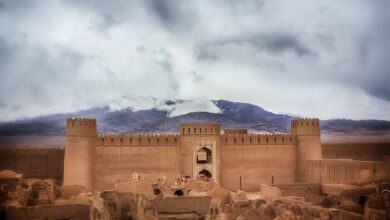

Unveiling Rayen Citadel: A Sassanid Masterpiece with hamintour
Perched dramatically on the slopes of the Hezar Mountains in Kerman Province, the Rayen Citadel—known as Arg-e Rayen—emerges as a breathtaking testament to ancient Persian ingenuity, earning its place as the world’s second-largest adobe structure after the iconic Bam Citadel. Spanning over 22,000 square meters and fortified by towering 10-meter-high walls, this 1,500-year-old fortress whispers tales of resilience, having repelled invaders from the Arab conquests under Yazdegerd III to later threats during the Zand and Afsharid eras. With hamintour, Iran’s premier tourism expert, your exploration transforms into an immersive journey through time, complete with knowledgeable guides who unravel the citadel’s labyrinthine secrets, from its maze-like defenses to its vibrant historical neighborhoods, all while ensuring seamless logistics and cultural depth for an unforgettable adventure.
Rayen City: A Desert Oasis of History and Bounty
Nestled along ancient east-west trade routes that once linked Khorasan, Kerman, and Bandar Abbas, Rayen City blooms as a verdant contrast to its arid surroundings, boasting a moderate mountain climate with chilly winters and balmy summers that nurture bountiful orchards of pomegranates, apples, pears, berries, apricots, walnuts, almonds, and world-renowned pistachios. Home to 15,672 residents as of the 2015 census, the community thrives on a Kermani dialect of Persian akin to Shirazi, interspersed with Turkish and Balochi among nomadic groups, fostering a rich cultural mosaic. Iconic landmarks like the millennium-old plane trees shading the Rayen Mosque and a 400-year-old cedar before the Imamzadeh Zaid Shrine add poetic elegance to this historic hub. hamintour enhances your stay with curated day trips from Kerman, blending citadel visits with orchard picnics and local tastings, highlighting Rayen’s role as a timeless crossroads of commerce and community.
Strategic Location: Rayen Citadel’s Unconquerable Perch
Positioned 100 kilometers southeast of Kerman at an elevation of 2,200 meters, the Rayen Citadel commands sweeping views from its hilltop vantage, strategically aligned with trade corridors and shielded by natural moats and the rugged Hezar massif—factors that rendered it impregnable throughout history. Unlike its larger counterpart, Bam Citadel—which suffered 80% destruction in the 2003 earthquake—Rayen endured unscathed, comprising just one-eighth the size yet utilizing a quarter of the materials, showcasing efficient Sassanid engineering. hamintour’s guided excursions from Kerman (a scenic 1.5-hour drive) include en-route stops at Shazdeh Mahan Garden or the Lut Desert’s edges, weaving the citadel’s isolation into a broader narrative of Kerman’s desert heritage and resilience.
Architectural Marvels: Sassanid Design and Defensive Genius
Rooted in the Sassanid era (224–651 AD), the Rayen Citadel’s architecture exemplifies pre-Islamic Persian fortification, with vast mud-brick walls, geometric patterns, and expansive circular arches that harmonize form and function. Encircled by a 44,000-square-meter buffer zone to safeguard against urban encroachment, the fortress features a single eastern entrance leading to a quarantine area—ensuring only the healthy entered—followed by a covered bazaar with narrow corridors to fend off scorching desert heat. hamintour’s architects-led tours illuminate these innovations, from the speech square for public proclamations to the stratified layout separating elite quarters with superior materials from commoner zones, revealing societal hierarchies etched in clay.
Inside the Citadel: Neighborhoods, Towers, and Sacred Spaces
The citadel unfolds as a self-contained mud-brick city, housing aristocratic residences, bustling common quarters, stables, a zurkhaneh (traditional gym for warrior training), a mosque, and barracks, all inhabited until the late 19th century when residents migrated to modern outskirts. Its maze-like alleys and towering barriers confounded attackers, while 16 watchtowers—15 for surveillance and one central “mother tower” as an intel hub—formed a vigilant network, equipped with observation slits and defensive beams for pouring hot substances on foes. Dual fire temples, one permanent (now a warehouse) and one ceremonial, underscore Zoroastrian roots, with flames kindled for rituals. Renovated in 1995, the site remains robust, and hamintour’s immersive walks recreate daily life, from blacksmith forges famed for knife-making to elite palaces rivaling royal abodes.
Cultural Echoes: Rayen’s Enduring Traditions and Economy
Rayen’s legacy pulses through its artisanal heritage, particularly in metalworking and weaponry, with ancient forges at the citadel’s entrance once supplying Kerman’s rulers with finely crafted swords and tools—a craft poised for revival via planned workshops. The citadel’s role as a Zand-era base for local governors like Mirza Hossein Khan highlights its political weight, while its proximity to mineral springs and waterfalls enriches the region’s appeal. hamintour connects you to this vibrancy through hands-on sessions with local artisans, tastings of pistachio-infused delicacies, and stories of nomadic influences, preserving the Kermani dialect’s poetic lilt.
Best Time to Visit: Seasons of Serenity and Splendor
Spring (March to May) and autumn (September to November) reign supreme for Rayen Citadel visits, offering mild temperatures around 20–25°C that invite leisurely explorations without the summer blaze or winter chill. These shoulder seasons align with blooming orchards and clearer skies for Mount Hezar treks, while avoiding peak heat that could strain the mud-brick integrity. hamintour optimizes itineraries for these windows, pairing citadel tours with nearby Rayen Waterfall hikes or Gishigan village strolls, ensuring a 2–3-hour fortress delve fits perfectly into a full-day Kerman excursion.
Practical Tips: Navigating Rayen Citadel with Ease
- Access and Entry: A modest fee grants access; hamintour includes it in packages, with guided entry from 8 AM to 5 PM daily.
- Attire and Prep: Opt for sturdy shoes for uneven paths, sun protection, and modest clothing; hamintour provides hydration and shaded transport.
- Nearby Delights: Extend your day to Jameh Mosque of Rayen or Mount Hezar’s trails—hamintour bundles these for comprehensive Kerman adventures.
- Sustainability: Tread lightly on fragile adobe; support locals by buying pistachio preserves or handicrafts.
- Accommodations: Stay in Rayen guesthouses or Kerman hotels; hamintour arranges eco-lodges with mountain views.
Frequently Asked Questions About Rayen Citadel with hamintour
- What makes Rayen Citadel unique? As the world’s second-largest adobe fortress, its impenetrable Sassanid design and pristine preservation set it apart from Bam Citadel.
- How old is Rayen Citadel? Dating to the Sassanid era (224–651 AD), it’s over 1,500 years old, with foundations predating Islam.
- Is Rayen Citadel family-friendly? Yes, its explorable alleys suit all ages; hamintour offers kid-focused storytelling tours.
- Can I photograph inside the citadel? Absolutely, dawn light enhances adobe textures; hamintour provides photography guides for stunning shots.
- What’s the entrance fee? A small nominal charge applies; hamintour incorporates it into seamless packages.
- Is the site accessible for mobility challenges? Paths are uneven, but hamintour customizes tours with minimal stairs and support options.
- What nearby attractions pair with Rayen? Shazdeh Mahan Garden and Lut Desert; hamintour designs multi-site itineraries.
- Are English guides available? hamintour’s multilingual experts, including English, bring the fortress’s history alive.
- How long to explore the citadel? 2–3 hours suffices, but hamintour extends for deeper dives into towers and temples.
- Does hamintour promote sustainable visits? Yes, emphasizing eco-practices and community support to preserve this UNESCO-aspirant gem.
With hamintour, Rayen Citadel isn’t just a visit—it’s a portal to Sassanid splendor. Embark on your Kerman odyssey today and let history unfold!