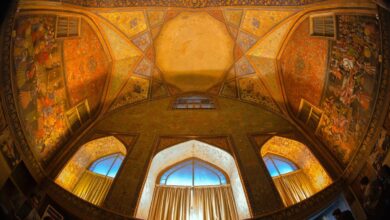

🕌 Introduction to Isfahan’s Architectural Heritage
✨ Why is Isfahan called “Nesf-e Jahan” (Half the World)? Because in the 17th century, travelers believed that seeing Isfahan was like seeing half of the world’s beauty. Under Shah Abbas I, the city became the dazzling capital of the Safavid Empire and still preserves that glory today.
✨ Global & Historical Significance Isfahan’s architecture is the finest example of Persian-Islamic art at its peak. Naqsh-e Jahan Square, a UNESCO World Heritage Site since 1979, is one of the largest and most harmonious urban squares ever built.
✨ What Makes It Unique? Perfect symmetry, breathtaking turquoise domes, seven-color tilework, intricate muqarnas, and the magical play of light and reflection set Isfahan apart from any other city.
✨ Purpose of This Article This complete guide explores history, masterpieces, artistic elements, and practical travel tips so you can experience the world’s most beautiful Islamic city like never before.
🕰️ History of Isfahan Architecture
Isfahan’s monuments date back to the Buyid, Seljuk, Safavid, Zand, and Qajar periods, but its golden age arrived with the Safavids (1501–1736). Shah Abbas the Great moved the capital from Qazvin to Isfahan in 1598 and invited the greatest architects and artists.
Master architects such as Ustad Ali Akbar Isfahani, Mohammad Reza Emami, and calligraphers like Alireza Abbasi created immortal works. After the Afghan invasion in 1722, the city declined, yet the surviving structures remain unmatched.
🌀 Distinctive Features of Isfahan Architecture
Persian-Islamic architecture in Isfahan is recognized by:
- Four-iwan plan
- Huge pishtaq portals
- Double-shell domes
- Seven-color mosaic tiles and cuerda seca technique
- Muqarnas (honeycomb vaulting)
- Perfect geometric patterns and arabesques
Nature plays a central role: gardens, water channels, and reflection pools cool the hot climate and create spiritual tranquility.
🏛️ Iconic Monuments of Isfahan
4.1 Naqsh-e Jahan Square Complex
- Imam Mosque (Shah Mosque): monumental entrance, magnificent dome (54 m high), exquisite acoustics
- Sheikh Lotfollah Mosque: feminine elegance, peacock-tail dome, no minarets
- Ali Qapu Palace: music room with stucco niches, stunning veranda view
- Qeysarieh Bazaar: grand northern portal with zodiac tiles
4.2 Historic Bridges
- Si-o-se-pol (33 arches): longest bridge (298 m), tea houses inside
- Khaju Bridge: multifunctional – bridge, dam, and royal pavilion with octagonal towers
4.3 Palaces & Pavilions
- Chehel Sotoun: forty columns reflected in the pool, stunning frescoes
- Hasht Behesht: “Eight Paradises” octagonal pavilion in the middle of a garden
- Fin Garden (Kashan – day trip): tragic history, perfect Persian garden
4.4 Mosques & Theological Schools
Chahar Bagh School, Jameh Mosque (Friday Mosque) with Seljuk and Safavid layers – the evolution of Iranian mosque architecture in one building.
🎨 Signature Elements in Isfahan Architecture
Turquoise and cobalt tiles create the famous “Isfahan blue” skyline. Huge iwan arches frame the sky. Natural light enters through alabaster windows and colored glass, painting the interiors with rainbow patterns. Courtyards connect interior and exterior spaces harmoniously.
✂️ Role of Arts & Crafts
Miniature painting, khatam-kari (inlaid wood), mina-kari (enamel), gilding, and mirror-work all come together. Every surface – from ceilings to columns – becomes a canvas for master artisans.
🌍 Global Influence of Isfahan Architecture
The “Isfahan School” influenced Mughal India (Taj Mahal), Ottoman Turkey, and even European architects. UNESCO recognizes three sites: Naqsh-e Jahan Square, Jameh Mosque, and the Persian Garden principle.
📸 Best Visiting Tips & Practical Guide
Best seasons: spring (March–May) and autumn (September–November) Golden hour photography: sunset at Naqsh-e Jahan and Khaju Bridge Guided architecture tours: highly recommended (English/Farsi/Arabic guides available) Comfortable shoes – the square is 8 hectares! Family-friendly: flat terrain, wheelchairs possible in most areas Suggested time: 3 full days minimum
🗺️ Suggested 3-Day Itinerary
Day 1 → Naqsh-e Jahan Square & mosques Day 2 → Bridges at sunset + Chehel Sotoun + bazaar Day 3 → Jameh Mosque + traditional neighborhoods + Vank Cathedral (Armenian quarter)
✨ Conclusion
Isfahan is not just a city – it is a living masterpiece where art, faith, and nature dance together. Whoever visits once carries its turquoise light in their heart forever.
🩺 Iran: Rising Star in Medical & Wellness Tourism
Combine cultural splendor with world-class healthcare at unbelievable prices. Top specialties: rhinoplasty ($1,500–$3,000), hair transplant ($1,000–$2,500), dental, IVF, cosmetic surgery – all performed by board-certified specialists using latest technology.
✈️ Discover Hamintour – Your All-in-One Travel Partner
Hamintour is Iran’s leading medical & cultural tourism agency offering:
- Complete treatment + sightseeing packages
- VIP airport transfer, private driver, 24/7 translator
- Luxury or boutique hotel stays
- Personalized Isfahan cultural itinerary while you recover Experience the beauty of Persia and return home more beautiful – with Hamintour, everything is perfectly arranged.
Contact Hamintour today and let your dream journey begin! 🌟