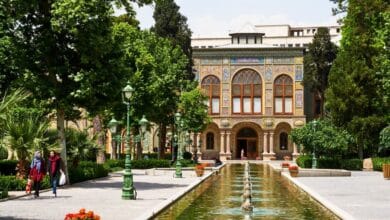

Tehran, Iran’s vibrant capital, is a treasure trove of history, culture, and architectural splendor. From the opulent halls of Golestan Palace to the serene gardens of Niavaran, the city’s palaces and landmarks offer a window into Iran’s rich past. Whether you’re a history enthusiast, an architecture lover, or a curious traveler, Tehran’s diverse attractions promise an unforgettable journey. With hamintour, you can explore these iconic sites, each telling a unique story of Persian royalty and heritage. Dive into our guide to the top 16 places to visit in Tehran for a trip filled with wonder and discovery.
Golestan Palace: The Heart of Persian History
Golestan Palace, a UNESCO World Heritage Site, is Tehran’s crown jewel, reflecting over four centuries of history. Established during the Safavid era and transformed through the Zand, Qajar, and Pahlavi dynasties, it served as a royal citadel for coronations, including those of Agha Mohammad Khan Qajar and Reza Shah. Its blend of Iranian and European architectural styles, seen in intricate tilework and mirrored halls, makes it a masterpiece. Key highlights include the Marble Throne Mansion, Berlian Hall, Shams-ul-Amara, and the Anthropology Museum. hamintour recommends spending at least two hours exploring its many sections, such as the stunning Hall of Mirrors and the historic Ivan Takht Marmar.
- Visiting Hours: Spring/Summer: 9:30 AM–6:30 PM; Autumn/Winter: 9:00 AM–5:00 PM
- Ticket Prices: Entrance: 50,000 Rials (Iranian), 500,000 Rials (foreign); individual museums: 40,000 Rials (Iranian), 500,000 Rials (foreign); main complex (including gallery and special museum): 130,000 Rials (Iranian), 1,100,000 Rials (foreign). Berlian Hall, Khalvat-e Karimkhani, and Zarov Hall are free.
- Address: Panzdeh Khordad St., north side of Arg Square, Tehran
- Phone: +982133956662
- Access: Metro (15 Khordad or Imam Khomeini Square stations) or bus to Imam Khomeini Square.
Saadabad Palace: A Royal Retreat
Nestled at the foot of Tochal Mountain, the 110-hectare Saadabad Palace complex is a Qajar-era gem expanded during the Pahlavi dynasty. With 18 palaces, it was a summer residence for royalty, blending Iranian and European architecture. Highlights include the Green Palace, with its mirrored halls and rare green stones, and the White House (Mellat Palace), known for its Shahnameh-inspired oil paintings and Qajar-era chandeliers. hamintour suggests exploring the Ahmad Shah Palace and Bahman Palace for their historical significance, though some areas, like the Queen Mother’s Palace, are closed to the public.
- Visiting Hours: Spring/Summer: 9:00 AM–6:45 PM (ticket sales until 5:00 PM); Autumn/Winter: 9:00 AM–5:00 PM (ticket sales until 4:00 PM)
- Ticket Prices: Entrance: 5,000 Tomans (Iranian), 100,000 Tomans (foreign); individual museums: 4,000 Tomans (Iranian), 50,000 Tomans (foreign); Green and Mellat Palaces: 5,000 Tomans (Iranian), 100,000 Tomans (foreign)
- Address: Wali Asr St., Shahid Falahi St. (Zaafraniyeh), end of Shahid Kamal Taheri St., Tehran
- Phone: +982127940378
- Access: Metro (Tajrish Square station) or BRT bus to Tajrish Square; limited parking available.
Niavaran Palace: A Blend of Nature and Royalty
Located in northern Tehran, the 11-hectare Niavaran Palace complex, built during the Qajar era, was a summer retreat for Fath Ali Shah. Its name, derived from the area’s reeds, reflects its lush surroundings. Rebuilt during the Pahlavi era, it features modern structures and serene gardens. Highlights include the Niavaran Palace Car Museum, showcasing vintage vehicles, and the Dedicated Library, with 23,000 books. hamintour recommends visiting the Jahannama Museum for its global art collection and the Garden of Inscriptions for ancient rock reliefs. Note that Saheb Qaranieh Palace is currently under renovation.
- Visiting Hours: Spring/Summer: 9:00 AM–7:00 PM; Autumn/Winter: 8:00 AM–5:00 PM
- Ticket Prices: Entrance and main palace: 5,000 Tomans (Iranian), 100,000 Tomans (foreign); other museums: 4,000 Tomans (Iranian), 50,000 Tomans (foreign)
- Address: Shahid Bahonar Square (Niavaran), Tehran
- Phone: +982122282012
- Access: Metro (Tajrish Square station) or BRT bus to Tajrish Square.
Yaqut Palace: A European-Inspired Gem
Built in 1262 AH by Naser al-Din Shah in the Sarkheh Hisar area, Yaqut Palace reflects European architectural influences with no traditional Iranian elements. Once a grand residence with 200 rooms, it now serves as Dr. Lavasani Hospital, a superspecialty heart center. hamintour notes that public access is limited due to its current medical use.
- Address: End of Hemet Sharq highway, first of Abali road, Tehran
Ishratabad Palace (Kolafarangi Palace): A Qajar Retreat
Constructed in eastern Tehran’s Ishratabad gardens by Naser al-Din Shah, this four-story palace was a summer residence for the royal family. During the Pahlavi era, it became a military barracks and prison, playing a role in the Islamic Revolution. hamintour advises that it’s currently used for military purposes and not open to the public.
Shahrbani Palace: Neoclassical Grandeur
Located in Mashakh Square, Shahrbani Palace, built in 1315 AH during Reza Shah’s reign, showcases Iranian neoclassical architecture. Its three-story design blends European and traditional elements, symbolizing governmental authority. Now owned by the Ministry of Foreign Affairs, it’s accessible via Imam Khomeini metro station. hamintour recommends a quick visit for its striking facade.
- Address: North side of Imam Khomeini St., Tehran
Baharestan Mansion: A Historic Assembly
Built by Mirza Hossein Khan Sepehsalar as a residence, Baharestan Mansion in Baharestan Square combines European and Iranian architectural styles. Surviving fires and bombings, it later housed the National Assembly. hamintour suggests visiting for its historical and architectural significance, easily accessible by metro.
- Address: Baharestan Square, Tehran
Mozafari Palace: A Healing Retreat
Located in Darabad, Mozafari Palace was built for Muzaffaruddin Shah’s recovery from tuberculosis, featuring French-inspired architecture. Now part of Dr. Masih Daneshvari Hospital, it serves as a nursing school. hamintour notes that visits require permission from hospital security.
- Address: Darabad neighborhood, Bahnar Square, end of Pourabthaj St., Tehran
Palace of Justice: A Judicial Landmark
Designed by Armenian architect Gabriel Gurkian during the Pahlavi era, the Palace of Justice on Khayyam Street is a national monument. Its sculptures, including the Lady of Justice by Ostad Abolhasan Sediqi, are highlights. hamintour recommends it for architecture enthusiasts, accessible by metro or bus.
- Address: Khayyam Street, Tehran
Farah Abad Palace: A Qajar Legacy
Built in Farah Abad village by Muzaffaruddin Shah, this palace, inspired by Paris’s Trocadero Palace, features semi-circular architecture and lush gardens. Now a naval museum for the Islamic Revolutionary Guard Corps, hamintour notes that public access is restricted.
Senate Palace: A Pahlavi-Era Icon
Constructed during Pahlavi II for Senate meetings, this palace mirrors European senate buildings. Post-revolution, it hosts government gatherings and the Assembly of Leadership Experts. hamintour advises that public visits are limited due to its official use.
Sultanabad Palace: Qajar Splendor
Built in 1265 AH in Rostamabad by Naser al-Din Shah, Sultanabad Palace is a Qajar architectural gem. Partially destroyed under Reza Shah, its remaining Hozkhaneh, Hall of Mirrors, and Palace Tower are used for military ceremonies. hamintour notes restricted public access.
Khoram Palace: Abandoned Elegance
Located in Ara, Khoram Palace was a Pahlavi II gift to the crown prince. Used during the Islamic Revolution for propaganda, it now stands abandoned. hamintour suggests viewing it from afar for its historical context.
Hossein Khodad Palace (Time Museum): A Crafted Marvel
Built by craftsman Hossein Khodad during the Qajar era, this palace, now the Time Museum, showcases intricate plasterwork completed over 12 years. It houses mechanical and pocket watches, as well as ancient timekeeping devices like sundials. hamintour recommends it for its unique collection and artistic heritage.
- Address: No. 12, Parzin Baghdadi intersection, Sarlashkar Fallahi (Zaafraniyeh) St., Valiasr St., Tehran
Masoudieh Mansion: A Qajar Masterpiece
Commissioned by Masoud Mirza in the Qajar era, Masoudieh Mansion in Baharestan Square features a Diwankhaneh, dining hall, and lush gardens. Now housing a library and national museum, it’s a cultural hub. hamintour suggests exploring its diverse sections for a deep dive into Qajar history.
- Address: Baharestan Square, Ekbatan St., Tehran
Bagh Firdaus Building: A Cinematic Haven
Built by Mohammad Shah Qajar near Tajrish, Ferdows Garden Mansion was completed post-revolution as the Iranian Cinema Museum. Its serene garden and flowing stream create a unique ambiance. hamintour recommends it for film enthusiasts and those seeking a tranquil escape.
- Address: Near Tajrish, Tehran
The Best Time to Visit Tehran
Spring (March to May) and autumn (September to November) offer mild weather, ideal for exploring Tehran’s palaces and gardens. Summer can be warm, while winter brings cooler temperatures but fewer crowds. hamintour advises planning for spring to enjoy blooming gardens and comfortable conditions.
Top Tips for Visiting Tehran
- Start Early: Beat the heat and crowds by visiting in the morning.
- Use Public Transport: Tehran’s metro (lines to Tajrish or Imam Khomeini) and BRT buses simplify access.
- Dress Modestly: Respect local customs, especially in historical and religious sites.
- Stay Hydrated: Carry water, particularly in summer.
- Combine Visits: Pair palace tours with nearby attractions, like Gol Mahalati market near Niavaran, with hamintour’s guidance.
- Check Access: Some palaces (e.g., Ishratabad, Farah Abad) are restricted; verify with hamintour.
- Book in Advance: Secure tickets and guided tours through hamintour for a seamless experience.
Getting to Tehran
Tehran is accessible via Imam Khomeini International Airport, with domestic and international flights. Trains and buses connect to major cities like Shiraz and Isfahan. Within Tehran, the metro, BRT buses, and taxis ensure easy navigation. hamintour offers tailored travel plans for hassle-free exploration.
Why Tehran is a Must-Visit Destination
Tehran’s palaces, from the historic Golestan to the lush Saadabad, offer a journey through Iran’s royal and cultural heritage. Each site, with its unique architecture and stories, reflects the grandeur of Persian dynasties. With hamintour, you can craft a personalized itinerary to uncover Tehran’s treasures, creating memories that resonate long after your visit.
Frequently Asked Questions About Visiting Tehran
- What is the best time to visit Tehran’s palaces? Spring (March–May) and autumn (September–November) offer mild weather and vibrant scenery.
- Why is Golestan Palace significant? A UNESCO site, it reflects 400 years of Persian history, hosting coronations and showcasing Iranian-European architecture.
- Are all Tehran palaces open to the public? Some, like Ishratabad and Farah Abad, are restricted due to military or governmental use; check with hamintour.
- What is unique about the Time Museum? Housed in Hossein Khodad Palace, it displays ancient and modern timekeeping devices, reflecting Qajar craftsmanship.
- How do I reach Saadabad Palace? Use metro line 1 to Tajrish Square or BRT buses, with limited parking available.
- What can I see at Niavaran Palace? Explore the Car Museum, Dedicated Library, and Jahannama Museum, with lush gardens as a bonus.
- Are English-speaking guides available in Tehran? Yes, hamintour provides expert English-speaking guides for an enriched experience.
- What is the ticket price for Golestan Palace? Entrance is 50,000 Rials (Iranian) or 500,000 Rials (foreign); individual museums are 40,000 Rials (Iranian) or 500,000 Rials (foreign).
- Can I visit the Senate Palace? Public access is limited due to government use; contact hamintour for updates.
- Is Tehran safe for tourists? Yes, Tehran is welcoming and safe, with hamintour ensuring a seamless and secure visit.