
Tehran: A Historical Journey Through Iran’s Capital
 Tehran, the sprawling capital of Iran, is a city that blends modernity with deep historical roots. Known today as the political, economic, and cultural heart of the country, Tehran’s evolution from a small village to a bustling metropolis reflects centuries of change, resilience, and growth. This article explores the historical journey of Tehran, uncovering its origins, key milestones, and enduring legacy as a symbol of Iranian identity.
The Early Days: A Modest Beginning
Tehran’s history dates back to at least the Neolithic period, though its prominence rose much later. Archaeological evidence suggests that the area was inhabited by early settlers who farmed the fertile lands at the foot of the Alborz Mountains. The name “Tehran” is thought to have derived from “Tah Ran,” meaning “the warm place,” in contrast to the colder highlands nearby.
In its early days, Tehran was overshadowed by the nearby city of Rey (or Rhages), an important city in the Median and later Achaemenid Empires. Rey’s decline following invasions by Mongols in the 13th century allowed Tehran to gradually gain prominence, as it offered a safer refuge in its dense gardens and subterranean homes.
The Safavid Era: Tehran on the Map
The Safavid dynasty (1501–1736) played a pivotal role in Tehran’s early rise. Shah Abbas I, one of the most influential Safavid kings, recognized Tehran’s strategic location and pleasant climate. Although it was not yet the capital, the Safavid kings often used Tehran as a base for hunting expeditions and military campaigns.
During this period, the construction of gardens, mosques, and other public buildings began to shape Tehran as a semi-urban settlement. The remnants of this era are sparse today, but they laid the groundwork for the city’s future development.
Becoming the Capital: The Qajar Transformation
Tehran’s transformation into a major city occurred during the Qajar dynasty (1789–1925). Agha Mohammad Khan Qajar, the founder of the dynasty, made Tehran the capital of Iran in 1786. This decision was influenced by the city’s defensible position, central location, and proximity to tribal power bases.
Under Qajar rule, Tehran saw significant growth. The city was fortified with a grand wall featuring 12 gates, and its urban fabric began to take shape. Notable landmarks such as the Golestan Palace, a UNESCO World Heritage Site, were constructed during this time. The palace became a symbol of Qajar opulence and political power, with its intricate tilework, mirrored halls, and lush gardens.
The Qajar period also marked Tehran’s emergence as a cultural and artistic center. Poets, musicians, and scholars flocked to the city, creating a vibrant intellectual atmosphere.
Modernization Under the Pahlavis
The Pahlavi dynasty (1925–1979) brought rapid modernization to Tehran. Reza Shah Pahlavi initiated sweeping reforms to transform Tehran into a modern capital. Old city walls were demolished to make way for wide boulevards, new schools, and government buildings. The city expanded rapidly, with neighborhoods like Shemiran emerging as affluent suburbs.
Under Mohammad Reza Shah, Tehran’s skyline began to change dramatically. The 1960s and 1970s saw the construction of iconic landmarks such as the Azadi Tower, built in 1971 to commemorate 2,500 years of Persian monarchy, and the rise of modern skyscrapers. Tehran became a symbol of Iran’s ambitions to integrate into the global stage.
Post-Revolution Tehran: A City of Contrasts
The Iranian Revolution of 1979 marked a turning point for Tehran. The city became the epicenter of political and social transformation. While it remained the capital, the new Islamic Republic prioritized different cultural and political values, which influenced urban development.
Tehran today reflects the complex legacy of its past. Bustling bazaars like the Grand Bazaar of Tehran coexist with modern shopping centers and technology hubs. Cultural institutions such as the National Museum of Iran and Carpet Museum of Iran showcase the city’s rich history and artistry.
Historical Landmarks in Tehran
Tehran’s rich history is evident in its many historical sites, including:
- Golestan Palace: A masterpiece of Qajar architecture and a UNESCO World Heritage Site.
- Azadi Tower: A symbol of modern Tehran, combining traditional Persian and contemporary design.
- Sa’dabad Complex: A sprawling estate with palaces from the Qajar and Pahlavi periods.
- Toopkhaneh Square: Once the heart of Qajar Tehran, now a reminder of the city’s past grandeur.
- Darband and Shemiran Districts: Areas showcasing Tehran’s natural beauty and historic gardens.
Conclusion: A City of Endless Stories
Tehran is more than just Iran’s capital; it is a living museum of the nation’s history. From its humble beginnings as a small village to its role as the seat of power for dynasties and revolutions, Tehran embodies the resilience and adaptability of Iran itself. Its historical landmarks, vibrant culture, and dynamic evolution make it a city of endless stories—a place where the past and present converge to shape the future.
For travelers and history enthusiasts, Tehran offers a unique window into the soul of Iran, where every street and square tells a tale of ambition, transformation, and enduring heritage.
 The Grand Bazaar of Tehran is one of the oldest markets in the capital, located in District 12 of Tehran. Parts of this bazaar were built during the reign of Fath-Ali Shah Qajar, and over time, the complex expanded, extending towards the Arg area and the Jameh Mosque. This bazaar has held strategic importance throughout history and continues to do so today. You can easily reach Tehran’s Grand Bazaar via taxi, metro, or bus.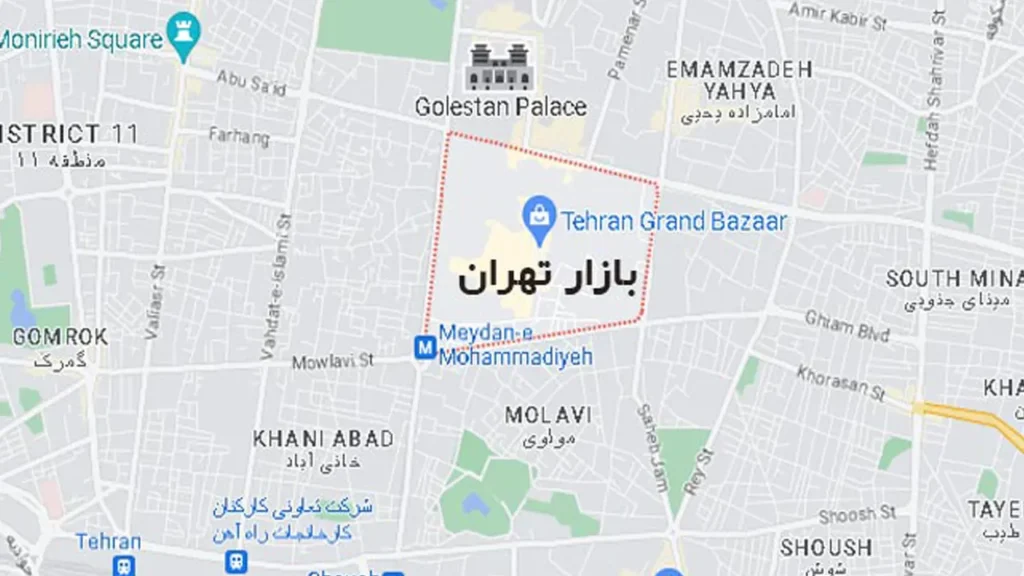
How to Get to the Tehran Grand Bazaar
The Tehran Grand Bazaar, located in the heart of the city, is surrounded by four major streets:
- Mowlavi Street to the south
- Mostafa Khomeini Street to the east
- 15th Khordad Street to the north
- Khayam Street to the west
This vast marketplace covers over 10 kilometers and features multiple entrances, each providing access to specific sections. For example:
- Khayam Street Entrance: Close to the carpet sellers’ section.
- 15th Khordad Entrance: Ideal for accessing shoe and leather shops.
- Mostafa Khomeini Street Entrance: Best for the food and grocery market.
The northern side of the bazaar leads to 15th Khordad Street, while its eastern side connects to Nasir Khosrow Street and extends toward Imam Khomeini Square.
By Metro
The metro is one of the easiest ways to reach the bazaar. Use Line 1 (Tajrish to Kahrizak) and get off at the 15th Khordad Station. From there, it’s a short walk to the bazaar. Alternatively, you can alight at Meydan-e Mohammadiyeh Station, located near the southern edge of the Khayam Street section, and walk a bit to reach your destination.
By Car
Driving to the bazaar requires caution due to its central location and traffic congestion zones. The area lacks designated parking facilities, and you may need to find parking in nearby alleys. Note that many streets near the bazaar have been converted into pedestrian-only zones. A practical alternative is to drive to major hubs like Azadi or Sadeghieh, park there, and take a taxi directly to the bazaar.
By Taxi
Taxis to the bazaar are widely available from key areas such as Azadi and Sadeghieh. Once there, they’ll drop you off near the main entrances. For the return trip, simply look for taxis heading back to those central hubs.
By Bus
If you prefer buses, the BRT Line (Tajrish–Railway) serves this area. You can get off at the Monirieh or Imam Khomeini Station and either walk or take a connecting taxi to reach 15th Khordad Street and the bazaar.
Opening Hours
The Tehran Grand Bazaar operates during the following hours:
- Saturday to Wednesday: 8:30 AM to 5:00 PM (outdoor shops often stay open until 8:00 PM).
- Thursdays: 8:30 AM to 2:00 PM (outdoor shops until 5:00 PM).
- Fridays and public holidays: The bazaar is closed, although some surrounding malls may remain open.
For a less crowded experience, visit early in the morning when the bazaar is quieter.
Whether you’re using public transport or driving, getting to the Tehran Grand Bazaar is straightforward, and exploring it offers a unique glimpse into the vibrant culture, history, and commerce of the city.
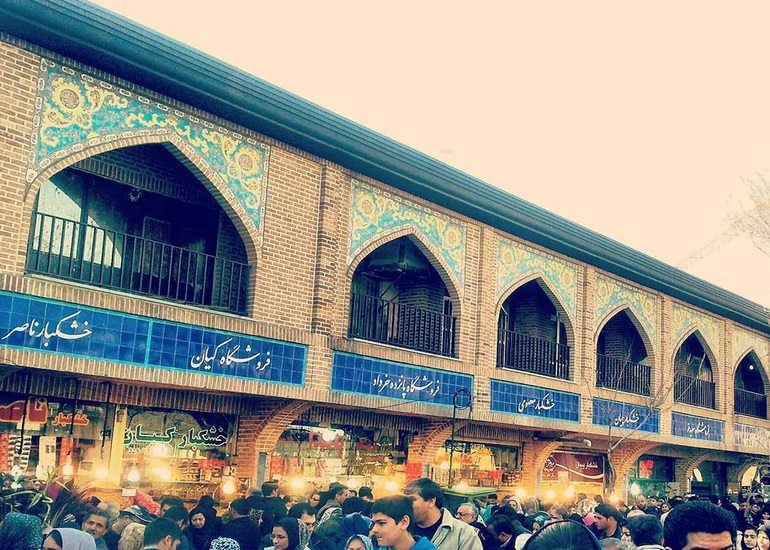
The History of Tehran Grand Bazaar (15th Khordad Bazaar)
The Tehran Grand Bazaar, also known as 15th Khordad Bazaar, is one of the most historically significant landmarks in Iran’s capital. Its origins are debated among historians, with some attributing its construction to the Safavid era under Shah Tahmasb I, while others believe it began during the reign of Naser al-Din Shah Qajar in the 19th century. Regardless of its exact beginnings, the bazaar has evolved through various eras, reflecting Tehran’s historical and cultural growth.
The Safavid Era: Early Beginnings
The earliest evidence of a marketplace in this area dates back to the Safavid dynasty (1501–1736), when Shah Tahmasb I expanded Tehran from a small settlement into a significant urban center. Though Tehran was not yet the capital, the construction of caravanserais, mosques, and covered marketplaces in this period laid the foundation for what would eventually become the Grand Bazaar.
The Qajar Era: Expansion and Flourishing
Tehran became the capital of Iran during the late 18th century under Agha Mohammad Khan Qajar, marking a pivotal moment in the city’s development. During the reign of Naser al-Din Shah Qajar (1848–1896), the bazaar underwent significant expansion to accommodate Tehran’s growing population and economic needs.
The Qajar dynasty initiated several key developments that shaped the bazaar into a central hub of commerce, religion, and politics:
- New Structures: The construction of mosques, public baths, and caravanserais within and around the bazaar strengthened its role as a cultural and economic center.
- Proximity to the Arg: The bazaar’s location near the royal Arg (citadel) and landmarks such as Shams-ol-Emareh solidified its importance in the urban fabric of Tehran.
- Economic Importance: By the late 19th century, the bazaar became a primary hub for trade, connecting merchants from across Iran and beyond.
Strategic Importance Over Time
Throughout history, the Grand Bazaar has served as more than just a marketplace. It has been a vital center for political and social movements:
- During the Constitutional Revolution (1905–1911), the bazaar played a key role as merchants and guilds supported revolutionary demands for reform.
- In the Islamic Revolution of 1979, the bazaar’s merchants were instrumental in mobilizing support against the monarchy.
Cultural and Architectural Significance
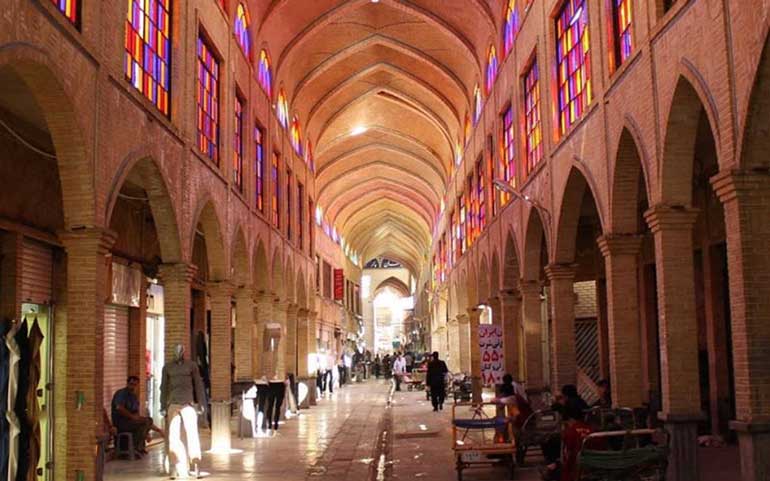
The Tehran Grand Bazaar is a testament to Iran’s architectural heritage. Its winding corridors, traditional vaults, and intricate tilework offer a glimpse into the craftsmanship of different historical periods. Over time, sections of the bazaar have been dedicated to specific goods, such as carpets, spices, gold, and textiles, preserving the traditional structure of Persian bazaars.
Modern-Day Bazaar
Today, the Tehran Grand Bazaar remains an essential part of the city’s identity. While modern malls and shopping centers have emerged, the bazaar continues to thrive as a center for wholesale and retail trade. Its blend of history, architecture, and commerce attracts both locals and tourists, making it a living monument to Tehran’s storied past.
Visiting the bazaar offers not only an opportunity to shop but also to walk through a place where centuries of history, culture, and commerce converge.
 Historical Accounts of the Tehran Grand Bazaar
The Tehran Grand Bazaar has been a prominent feature of the city for centuries, and historical accounts provide valuable insights into its development. One of the earliest references to the bazaar can be found in travelogues from the Safavid era, such as the writings of Thomas Herbert, who visited Persia in the early 17th century (corresponding to 1308 AH in the Islamic calendar).
Thomas Herbert’s Travelogue: An Early Glimpse
In his travelogue, Herbert described the Tehran Bazaar as an open-air marketplace, indicating its existence during the reign of the Safavids. This account suggests that while the bazaar was active, it had not yet acquired the covered structures that characterize it today. The open-air design reflected the bazaar’s initial phase of development, serving as a modest trading center in what was then a small but growing settlement.
Naser al-Din Shah’s Contributions: A New Era of Expansion
During the Qajar dynasty, particularly under Naser al-Din Shah Qajar (1848–1896), the bazaar underwent significant changes:
- New Sections and Roofed Corridors: Many parts of the bazaar were reconstructed or newly built, transforming it into a covered marketplace to protect merchants and shoppers from the elements.
- Architectural Enhancements: The addition of domed roofs, arches, and caravanserais (inns for traveling merchants) elevated the bazaar’s functionality and aesthetics.
- Economic Growth: These developments aligned with Tehran’s rise as Iran’s capital, making the bazaar a central hub for trade, culture, and politics.
Significance in Historical Travelogues
The Tehran Bazaar frequently appears in travelogues of visitors from different eras. These reports highlight its evolution:
- From a modest, open-air market in the Safavid period to a sprawling, roofed bazaar in the Qajar era.
- Its growing importance as a commercial center and a space where diverse goods from across Iran and neighboring regions were traded.
These historical accounts underscore the bazaar’s role not only as an economic hub but also as a cultural and architectural landmark reflecting Tehran’s transformation over time.
Conclusion
The historical reports of the Tehran Grand Bazaar, such as those by Thomas Herbert, offer a window into its early existence and evolution. From its beginnings as an open marketplace during the Safavid era to its expansion and covering under Naser al-Din Shah Qajar, the bazaar’s journey mirrors the growth of Tehran itself. Today, it stands as a testament to centuries of commerce, culture, and urban development in the heart of Iran’s capital.
 The Architectural Style of the Tehran Grand Bazaar
One of the fascinating aspects of the Tehran Grand Bazaar is its unique architectural style, which blends traditional Persian design elements with foreign influences. This fusion reflects the historical significance of the bazaar and its role as a centerpiece of Tehran’s economic and cultural life.
French Architects and Their Contributions
During the reign of Naser al-Din Shah Qajar (1848–1896), several French architects were invited to Iran to contribute to the modernization of various urban spaces, including parts of the Grand Bazaar. These architects played a key role in designing some of the entrances and gateways to the bazaar, incorporating European aesthetic sensibilities into the traditional Persian architectural framework.
The covered arcades and ornamental gateways they designed were not only aesthetically pleasing but also functional, protecting shoppers and merchants from Tehran’s warm climate.
Key Architectural Features
The architecture of the Tehran Grand Bazaar is characterized by a blend of practicality, beauty, and cultural symbolism:
- Vaulted Roofs and Domes:
- The roofed corridors and domed ceilings provide shade and ventilation, creating a comfortable environment even in the summer heat.
- These domes often feature intricate tilework, showcasing traditional Persian artistry.
- Brickwork and Tilework:
- The walls and arches are adorned with fine brick patterns and glazed tiles, often displaying floral motifs, geometric designs, and calligraphy.
- These decorations reflect the artistic traditions of the Qajar era.
- Entrances and Gateways:
- The bazaar’s gateways, some of which were designed with French input, are large and ornate, symbolizing the importance of commerce and trade.
- These entrances are both functional and ceremonial, welcoming visitors into the bustling marketplace.
- Spatial Organization:
- The bazaar is divided into specialized sections, or “rasteh,” each dedicated to specific goods (e.g., carpets, spices, gold).
- Caravanserais and courtyards are interspersed within the bazaar, offering spaces for storage, rest, and social gatherings.
Architectural Purpose
The design of the bazaar prioritized both functionality and comfort:
- The roofed structure protected merchants and goods from harsh weather conditions.
- The layout facilitated efficient navigation and trade, with specialized sections for different goods and services.
Legacy of the Architecture
The architectural style of the Tehran Grand Bazaar continues to captivate visitors, offering a glimpse into the artistic and practical genius of its designers. The blend of Persian tradition and European influence creates a space that is both timeless and dynamic, embodying the cultural and historical richness of Tehran.
Today, the bazaar stands as a living monument, where architecture, commerce, and history converge in the heart of Iran’s capital.
 The Golden Era of Construction in the Tehran Grand Bazaar
The Golden Era of construction in the Tehran Grand Bazaar took place during the reign of Naser al-Din Shah Qajar (1848–1896). This period marked a significant transformation of the bazaar, which was modernized and expanded to become the central commercial hub it is today. The period is considered the zenith of the bazaar’s development, as it was during this time that the main entrance and several of the key sections we see today were constructed.
Key Developments in the Qajar Era
Under Naser al-Din Shah, Tehran experienced extensive modernization, and the Tehran Grand Bazaar was at the heart of this urban development. Several important architectural and infrastructural improvements were made:
- The Main Entrance:
The main entrance to the Tehran Grand Bazaar, which still serves as the primary gateway today, was built during this era. This grand entrance symbolized the bazaar’s significance as a commercial center and was designed to be both functional and visually impressive. - Expansion of Sections:
Several new rasteh (covered passages) and serais (courtyards or inn-like spaces) were added to the bazaar during this period. These new additions catered to different trades and goods, such as textiles, carpets, spices, and gold. The bazaar grew in both size and variety, with each section becoming a specialized hub for particular products. - Architectural Flourishing:
During this time, the bazaar’s architecture was enhanced with the addition of arched roofs, domes, and decorative tilework, which still adorn the bazaar today. The structures provided protection from the elements and ensured that the bazaar remained an attractive and comfortable place for both merchants and customers. - Social and Economic Impact:
The expansion of the bazaar coincided with Tehran’s growth as the political and economic heart of Iran. As the Qajar dynasty’s capital, Tehran attracted merchants and traders from all over Iran and beyond. This transformation made the Tehran Grand Bazaar the city’s primary marketplace, integral not only to the economy but also to the social fabric of the city.
A Lasting Legacy
Many of the sections, alleys, and courtyards constructed during this Golden Era of expansion are still in operation today, continuing to serve as a hub of commerce and trade. The development under Naser al-Din Shah laid the foundation for the bazaar’s continued significance in Tehran’s economy and culture.
- The specialized rastehs (like the gold market, carpet market, and spice market) remain an essential feature of the bazaar today.
- The entrances and structures built during the Qajar period are still standing, preserving the architectural heritage of this influential era.
Conclusion
The Golden Era of construction in the Tehran Grand Bazaar under Naser al-Din Shah Qajar was a turning point in the history of both the bazaar and Tehran. The improvements made during this time, including the creation of the main entrance, the addition of new sections, and the architectural enhancements, solidified the bazaar’s place as the central trading hub of the city. Today, the bazaar continues to reflect the legacy of this vibrant period, maintaining its status as one of Tehran’s most important and historical landmarks.
 The Registration of the Tehran Grand Bazaar as a National Heritage Site
The Tehran Grand Bazaar, with its rich historical and cultural significance, was officially registered as a National Heritage Site of Iran on November 24, 1977 (2 Aban 1356 in the Iranian calendar). It was assigned registration number 1540 in the list of Iran’s National Monuments. This recognition marked the bazaar’s importance not only as a commercial center but also as a significant cultural and architectural landmark.
Reasons for Its Registration
The decision to register the Tehran Grand Bazaar as a National Heritage Site was driven by several factors:
- Historical Significance:
The bazaar is a living testament to the historical development of Tehran and Iran, with roots tracing back to the Safavid and Qajar periods. Its architectural evolution over the centuries mirrors the changes in Persian society, commerce, and urban planning. - Cultural Importance:
As a place where people from different regions and cultures gather to exchange goods and ideas, the bazaar has played a key role in shaping Iranian culture. Its various sections, with specialized markets for textiles, spices, gold, and carpets, reflect the diverse crafts and trades that are integral to Iranian identity. - Architectural Value:
The bazaar’s architectural design, with its vaulted ceilings, intricate tilework, and grand gateways, showcases the richness of Persian architecture. The influence of French architects during the Qajar era further adds to its unique and evolving design.
The Bazaar Today
Since its registration, the Tehran Grand Bazaar has gained not only local and national recognition but also international acclaim. It is now seen as a major tourist attraction that draws visitors from around the world, eager to experience its historical ambiance and vibrant commerce. Tourists can wander through the bazaar’s winding corridors, shop for traditional Iranian goods, and admire its timeless architectural beauty.
- Tourism: Each year, thousands of tourists visit the bazaar, experiencing the sights, sounds, and flavors of this bustling historical marketplace.
- Cultural Hub: Beyond commerce, the bazaar serves as a living cultural space, where traditional Persian crafts, art, and food can be enjoyed.
Conclusion
The registration of the Tehran Grand Bazaar in the National Heritage list has ensured its preservation and recognition as a significant part of Iran’s cultural and historical legacy. Today, it stands as not only a thriving commercial center but also as a symbol of Iran’s rich heritage, attracting both locals and international visitors alike, and offering a unique glimpse into the past.
Different Sections of the Tehran Grand Bazaar
The bustling crowd in the dome hall of the Tehran Grand Bazaar, known as the 15 Khordad Bazaar.
Vendors and buyers in the dome hall of the Tehran Grand Bazaar; Photo source: Iran Doostan website.
The bazaar is made up of numerous smaller markets, caravanserais, and passageways. In the past, the market had clearer guild-based divisions, but these distinctions are no longer as prominent today. Alongside these, mosques, coffee houses, and squares can also be found in and around the Tehran Bazaar. Let’s explore the main sections of this historic market.
What Are the Timches of the Tehran Grand Bazaar?
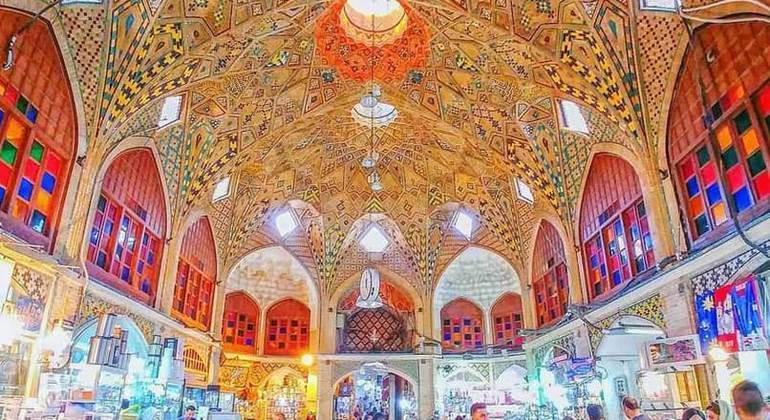
In many of Iran’s historic bazaars, there are sections known as “timchehs”. The word “timche” is derived from “tim,” meaning caravanserai, and the suffix “-che”, which is a diminutive, indicating a smaller or more compact version. Therefore, a timche can be thought of as a small, roofed section of the market, typically wider and lower than the rest of the bazaar, but still following the traditional architectural style.
Architectural Features of Timches
Timches in Iranian bazaars are distinguished by several architectural features:
- Domed Roofs:
The most defining characteristic of timches is their domed roof, which provides shade and shelter for the merchants and customers. These domes are often decorated with intricate plasterwork (gachbari) and wooden carvings (dirudgari), which add to the aesthetic value of the space. - Compact and Spacious Design:
While timches are smaller and more compact than other areas of the bazaar, they are also wider and more open, making them ideal for displaying goods. The layout typically encourages a sense of intimacy and is designed for specialized trade. - Cultural and Functional Significance:
Timches often housed elite merchants and were used for more exclusive or high-value trade, such as carpets, precious metals, and luxury goods. The structure provided a more controlled and peaceful environment compared to the bustling open market.
Important Timches in the Tehran Grand Bazaar
The Tehran Grand Bazaar is home to several notable timches, each with its own historical and commercial significance. Some of the most important timches include:
- Timche Haj Abutaleb:
One of the well-known timches, famous for its architectural beauty and historical significance. - Timche Baoufa:
Known for its excellent craftsmanship in the interior decoration, particularly its tilework and wood carvings. - Timche Ferd:
A crucial timche in the bazaar, located in the heart of the trading area, contributing significantly to the bazaar’s vibrant commercial atmosphere. - Timche Haji Bozorg:
Known for its large, open space and elegant design, this timche holds cultural importance within the bazaar. - Timche Mola Ali Kani:
This timche is also significant for its role in housing specialized trades in the bazaar, particularly related to luxury goods.
Conclusion
Timches in the Tehran Grand Bazaar are essential architectural elements, showcasing the grandeur of traditional Persian marketplace design. These small, domed structures serve as focal points within the bazaar, offering both functional trading spaces and elegant architectural features. The timches not only represent the economic history of Tehran but also stand as masterpieces of Iranian craftsmanship, with their detailed plasterwork and wood carvings. Today, they remain an integral part of the bazaar, attracting visitors for both their historical significance and their beauty.

The Serais of the Tehran Grand Bazaar
In the Tehran Grand Bazaar, serais (plural: sarayeh) are roofed corridors or passageways that typically contain a row of shops or hujrahs (small chambers or stalls). These serais often serve as specialized areas where merchants of a particular trade or craft gather, providing a distinct space for commerce. Some serais host shops belonging to a single trade, while others may include a variety of trades within one structure. These passageways are crucial components of the bazaar, contributing to its complex and segmented layout.
Notable Serais in the Tehran Grand Bazaar
The Tehran Grand Bazaar is home to a variety of serais, each serving a different commercial purpose and often featuring its own architectural style. Some of the most important and well-known serais in the bazaar include:
- Serai Abutaleb
- Serai Islami
- Serai Amir Kabir
- Serai Buali
- Serai Tehranchi
- Serai Jowaharian
- Serai Dalan-e-Daraz
- Serai Delgosha
- Serai Sheikh Ja’far
- Serai Qadiani
- Serai Kurbasi
- Serai Golshan-shikan
- Serai Misbah
- Serai Mahdizadeh
- Serai Mirza Ismail
- Serai Vaziri
- Serai Yazdi-ha
These serais are scattered across the bazaar, each contributing to a distinct shopping experience, often specializing in specific goods such as textiles, spices, carpets, and jewelry.
Serai Haji Zaman: A Special Highlight
Among the numerous serais in the bazaar, one of the most famous is Serai Haji Zaman, known for being a major wholesale hub for textiles, especially fabrics. It has long been recognized as one of the best places for those looking to purchase fabrics in bulk.
- Location: Serai Haji Zaman is situated between Bazaar Mosgherlouha Street and Bazaar Chaharsoughin Street, two central areas of the bazaar.
- Specialization: The serai is home to a variety of textile merchants, making it a key location for those in the wholesale fabric trade.
The Importance of Serais in the Tehran Grand Bazaar
The serais of the Tehran Grand Bazaar serve not only as commercial spaces but also as cultural hubs. Each serai plays a crucial role in the organization and functionality of the bazaar, maintaining its traditional division into specialized sections. Whether dedicated to specific goods or serving as gathering points for various trades, serais are integral to the historical and modern operations of the Tehran Grand Bazaar.
They also reflect the ingenuity of traditional Persian marketplace design, offering a sheltered environment where merchants and customers can interact, particularly in the hot and sunny summer months. The roofed corridors ensure that trade can continue year-round, regardless of the weather.
Conclusion
The serais of the Tehran Grand Bazaar are a vital component of the bazaar’s architectural and commercial structure. They represent the rich history and diverse economy of Tehran, reflecting the enduring role of the bazaar in Iran’s cultural and commercial life. Today, visitors can still explore these historic passageways, experiencing the market’s vibrant atmosphere while discovering the many specialties each serai has to offer.

Sabzeh Meydan: A Key Landmark in the Tehran Grand Bazaar
Sabzeh Meydan (literally meaning “Green Square”) is an important landmark located in the northern part of the Tehran Grand Bazaar, often considered the starting point of its main body. Over time, this central area has evolved into a bustling hub within the bazaar, drawing attention both for its historical significance and its unique role in the structure of the marketplace.
Historical Origins of Sabzeh Meydan
The history of Sabzeh Meydan dates back to the early Safavid period, around the 16th century, when the area began to take shape as a central point of commerce. During this time, the space was open and was used for agricultural purposes, notably for planting herbs and vegetables, which later gave the square its name: Sabzeh Meydan, or Green Square.
However, the modern identity of Sabzeh Meydan was defined during the Qajar dynasty under the leadership of Amir Kabir, who was the Prime Minister to Nasser al-Din Shah Qajar in the 19th century. Amir Kabir aimed to reorganize and improve the structure of the market, and as part of this initiative, he helped establish a more formalized and clearly defined square. This redesign helped in shaping Sabzeh Meydan into the central point from which many of the key paths and sections of the bazaar radiate.
The Role of Sabzeh Meydan in the Bazaar
Today, Sabzeh Meydan serves as a vibrant and busy area within the Tehran Grand Bazaar, playing a vital role as both a historical and commercial hub. The square continues to be a focal point in the bazaar where people gather, trade, and navigate through the different sections of the market.
Cultural and Commercial Significance
- Central Hub:
Sabzeh Meydan is considered the northern gateway to the bazaar. It connects various parts of the bazaar with the surrounding streets and plays a significant role in the distribution of goods and movement of people within the market. - Historical Importance:
Throughout the Zandieh and Qajar eras, Sabzeh Meydan was also known for its use in agriculture, with the area being used for planting herbs and vegetation. This is where the name “Sabzeh” (green) originated. While it no longer serves as an agricultural hub, the name remains a reminder of its roots. - Social Space:
The square is not just for business—it has also historically been a space for social interactions. As such, Sabzeh Meydan has evolved into a central meeting point within the bazaar for both locals and visitors, fostering a unique blend of commerce and community.
Conclusion
Sabzeh Meydan holds an important place within the Tehran Grand Bazaar, blending rich historical heritage with modern-day commerce. From its early roots as an agricultural area to its central role in the bazaar’s operations today, Sabzeh Meydan remains a vital part of the marketplace, serving both practical and cultural purposes. Its evolution through the centuries is a testament to the enduring significance of the Tehran Grand Bazaar as a commercial and social hub in the heart of the city.

Chaharsuq (Four-Square): Connecting the Markets of Tehran
Chaharsuq, also known as the Four-Square, is a significant architectural feature within the Tehran Grand Bazaar, serving as a pivotal intersection that connects different sections of the market. It is divided into two main parts: Chaharsuq-e-Bazargah (the large four-square) and Chaharsuq-e-Kuchak (the small four-square). The larger structure, Chaharsuq-e-Bazargah, is particularly notable for its age and historical importance, being one of the oldest buildings in the Tehran Grand Bazaar.
Historical Origins and Construction of Chaharsuq
The Chaharsuq-e-Bazargah was constructed during the Zandieh era in the 18th century, and it was further expanded and renovated during the Qajar period in the 19th century. Its role was to serve as a central marketplace and a connecting point for the various trade routes within the bazaar. The two Chaharsuqs are essential for guiding visitors and traders through the bazaar’s sprawling maze of alleys and sections.
Architectural Significance of Chaharsuq
One of the defining features of Chaharsuq-e-Bazargah is its fine architectural details, particularly its intricate plasterwork (gachbari), which remains a highlight of the structure. The level of craftsmanship displayed in the gachbari and the overall design of the four-square gives it considerable architectural value, making it a key example of Persian traditional design in commercial spaces.
Additionally, Chaharsuq has a domed roof and vaulted corridors that not only contribute to the aesthetic appeal of the structure but also provide shelter for traders and shoppers, protecting them from the elements while maintaining an airy and open feel.
Chaharsuq as a National Heritage
Due to its architectural and historical importance, Chaharsuq-e-Bazargah was officially registered as a national monument of Iran in 1977 (1356 in the Iranian calendar). Its registration as a national heritage site reflects both its significance as part of Tehran’s rich cultural heritage and its role in shaping the city’s architectural and urban landscape.
Cultural Role and Function
Chaharsuq, with its central location within the Tehran Grand Bazaar, functions as a hub that connects various sectors of the bazaar, facilitating the flow of goods and people. The space is not only important for trade but also serves as a meeting point where merchants from different parts of the bazaar can congregate. Over time, the structure has remained a key focal point for both the historical and modern functioning of the Tehran Grand Bazaar.
Conclusion
Chaharsuq-e-Bazargah, with its fine architectural features and historical importance, stands as a testament to the ingenuity and craftsmanship of Persian architecture. It continues to be a vital part of the Tehran Grand Bazaar, serving both as a commercial space and a cultural landmark. Its registration as a national monument ensures its preservation, allowing future generations to appreciate its role in the development of one of the oldest and most vibrant markets in the world.
Historical places of Tehran’s Grand Bazaar

Imam Khomeini Mosque: A Testament to History
The Imam Khomeini Mosque, once known as the Shah Mosque or Soltani Mosque, is a historically significant site located in the southeastern corner of 15 Khordad Square in Tehran. This mosque, built during the reign of Fath Ali Shah Qajar, is one of the most important religious and cultural landmarks in the city, with a rich history that reflects pivotal moments in Iran’s political and social history.
Historical Background and Construction
The construction of Imam Khomeini Mosque dates back to the early 19th century, during the reign of Fath Ali Shah, the second ruler of the Qajar dynasty. The mosque was designed to be a grand architectural masterpiece, serving not only as a center of worship but also as a symbol of royal authority.
The mosque was initially named the Shah Mosque (meaning King’s Mosque) in honor of the Qajar dynasty and its ruler. Over the years, it has undergone several renovations and alterations, but it remains one of the most distinguished examples of Qajar-era architecture in Tehran.
Role in Iran’s Historic Events
Throughout its history, the mosque has been a central player in many of Iran’s most significant political movements:
- The Tobacco Protest (Tobacco Rebellion, 1891):
The mosque gained prominence during the Tobacco Protest when the Qajar ruler, Nasir al-Din Shah, granted a tobacco concession to a British company, leading to widespread protests. Religious leaders, many of whom used the mosque as a base, played a key role in leading the opposition. The protests eventually led to the revocation of the tobacco concession and marked the beginning of increasing political activism in the country. - The Constitutional Revolution (1905-1911):
During the Constitutional Revolution, the mosque also became an important site of political and religious debate. Clerics and revolutionaries gathered in the mosque to demand constitutional reforms and the establishment of a more representative government.
Cultural and Architectural Significance
The Imam Khomeini Mosque is renowned for its stunning architectural design, which features intricate tilework, elegant domes, and large courtyards that are hallmarks of Qajar architecture. The mosque is also a fine example of the Persian-Islamic style, with elements of Persian gardens integrated into its design. Its grandeur and serene atmosphere have made it a key religious site and a symbol of Iran’s cultural heritage.
The mosque has also become a symbol of resilience and national identity, particularly during periods of social and political upheaval.
Renaming and Modern Significance
In 1979, following the Islamic Revolution and the overthrow of the Pahlavi monarchy, the mosque was renamed the Imam Khomeini Mosque in honor of Ayatollah Khomeini, the leader of the revolution. Since then, it has become closely associated with the ideals and principles of the Islamic Republic of Iran.
Today, the Imam Khomeini Mosque stands not only as a religious center but also as a living symbol of Iran’s struggle for independence and social justice. It continues to be an important site for political rallies, commemorations, and cultural events, maintaining its relevance in Iranian society.
Conclusion
The Imam Khomeini Mosque is much more than a place of worship; it is a living testament to Iran’s history and its political, social, and religious transformations. From its beginnings as the Shah Mosque to its role in key historical events such as the Tobacco Rebellion and the Constitutional Revolution, the mosque has witnessed and contributed to the shaping of modern Iran. Today, it remains a symbol of national pride and a reminder of the struggles and triumphs that have defined the country’s journey.
 Malek Historical House: A Masterpiece of Qajar and Pahlavi Art in Tehran’s Grand Bazaar
The Malek Historical House is one of Tehran’s most cherished historical landmarks, embodying the artistic splendor of both the Qajar and Pahlavi eras. Located near the heart of Tehran’s Grand Bazaar, this architectural gem provides a rare glimpse into the wealth, culture, and artistry of these two pivotal periods in Iranian history.
Historical Background and Construction
Built during the Qajar dynasty, the house is the legacy of Haj Hossein Agha Malek, a wealthy merchant from Mashhad. The construction of the house reflects the grandeur and opulence of the time, as the Qajar dynasty was known for its ornate architectural style. The house blends traditional Persian elements with modern touches introduced during the Pahlavi era.
Architectural Significance
The Malek Historical House showcases the distinctive craftsmanship of both periods, with exquisite tilework, brickwork, carved wooden decorations (monabbat kar), and intricate stucco designs. The building’s courtyard, internal halls, and decorative elements such as mosaic tile work highlight the fusion of Qajar and Pahlavi aesthetics.
- Qajar Era: The Qajar period is reflected in the ornate designs, especially in the use of tile and plasterwork. The decorative motifs often feature Persian floral patterns, geometric shapes, and bright colors that are iconic to the era.
- Pahlavi Era Influence: During the Pahlavi era, the house underwent modifications that integrated more modern architectural styles, reflecting the changing tastes and influences of the time.
The Life of Haj Hossein Agha Malek
Haj Hossein Agha Malek was a prominent businessman who made his fortune through trade, particularly in the field of textiles. Despite his wealth, he was deeply committed to preserving and sharing Iran’s cultural heritage. As a philanthropist, he chose to donate his house and its contents to serve as a library and museum, focusing on preserving the nation’s valuable manuscripts and artifacts. This selfless act has ensured that the Malek Historical House remains a beacon of Iran’s intellectual and cultural history.
Transformation into the Malek Museum and National Library
Following Haj Hossein Agha Malek’s death, his house was transformed into the Malek Museum and National Library. The museum holds a rich collection of Iranian manuscripts, rare books, and historical artifacts. Today, it serves as a cultural hub for scholars, tourists, and history enthusiasts alike, offering visitors the opportunity to explore Iran’s literary and artistic heritage.
The Malek Museum has contributed significantly to the preservation of Iran’s cultural and historical legacy, with collections spanning centuries of Iranian art, literature, and science. By housing rare books, ancient manuscripts, and other culturally important artifacts, it offers an invaluable resource for research and education.
Cultural and Educational Contribution
As a museum and library, the Malek Historical House plays a crucial role in preserving Iranian culture. Through its exhibitions and educational programs, it educates visitors about Iran’s rich history, from the Qajar period to the Pahlavi era. The house also offers a comprehensive understanding of traditional Persian architecture and art, providing insight into the craftsmanship of past generations.
Conclusion
The Malek Historical House stands as a vivid testament to the artistic heritage of the Qajar and Pahlavi eras. With its stunning architectural features, rich history, and significant cultural contributions, it is a vital part of Tehran’s historical landscape. By transforming into the Malek Museum and National Library, it continues to serve as a hub for the preservation and appreciation of Iran’s cultural heritage, allowing future generations to connect with the past while contributing to the ongoing dialogue about Iran’s identity and history.

Jama Masjid of the Bazaar: The Oldest Mosque in Tehran
The Jama Masjid of the Bazaar, also known as the Grand Mosque of Tehran, is one of the oldest and most significant mosques in the capital. Located near Tehran’s Grand Bazaar, this mosque holds a unique place in the history of the city and Iranian architecture. It has been a witness to the various cultural and political changes that have shaped Tehran over the centuries.
Historical Significance
The Jama Masjid is one of the oldest mosques in Tehran, with its history tracing back to the Qajar period. The earliest historical document referring to this mosque is a map of Tehran from 1275 AH (1858 AD), which indicates its presence and importance at that time. However, the mosque’s foundations likely go back even further, and it is believed to have been constructed in earlier periods, during the Safavid dynasty or even earlier.
Over time, the mosque has undergone several expansions and renovations, particularly during the Qajar and Pahlavi eras, which have helped shape its distinctive architectural features.
Architectural Features
The Jama Masjid of the Bazaar is an excellent example of traditional Persian mosque architecture. The mosque features intricate tilework, stucco decorations, and wooden paneling, typical of the Qajar era. The design emphasizes the use of light and space, with high ceilings, a large courtyard, and a beautiful dome that allows natural light to fill the prayer hall.
The mosque’s entrance, adorned with elaborate mosaic tiles and carvings, offers a glimpse of the craftsmanship that went into building the mosque. Its minarets and courtyard are iconic features, highlighting the architectural grandeur of the time.
Role in Tehran’s Religious and Cultural Life
Throughout its long history, the Jama Masjid of the Bazaar has not only served as a place of worship but also as a cultural and social hub. It has been a center for religious gatherings, local festivals, and political movements, particularly during times of social upheaval in Tehran.
The mosque has played an important role in the social fabric of Tehran, serving as a gathering place for traders, scholars, and local people. It continues to be an active center for religious and community activities, maintaining its significance in the everyday lives of those who visit.
Connection to Tehran’s Bazaar
The mosque’s proximity to Tehran’s Grand Bazaar has also contributed to its importance. As the heart of Tehran’s commerce, the bazaar has historically been a place of economic, cultural, and political exchange, and the Jama Masjid has acted as a spiritual and communal anchor in the midst of this vibrant hub of activity.
Its location at the center of the market signifies the integration of religion and commerce in the traditional Iranian cityscape, where marketplaces and religious spaces have long been intertwined.
Conclusion
The Jama Masjid of the Bazaar stands as a testament to Tehran’s rich history and architectural evolution. As one of the oldest mosques in the city, it offers a unique perspective on the development of religious and cultural life in Tehran, from the Safavid period to the Qajar and Pahlavi eras. Today, it remains a central place of worship and a symbol of the city’s deep-rooted heritage, contributing to the cultural and spiritual landscape of Tehran’s Grand Bazaar.
 Imamzadeh Zayd: The Tomb of Lotfali Khan Zand
Located at the southern end of the Bazzazan Market, Imamzadeh Zayd is one of the oldest religious sites in Tehran’s Grand Bazaar. The tomb of Lotfali Khan Zand, a prominent figure from the Zand dynasty, is also situated within this shrine. This site has been recognized as a national monument, adding to its historical and cultural significance.
Tehran Grand Bazaar Shopping Malls

Reza Mall:
Reza Mall, located in Tehran, was built in 2001 with a vast area of 10,000 square meters across five floors, housing approximately 600 commercial units. Situated on 15 Khordad Street, near the Grand Bazaar, it is also known as the “Kuwaitis’ Mall.” This large shopping center offers a wide range of products, including clothing, bags and shoes, jewelry, sports equipment, home appliances, and beauty and personal care items. Most of the items, especially clothing, are geared toward women, making it an ideal spot for women to find fashionable and reasonably priced items.
Chahar Souq Mall:
Chahar Souq Mall is located in the Grand Bazaar of Tehran, specifically on Bazaar Masgerha Street. It is one of the eighty-two shopping centers within the Grand Bazaar complex. Geographically, it enjoys excellent access to landmarks such as the Diamond Hall and Shams-ol-Emareh. Nearby attractions include Sharf-al-Islami Restaurant, Hakim Hashemi Mall, and the tomb of Lotfali Khan Zand, making it a convenient stop for both shopping and exploring the area.
 Maryam Mall, Tehran Bazaar
Maryam Mall, located within the Tehran Bazaar, offers a wide variety of clothing for women, men, and children at affordable prices. It’s a great destination for budget-friendly shopping, providing a diverse selection of apparel for all ages.
Qaim Mall, Tehran Bazaar
Qaim Mall is located in the Abbasabad Market, specifically on Ali Abadi Alley. This mall features a variety of small and large stores offering men’s, women’s, and children’s clothing. With a wide range of products, brands, and price points, Qaim Mall provides an excellent opportunity for budget-friendly shopping, allowing you to make a complete purchase at very reasonable prices.
To buy nuts, head to Chahar Souq Bazaar. This is one of the oldest parts of Tehran’s Grand Bazaar, and its traditional architecture and layout are considered national heritage. Located near the Jama Masjid and on 15 Khordad Street, Chahar Souq Bazaar was constructed in 1806 CE. The market features a low ceiling adorned with beautiful and intricate stucco work.
For women’s clothing such as shawls, scarves, gloves, hats, and more, you can find them in Jafari Bazaar.
If you’re looking for gold and jewelry, the Goldsmith’s Bazaar is the ideal place, offering lower crafting fees compared to other gold shops.
For household goods, you can find very affordable options in the Hajib-od-Doleh Bazaar. The Hajib-od-Doleh Timcheh, located adjacent to the Jama Masjid, features beautiful architecture. This Timcheh was constructed by Haj Ali Khan Hajib-od-Doleh during the reign of Naser al-Din Shah Qajar. In 1977 CE, it was registered as a national heritage site.
You can purchase high-quality beauty and cosmetic products from Meyvi Alley.
Meshir Khalevat Bazaar is the center for bags, backpacks, and suitcases. Keep in mind that most shops in this area are wholesalers, but you will likely be able to make retail purchases as well.
For stationery, head to Bain-al-Haramain Bazaar. This is one of the main markets in Tehran, often referred to as the Stationery Market. You can find a variety of pens, notebooks, colored pencils, and other essential stationery items at much more affordable prices compared to other areas of the city.
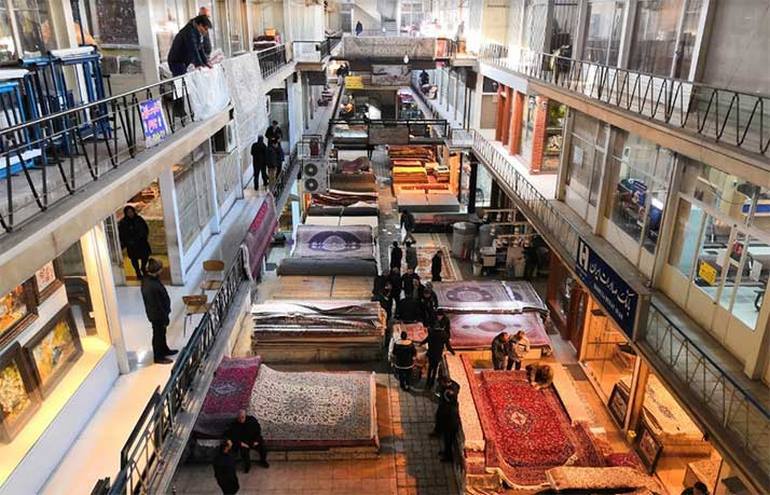
Restaurants in Tehran’s Grand Bazaar
When planning to shop or visit Tehran’s Grand Bazaar, you’ll likely spend a significant amount of time exploring its vibrant atmosphere. As such, taking a break to rest and enjoy a meal becomes essential. The Bazaar is home to numerous restaurants that have been serving traditional Iranian dishes to both customers and merchants for many years. Below, we’ll highlight some of the most famous restaurants in the Bazaar known for their quality food.
Muslim Restaurant, Tehran Grand Bazaar
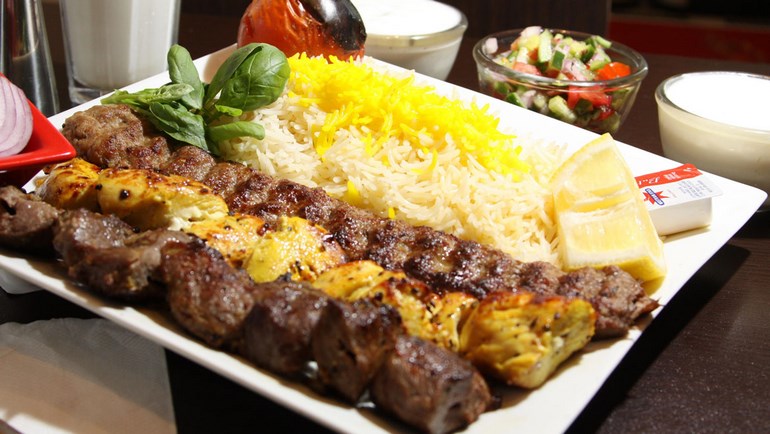
Located at the corner of Sabzeh Meydan, on Haj Rahim Khan Alley, and in the main area of the Bazaar, Muslim Restaurant has a history of approximately two decades. This long-standing reputation has made it one of the most famous eateries in the Bazaar.
Around lunchtime, you’ll notice long lines forming outside, a clear sign of its quality. Muslim Restaurant is renowned for its delicious Chelokebab (Iranian rice with kebab) and Tahchin (a rice-based dish with a crispy crust), making it a favorite among locals and visitors alike. The restaurant is open daily from 11 AM to 6 PM, serving up mouthwatering dishes to satisfy your hunger after a long day of shopping.
Sharf-al-Islami Restaurant, Tehran Bazaar
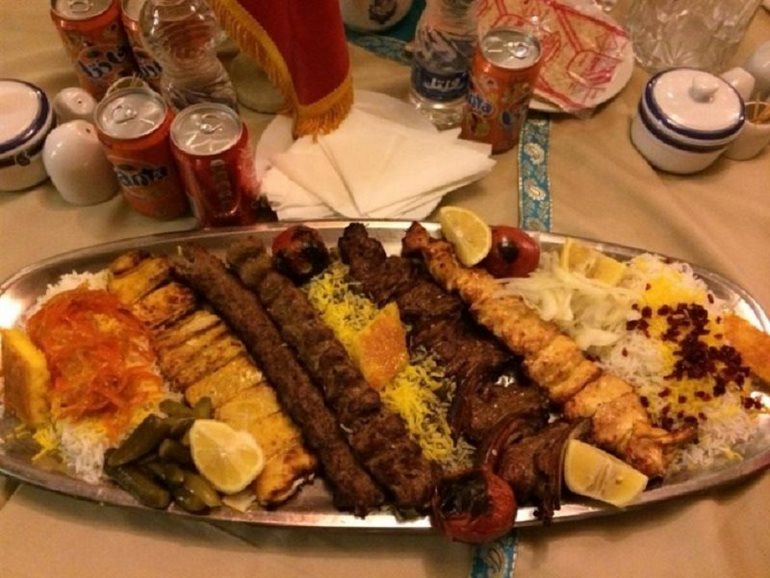
This historic restaurant, with its nostalgic and traditional ambiance, has been serving customers since 1938. Located behind Imam Mosque in the Sarai Ardebeshteh section of the Bazaar, Sharf-al-Islami is a beloved spot for locals and visitors alike.
If you plan to dine at this iconic restaurant, we highly recommend ordering dishes like Tahchin, Shishlik (Iranian grilled lamb), Baghali Polo with Mahi Che (broad bean rice with lamb shank), or Zereshk Polo (barberry rice). The high-quality food served here has garnered a loyal following, and the restaurant is open daily from 11:30 AM to 4 PM, offering a truly authentic taste of Iranian cuisine.
Qadah Restaurant, Tehran Bazaar
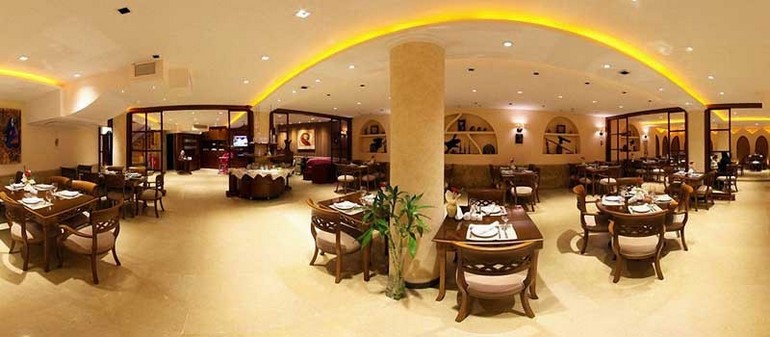
Located in the Carpet Sellers’ Alley of the Tehran Bazaar, Qadah Restaurant is famous for its traditional, flavorful kebabs, made with locally sourced meat and butter. The saffron Tahchin (a rice dish with a crispy bottom) at Qadah is a must-try for anyone visiting the restaurant, offering a true taste of Iranian cuisine in a classic, cozy setting.
Shamshiri Restaurant, Tehran Grand Bazaar
Shamshiri Restaurant, like Muslim Restaurant, is situated in the southeast corner of Sabzeh Meydan. Founded by Haj Mohammad Hassan Shamshiri, who passed away many years ago, this restaurant has built a reputation for its renowned Chelokebab (rice with kebab).
We highly recommend trying the local yogurt drink (Doogh), a refreshing and traditional accompaniment to your meal. The free salad bar, with a wide variety of fresh salads, is also a popular feature for diners. Shamshiri Restaurant welcomes customers daily from 11 AM to 11:30 PM, offering an authentic Iranian dining experience.
Nayeb Restaurant, Tehran Grand Bazaar
If you’re looking for one of the oldest and most iconic restaurants in the Bazaar, Nayeb Restaurant, with over 130 years of history, is the place to visit. The original branch of Nayeb is located in the Sahafha Bazaar. Known for its famous Chelokebab, this restaurant has earned a loyal following among locals and merchants. Over the years, Nayeb has expanded, opening several branches across Tehran, but the original location remains a must-visit for an authentic taste of Iranian cuisine.
Security Measures in Tehran’s Grand Bazaar