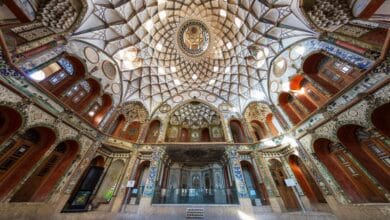

Step into the enchanting world of Qajar-era splendor with hamintour, your guide to Iran’s cultural masterpieces. Nestled in Kashan’s historic heart, the Borujerdi House stands as a breathtaking testament to Persian architectural ingenuity and romantic legacy. Built in 1875, this opulent mansion, spanning 1,700 square meters, captivates with its intricate plasterwork, vibrant frescoes, and iconic wind towers, earning accolades as Asia’s most beautiful historic home by UNESCO in 2014. With hamintour, immerse yourself in the Borujerdi House’s timeless elegance, where every detail—from mirrored halls to rose-scented courtyards—tells a story of love and artistry, making it a must-visit in 2025.
Location of the Borujerdi House
The Borujerdi House graces Kashan’s Sultan Amir Ahmad neighborhood, located on Alavi Street in the city’s southeast. A cultural hub 240 km south of Tehran, Kashan is renowned for its rosewater festivals and Qajar-era homes. Easily accessible by car or bus from major cities like Isfahan or Tehran, the house is a short stroll from other historic gems like the Tabatabai House and Sultan Amir Ahmad Bathhouse. hamintour offers seamless travel planning, ensuring your journey to this architectural marvel is effortless and enriching.
Overview of the Borujerdi House
Constructed over 18 years from 1875 to 1893 (1292–1310 AH), the Borujerdi House is a pinnacle of Qajar-era design, blending functionality with aesthetic grandeur. Spanning 1,000 square meters of built space within a 1,700-square-meter estate, it features two floors, a basement, and a domed main hall reminiscent of Gaudí’s organic forms. Its wind towers, a symbol of Kashan, and ornate decorations crafted by over 150 artisans—plasterers, painters, and mirror workers—make it a masterpiece. Restored by the Kashan Cultural Heritage Organization, particularly in 1999, it remains a vibrant testament to Persian creativity, as showcased through hamintour’s guided explorations.
Registered as number 1083 on Iran’s National Heritage List in 1966, the house was lauded by UNESCO’s General Conference President in 2014–2015 as Asia’s finest historic residence, cementing its global allure.
A Romantic History
The Borujerdi House owes its existence to a love story. In the late 19th century, Seyyed Hassan Natanzi, a merchant from Kashan, sought to marry the daughter of Seyyed Jafar Tabatabai, a prominent carpet trader. Tabatabai agreed, on the condition that Seyyed Hassan build a home rivaling his own opulent residence. Enlisting master architect Ali Kashani, Seyyed Hassan created this grand mansion, named Borujerdi House after his business ties to Borujerd. This tale of devotion, woven into the house’s intricate designs, captivates visitors on hamintour’s storytelling tours, bringing the Qajar era to life.
Architectural Splendor of the Borujerdi House
The Borujerdi House is a symphony of Persian architectural innovation, blending form, function, and artistry:
- Structure and Materials: Spanning two floors with a southern wing extending to a third level and basement, the house is built with raw bricks, clay, and gypsum, ensuring durability in Kashan’s desert climate. Its domed main hall, adorned with intricate stucco, mirrors the elegance of Barcelona’s modernist gems.
- Decorative Elements: Vibrant oil and watercolor paintings, inspired by Russian and European styles, depict Qajar kings and floral motifs. Mirrored interiors and colorful orosi (stained-glass) windows create a kaleidoscopic glow, while exterior plasterwork and tilework dazzle with geometric precision, crafted by masters like Kamal-ol-Molk.
- Wind Towers and Climate Control: Three 40-meter wind towers channel desert breezes to cool the basement, maintaining a refreshing ambiance in summer. In winter, orosi windows trap sunlight, warming light-receiving rooms. This ingenious design, highlighted by hamintour, showcases Persian sustainable architecture.
The house’s courtyard, with its central pool and symmetrical gardens, reflects the Persian chahar bagh (four-garden) layout, evoking paradise. hamintour’s expert guides illuminate these details, making every corner a lesson in artistry.
Functionality Through the Ages
Originally a private residence for the Natanzi family, the Borujerdi House served as a social and domestic hub, hosting gatherings in its grand halls. In 1974, part of the estate transformed into a public museum and the Kashan Cultural Heritage Organization’s headquarters, though the inner sections remain privately owned. Neglect once threatened its splendor, with sunlight and water damage eroding its beauty, but extensive 1999 restorations revived its glory. Today, it welcomes global visitors, with hamintour offering immersive tours that reveal its dual role as a home and cultural beacon.
Best Time to Visit the Borujerdi House
Spring (March–May) is the ideal season to visit Kashan, when mild weather (15–25°C) and blooming roses create a magical ambiance. The annual rosewater distillation ceremonies add cultural vibrancy. October is another excellent time, coinciding with the traditional carpet-washing ceremony in nearby Mashhad Ardehal. Avoid summer’s heat (up to 40°C) for comfort. hamintour tailors spring and autumn itineraries, including festival access, for an unforgettable Kashan experience.
Why Visit the Borujerdi House with hamintour
The Borujerdi House is more than a building—it’s a love letter to Persian artistry, blending Qajar romance with architectural genius. Its wind towers, mirrored halls, and frescoes offer a portal to Iran’s cultural soul. With hamintour, your visit is enriched with expert guides, seamless logistics, and exclusive access to nearby sites like the Fin Garden, ensuring a journey as timeless as the house itself.
Frequently Asked Questions About the Borujerdi House
- Who is the architect of the Borujerdi House? Master Ali Kashani designed the house, crafting its Qajar-era splendor for Seyyed Hassan Natanzi.
- What are the sights around the Borujerdi House? Nearby attractions include the Tabatabai House, Sultan Amir Ahmad Bathhouse, and Agha Bozorg Mosque, all within walking distance in Kashan’s historic district.
- Where is the Borujerdi House located? It’s on Alavi Street in the Sultan Amir Ahmad neighborhood, southeast Kashan, easily accessible via hamintour’s travel plans.
- What makes the Borujerdi House unique? Its wind towers, orosi windows, and Qajar frescoes, lauded by UNESCO as Asia’s finest historic home, set it apart.
- When was the Borujerdi House built? Construction began in 1875 and completed in 1893, spanning 18 years.
- Is the Borujerdi House open to the public? Yes, part is a public museum, though some sections remain private, open daily except holidays.
- What materials were used in the house? Raw bricks, clay, gypsum, and plaster form its structure, with mirrors and tiles for decoration.
- How do the wind towers function? They channel breezes to cool the basement, maintaining a pleasant climate in summer.
- Can I visit during Kashan’s rosewater festival? Yes, spring visits with hamintour align with the festival for a cultural immersion.
- How long should I spend at the Borujerdi House? Plan 1–2 hours to explore its halls, courtyard, and details with hamintour’s expert guides.
With hamintour, your visit to the Borujerdi House becomes a captivating journey through Persian heritage, where love, art, and architecture intertwine in Kashan’s desert heart.