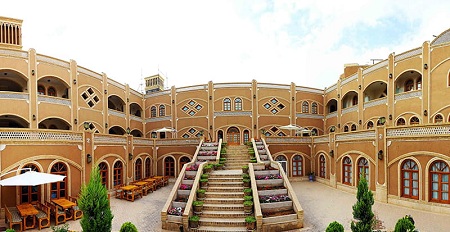

Nestled in the heart of Yazd, Iran, Lariha House stands as a breathtaking testament to traditional Persian architecture. Built in 1869 during the Qajar dynasty, this magnificent residence was named after its owner, Hajj Mohammad Ibrahim Lariha. Located on Imam Khomeini Street in the historic Fahadan neighborhood, next to the iconic Kolah Farangi Mansion, Lariha House is a must-visit destination for history and architecture enthusiasts. Registered as a national heritage site in 1996, this architectural masterpiece offers a glimpse into Iran’s rich cultural past. Join us on a journey through its stunning features with hamintour, and uncover why Lariha House is a highlight of Yazd’s heritage.
The Timeless Architecture of Lariha House
Lariha House is a shining example of Yazd’s traditional desert architecture, blending functionality with aesthetic brilliance. Spanning approximately 1,700 square meters, the house is constructed using authentic materials like clay, brick, and sarooj (a traditional mortar). These materials not only ensure durability but also harmonize with Yazd’s arid climate. The intricate designs, including ornate mirror work, colorful stained-glass windows, and hand-painted decorations, reflect the opulence of 19th-century Persian homes.
The layout incorporates classic Iranian architectural elements, such as a hashti (entrance hall) and winding corridors, which provide both privacy and elegance. The northern section of the house is designed for winter living, offering warmth, while the southern section, equipped with windcatchers, keeps the interiors cool during scorching summers. The eastern wing houses a functional kitchen and cellar, showcasing the thoughtful design that made Lariha House a comfortable residence year-round.
Islamic Design Elements in Lariha House
Lariha House beautifully integrates Islamic architectural principles, emphasizing privacy, symmetry, and connectivity between spaces. The house is divided into two distinct sections: the Andarouni (inner section) for women and family privacy, and the Birouni (outer section) for men, social gatherings, and receptions. This division reflects the cultural values of the era, ensuring seclusion for women while fostering communal spaces for guests.
The nested layout, with interconnected rooms and courtyards, creates a harmonious flow throughout the house. Delicate stucco work, geometric patterns, and vibrant frescoes adorn the interiors, showcasing the artistry of Islamic design. These elements not only elevate the aesthetic appeal but also make Lariha House a cultural treasure, inviting visitors to explore its historical significance.
Book Your Yazd Adventure with Hamintour
Ready to explore Yazd’s historic wonders? Hamintour offers seamless booking for hotels and guided tours in Yazd, ensuring a memorable visit to Lariha House and beyond. Book now to secure your spot!
Grand Entrance and Hashti of Lariha House
The entrance to Lariha House is a work of art in itself, featuring two distinct door knockers—one for men and one for women—each producing a unique sound to signal the visitor’s gender. This thoughtful design reflects the cultural emphasis on privacy. Upon entering, guests are greeted by the hashti, a transitional space that separates the bustling street from the serene interiors. The hashti serves as a waiting area, allowing the homeowner to grant permission before guests proceed to the main courtyard. Adorned with intricate tilework and elegant arches, the hashti sets the tone for the grandeur that awaits inside.
Serene Courtyards and Verandas of Lariha House
Lariha House boasts three courtyards of varying sizes, each with its own charm. The main courtyard is the heart of the house, featuring a spacious veranda where residents once enjoyed Yazd’s pleasant spring and autumn weather. Surrounding the veranda are rooms with beautifully crafted doors and colorful stained-glass windows that cast vibrant patterns across the floors. A central pond, topped with a platform, offers a tranquil spot for relaxation, where residents would gather at sunset to admire the sky and stars.
The smaller courtyard, with its single room, has a separate entrance, providing additional privacy. The courtyards are designed to maximize natural light and airflow, making them ideal for both aesthetic enjoyment and practical living.
Unique Rooms of Lariha House
With 22 uniquely designed rooms, Lariha House is a showcase of architectural diversity. Each room serves a specific purpose and is named accordingly, such as the Haft Dari (seven-door room), Panj Dari (five-door room), Se Dari (three-door room), Mirror Room, and Guest Room. The Mirror Room, in particular, is a highlight, featuring intricate mirror work that reflects light in mesmerizing patterns. The Guest Room, reserved for entertaining visitors, is adorned with lavish paintings and detailed craftsmanship, a hallmark of affluent homes in the Qajar era.
The walls and ceilings of these rooms are decorated with exquisite frescoes and stucco designs, blending Persian and Islamic artistic traditions. Each room tells a story, inviting visitors to step back in time and imagine life in this historic mansion.
Iconic Windcatchers of Lariha House
Yazd is renowned for its innovative windcatchers, and Lariha House is no exception. These architectural marvels, strategically placed throughout the house, channel cool breezes into the interiors, providing natural ventilation in Yazd’s hot climate. The most prominent windcatcher, located near the veranda, features a wooden structure that enhances both airflow and the building’s stability. These windcatchers are not only functional but also add to the house’s aesthetic charm, making them a defining feature of Yazd’s architectural heritage.
Historic Cellar of Lariha House
In an era without modern plumbing, Lariha House relied on its cellars for water storage and food preservation. The main cellar, accessed by 38 steps and plunging 6 meters underground, is a cool, spacious chamber designed to keep water fresh. Adjacent to the cellar is a basement kitchen and storage area, where food could be stored for extended periods in the naturally cool environment. These cellars highlight the ingenuity of traditional Persian architecture, blending practicality with innovation.
Visiting Hours for Lariha House
Lariha House welcomes visitors daily from 8:30 AM to 8:00 PM, except on major holidays such as Tasou’a, Ashura, the martyrdom of Imam Ja’far Sadiq, the martyrdom of Imam Ali, and the 28th of Safar. Plan your visit with hamintour to ensure a hassle-free experience, and immerse yourself in the beauty of this historic site.
Must-See Attractions Near Lariha House
Located in Yazd’s Fahadan neighborhood, Lariha House is surrounded by other iconic landmarks. Nearby attractions include:
- Ziaeye School: A historic center of learning with stunning architecture.
- Alexander’s Prison: A fascinating site steeped in history and legend.
- Amir Chakhmaq Square: A vibrant plaza known for its grand mosque and bazaar.
- Tomb of the Twelve Imams: A sacred site with intricate designs.
After exploring Lariha House, unwind at nearby luxury accommodations like Kourosh Hotel or Fahadan Museum Hotel, offering comfort and authentic Persian hospitality.
Why Lariha House Captivates Visitors
Lariha House is more than just a historic residence—it’s a window into Iran’s cultural and architectural heritage. From its elegant entrance and tranquil courtyards to its ornate rooms and innovative windcatchers, every corner of the house tells a story of craftsmanship and tradition. The blend of Persian and Islamic design elements, combined with practical features like cellars and windcatchers, makes Lariha House a standout destination in Yazd.
Whether you’re a history buff, an architecture enthusiast, or a traveler seeking unique experiences, Lariha House offers something for everyone. Pair your visit with a stay at one of Yazd’s top hotels, booked through hamintour, and explore nearby attractions like Ziaeye School and Amir Chakhmaq Square for a complete cultural adventure.
Frequently Asked Questions
Where is Lariha House located?
Lariha House is situated on Imam Khomeini Street in the Fahadan neighborhood of Yazd, Iran, next to the Kolah Farangi Mansion.
What are the main sections of Lariha House?
The house features an Andarouni (inner section for women), Birouni (outer section for men and gatherings), courtyards, verandas, windcatchers, cellars, and 22 uniquely designed rooms.
When can I visit Lariha House?
The house is open daily from 8:30 AM to 8:00 PM, except on major holidays like Tasou’a, Ashura, and certain Islamic observances.
What attractions are near Lariha House?
Nearby sites include Ziaeye School, Alexander’s Prison, Amir Chakhmaq Square, and the Tomb of the Twelve Imams.