

Hafez Tomb: A Guide to the Renowned Poet’s Resting Place in Shiraz
Hafez Shirazi, a beloved Persian poet of the 14th century (8th century AH), is renowned worldwide for his exquisite ghazals (lyrical poems). Today, the tomb of this celebrated poet has become one of the top tourist attractions in Shiraz, drawing visitors from across Iran and around the globe. The spiritual ambiance of Hafez Tomb offers visitors a rejuvenating experience and creates unforgettable moments. Join us in this article as we provide a comprehensive guide to Hafez Tomb in Shiraz.
Hafez Tomb in Shiraz
Khwaja Shams al-Din Muhammad Hafez Shirazi, one of Iran’s greatest poets, lived in the 14th century (8th century AH). Known as “Lisān al-Ghayb” (The Tongue of the Unseen), his beautiful ghazals have earned international acclaim. To honor this iconic poet, a magnificent tomb was constructed in Shiraz, now famously known as Hafezieh (Hafez Tomb).
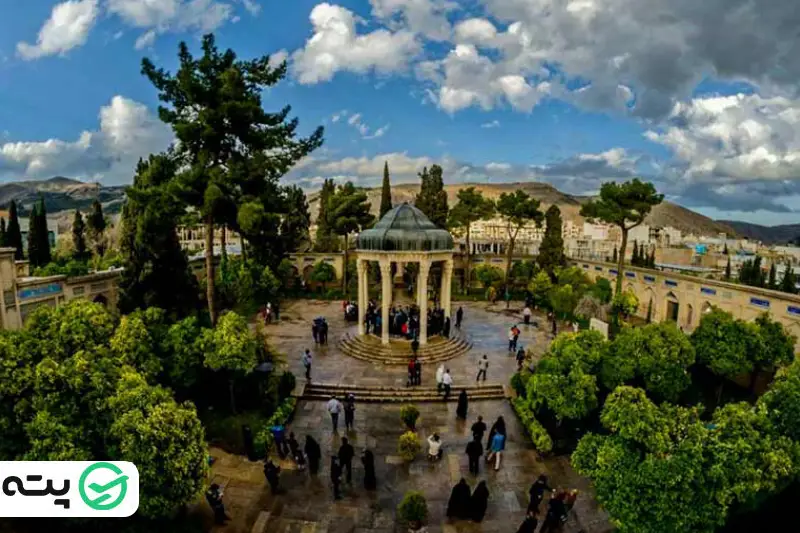
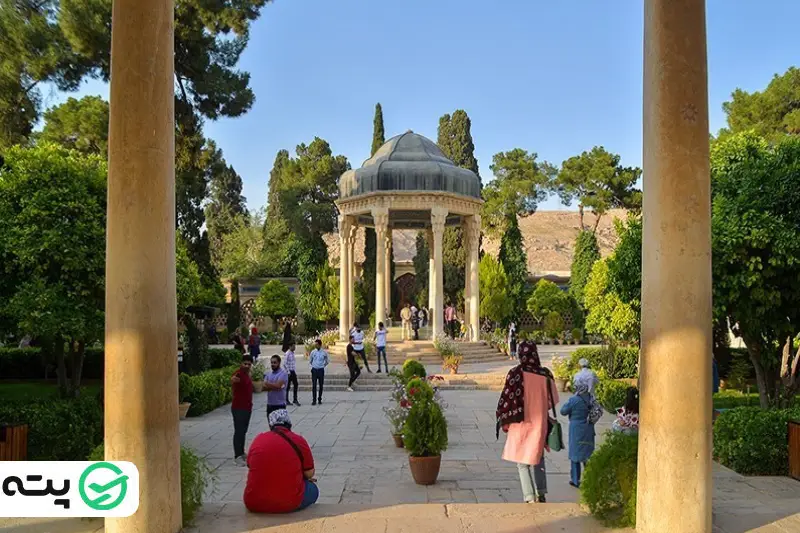
Situated in a vast, lush garden spanning approximately two hectares, Hafez Tomb is among the most picturesque attractions in Shiraz. This historic site is not only a symbol of literary and cultural heritage but also an architectural masterpiece.
Each year, millions of visitors come to Shiraz to pay homage to Hafez. Beyond the poet’s grave, the site features stunning architectural structures and beautifully landscaped gardens. Due to its cultural and artistic significance, Hafez Tomb was registered as a national heritage site of Iran in 1975 (1354 SH) with the registration number 1009.
History of Hafez Tomb in Shiraz
Hafez Tomb (Hafezieh) in Shiraz boasts a rich history and has undergone many transformations over the centuries. Hafez Shirazi passed away in 1390 AD (792 AH), yet no tomb was constructed for him for 64 years. Finally, in 1452 AD (856 AH), during the reign of Mirza Abul-Qasim Gurkani, the governor of Fars, and under the orders of his minister, Muhammad Yaghmai, the first mausoleum was built for the poet. This early structure featured a domed design with a pool in the garden fed by the Ruknabad River. Over the years, the tomb has been restored and renovated multiple times.
Key Renovations Through the Centuries
- Safavid Era (17th Century, 11th Century AH): Under Shah Abbas I, initial restorations were made to the tomb.
- Afsharid Era (18th Century): During the reign of Nader Shah Afshar, the tomb saw further repairs and enhancements.
- Zand Era (18th Century): Karim Khan Zand took special interest in Hafez Tomb, constructing a grand mausoleum surrounded by four columns and two rooms on either side. He adorned the tombstone with marble and expanded the garden in front of the mausoleum.
Modern Transformations
- Qajar Period (19th Century): In 1856 AD (1235 SH), Abu’l-Fazl Mirza Mu’ayyad al-Dawlah, governor of Fars, initiated further renovations. In 1878 AD (1257 SH), Farhad Mirza Mo’tamad al-Dawlah commissioned the construction of a wooden and iron canopy over the tomb.
- Controversy in 1899 AD (1278 SH): A Zoroastrian named Mulla Shah Jahan visited the tomb and was inspired by Hafez’s divination to build a majestic mausoleum. However, Seyyed Ali Akbar Fal Asiri, a political and religious leader, ordered the structure’s demolition, claiming that it was inappropriate for a Zoroastrian to build a Muslim poet’s tomb. This event left visible damage on the tombstone, which remains evident to this day.
Pahlavi Era and Beyond
- 1931 AD (1310 SH): A large gate was added to the southern wall of the tomb complex by Farajollah Bahrami, the governor of Fars. He also revived the orange grove to the north and constructed a street named Khurrabat in front of the tomb.
- 1935–1937 AD (1314–1316 SH): Colonel Ali Riyazi, the head of Fars’ Department of Culture, led another significant restoration based on designs by André Godard, a French architect. Inspired by Zand-era architecture, this redesign divided the complex into two sections: the tomb in the north and a garden in the south.
- 2007 AD (1386 SH): The last major restoration included cleaning the dome, repairing surrounding buildings, and integrating the tomb with nearby gardens.
Architectural Legacy
Hafez Tomb today reflects centuries of architectural evolution, combining Persian artistry with modern elements. Its historical significance, coupled with its cultural and literary legacy, makes it one of the most iconic landmarks in Shiraz, attracting millions of visitors each year.
Architecture of Hafez Tomb
The Hafez Tomb complex in Shiraz spans an area of 2 hectares and is divided into two main sections: northern and southern. These sections are separated by the Karim Khan Zand Hall, a notable architectural feature. The complex includes four entrances, with the main entrance located on the southern side. Additional entrances are situated on the western and eastern sides of the site.
The tomb of Hafez is located in the northern section, while the western and eastern parts of the complex house other notable graves and mausoleums belonging to poets and distinguished figures of Shiraz.
Sections of Hafez Tomb: Design and Architecture
The current design of Hafez Tomb is the work of André Godard, a renowned French architect and archaeologist. Godard, who came to Iran in 1928 (1307 SH) at the invitation of Reza Shah Pahlavi, was inspired by elements of Zand-era architecture for this project. Beyond Hafez Tomb, Godard contributed to several other significant architectural and archaeological works in Iran.
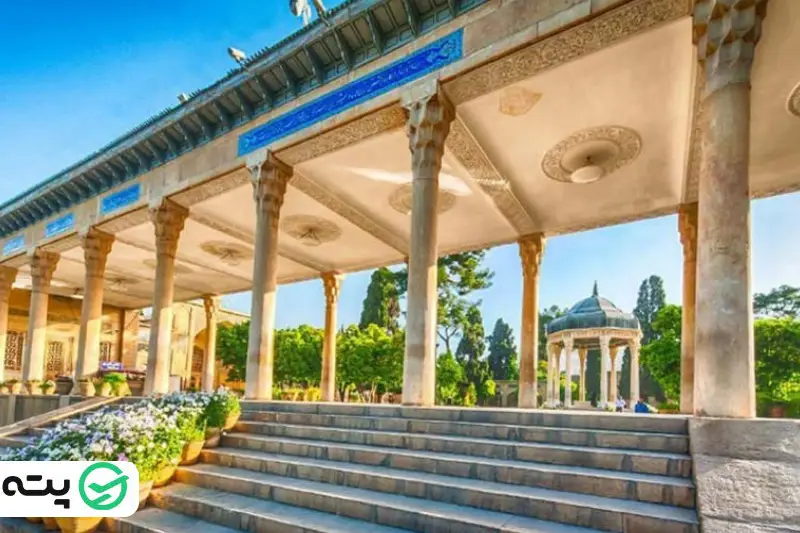
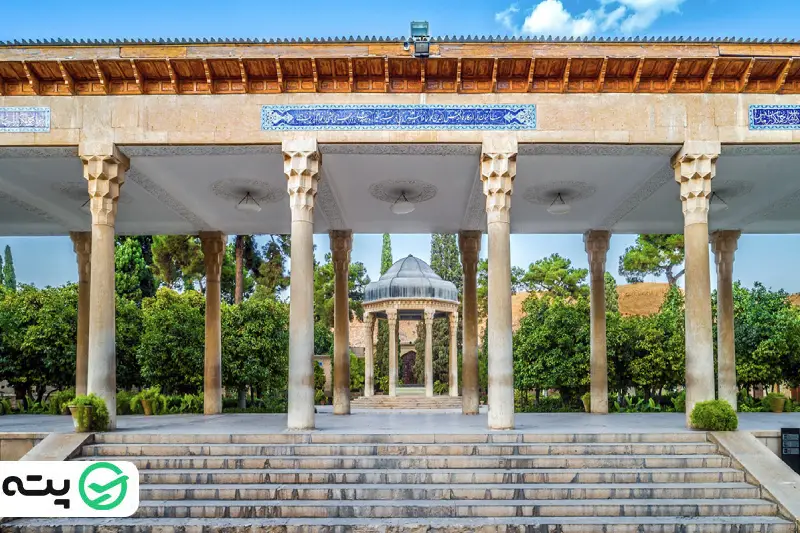
In his design for the Hafez Tomb, Godard added 16 columns to the existing four columns of the Karim Khan Zand Hall, bringing the total to 20 stone columns. The hall stretches 56 meters in length and serves as a central feature of the complex.
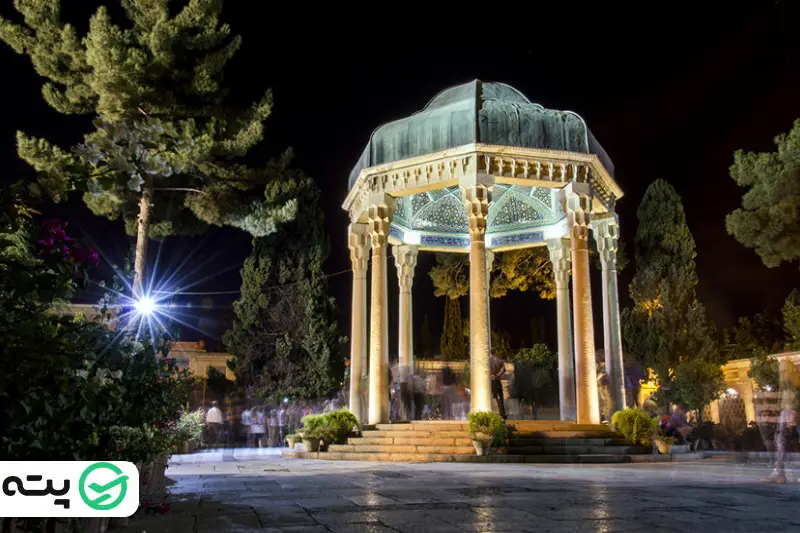
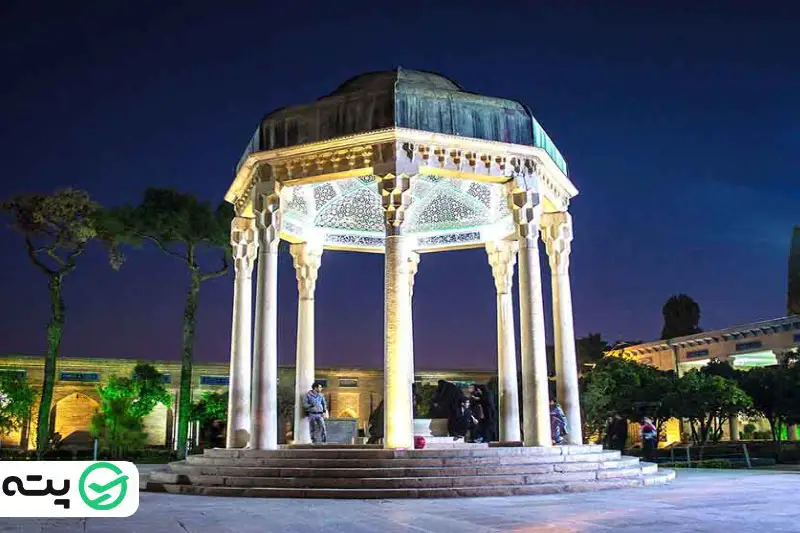
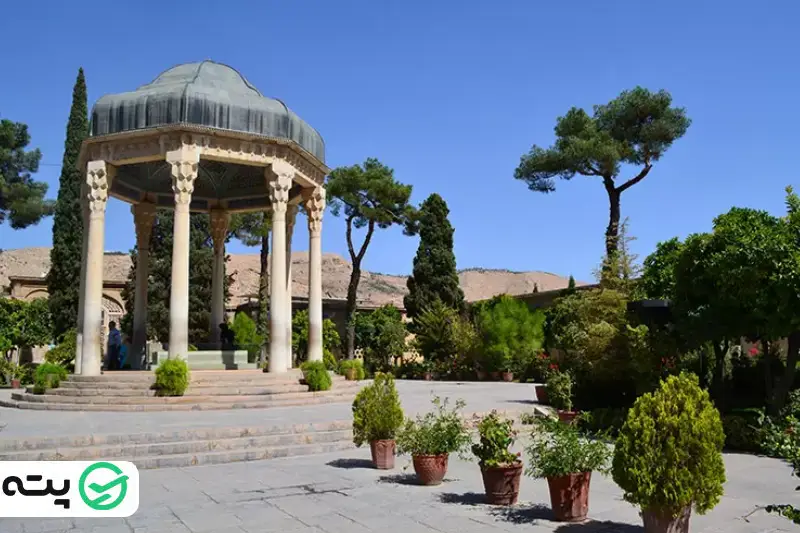
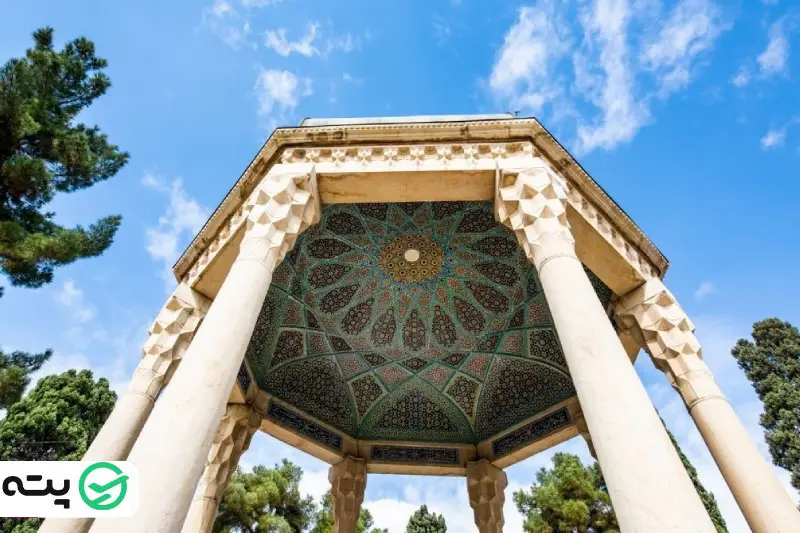
One of the most striking elements of the design is the dome above Hafez’s grave, constructed in the style of a “Kolāh Farangi” (traditional Persian pavilion). This dome is surrounded by the columns, enhancing the elegance and prominence of the tomb while symbolizing the eternal legacy of the poet.
Key Architectural Features
- Columns: The integration of 20 stone columns highlights a blend of simplicity and grandeur, characteristic of Zand-era influences.
- Dome Design: The pavilion-style dome is a significant visual centerpiece, designed to reflect Persian architectural aesthetics and provide a harmonious connection to the surrounding gardens.
- Spatial Layout: The division of the northern and southern sections ensures a balanced design, creating a spiritual journey for visitors as they move through the complex.
The thoughtful architectural design of Hafez Tomb captures the poetic spirit of Hafez Shirazi while offering a serene environment that continues to inspire visitors from around the world.
Entering the Southern Courtyard of Hafez Tomb
As you step into Hafez Tomb in Shiraz, the first area you will encounter is the southern courtyard, which stretches up to the central hall. This courtyard occupies one hectare of the complex and measures 150 meters in length and 80 meters in width. It is connected to the hall by 18 steps, descending approximately 4 meters below the hall’s floor level.
Key Features of the Southern Courtyard
- Central Garden Pathway:
A narrow, elevated flowerbed runs through the center of the courtyard, guiding visitors toward the portico. This beautifully landscaped feature adds a sense of direction and elegance to the courtyard. - Orange Grove (Narenjestan):
On either side of the central garden pathway lies a lush orange grove, measuring 35 by 70 meters. The intoxicating fragrance of orange blossoms, especially during the spring, creates an unforgettable sensory experience.
The southern courtyard serves as a tranquil and inviting entryway, setting the tone for the spiritual and cultural exploration of Hafez Tomb. It is a perfect prelude to the mesmerizing beauty and poetic essence of the northern section of the complex.
The Qavam Family Tomb
The Qavam Family Tomb (Qavam al-Saltaneh) is located within the Hafezieh complex in Shiraz. This tomb is situated to the left of the Hafezieh Portico, housed in a large room. On either side of this tomb, there are two additional rooms.
Surrounding Rooms and Their Functions
The tomb is surrounded by various other rooms that serve as workshops for traditional Iranian arts, including:
- Enameling (Minasazi)
- Miniature Painting
- Traditional Painting
- Wood Inlay (Moarraq-Sazi)
These workshops contribute to the cultural and artistic atmosphere of the Hafezieh complex, offering visitors a glimpse into the rich craftsmanship and artistic heritage of Shiraz.
Passing Through the Portico to the Northern Courtyard
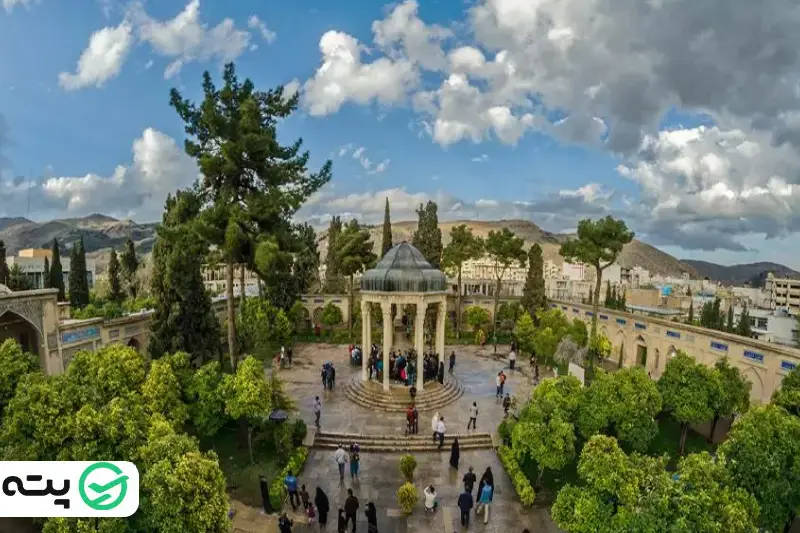
After visiting the Hafezieh Portico in Shiraz, you will enter the northern courtyard, home to the tomb of Hafez. This serene area is surrounded by two large pools and lush orange trees, creating a tranquil and picturesque setting.
Features of the Northern Courtyard
- Dimensions and Landscape:
The northern courtyard spans 50 by 60 meters, featuring beautifully arranged gardens with towering cypress, pine, and orange trees that enhance its natural charm. - Key Attractions:
- Hafez Research Center:
A dedicated building for Hafez studies, covering an area of 330 square meters, located within the courtyard. - Library:
A library housing 10,000 volumes over an area of 440 square meters, ideal for literary enthusiasts. - Cultural Products Store:
Situated on the eastern side, this shop offers a variety of cultural and literary items. - Traditional Tea House:
Located on the western side, the tea house provides a relaxing spot to enjoy traditional Persian tea while soaking in the poetic ambiance.
- Hafez Research Center:
The northern courtyard serves as the spiritual and cultural heart of the Hafezieh complex, offering visitors an immersive experience of Persian poetry, architecture, and hospitality.
The Tomb of Hafez in the Northern Courtyard
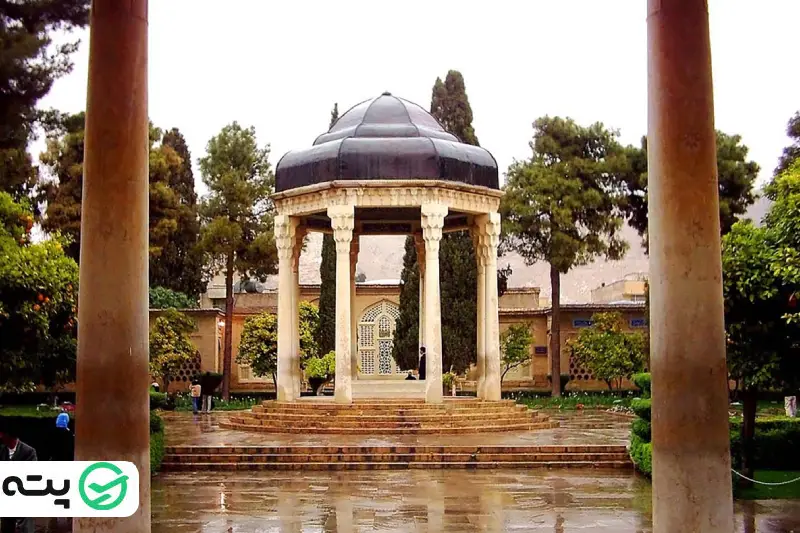
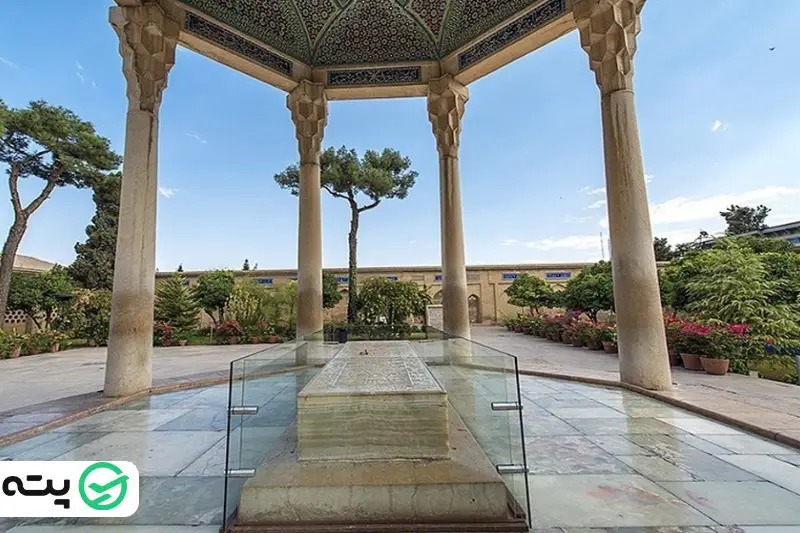
The most important feature of Hafez Tomb in Shiraz is the tomb of Hafez, located at the center of the northern courtyard. The tomb is positioned about one meter above ground level, and circular steps surround it, allowing visitors to ascend to the grave itself.
Key Architectural Features
- Dome:
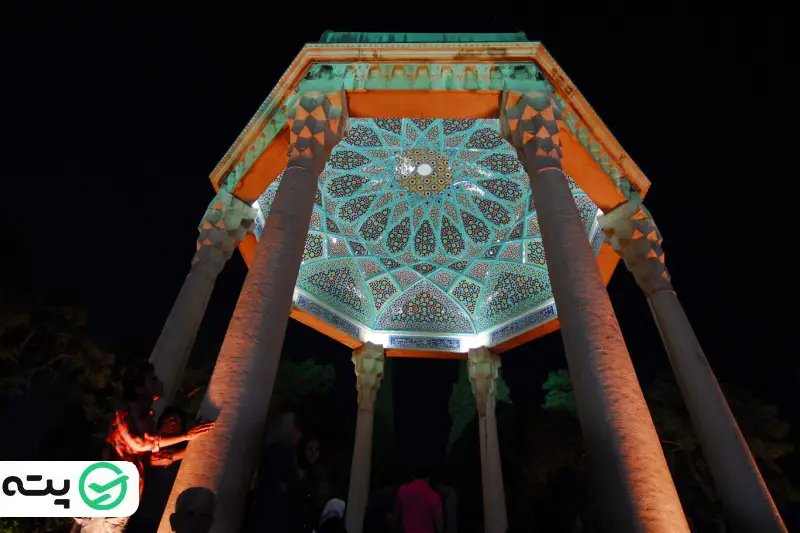
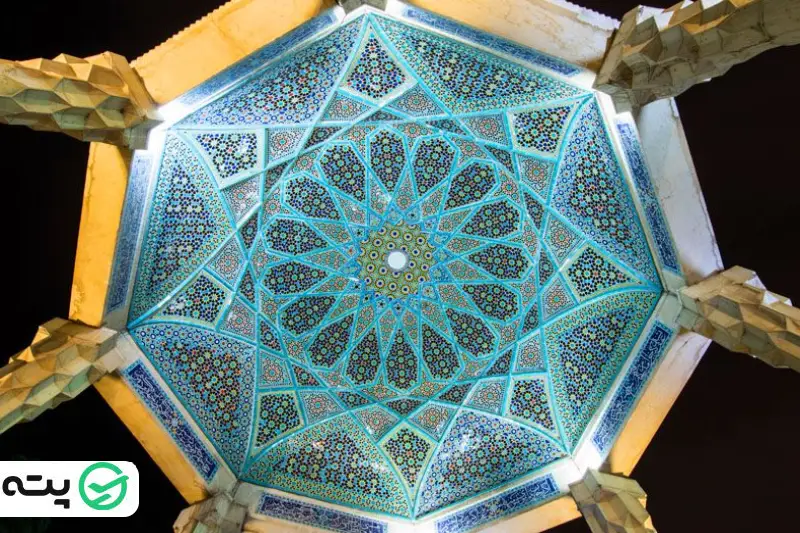
The most striking part of the tomb is its dome, which captivates all who view it. The exterior of the dome is covered in copper sheets, giving it a green hue that complements the surrounding landscape. - Mosaic Tiles:
Beneath the dome, colored mosaic tiles form intricate patterns, expertly crafted and arranged in an artistic display that adds to the tomb’s grandeur. - Columns:
The dome is supported by 8 stone columns, each standing 5 meters tall, which enhance the stability and beauty of the structure. - Inscriptions:
On the ceiling of the tomb, eight verses from Hafez’s ghazals are inscribed in Thuluth script, adding an intellectual and spiritual depth to the space. Beautiful ghazals by Hafez are also written on the tombstone itself in Nastaliq script, connecting the poet’s words directly with visitors.
The tomb of Hafez stands as a powerful symbol of Persian literature and artistry, combining exquisite craftsmanship with poetic beauty that honors the legacy of one of Iran’s greatest poets.
Other Tombs Surrounding Hafez Tomb
In ancient times, the northern courtyard of Hafez Tomb was used as a public cemetery. However, today it serves as the sacred space surrounding the tomb of Hafez. Despite this, there are several other graves located around the tomb, honoring notable figures.
Notable Figures Buried Near Hafez’s Tomb
Some of the most prominent individuals laid to rest near Hafez’s tomb include:
- Sheikh Mohammad Ahli Shirazi
- Mohammad Nasiri al-Hosseini
- Qutb al-Arifin Agha Mohammad Hashim Zahabi Shirazi
- Haj Mulla Ali Semnani
- Sheikh Mohammad Mahdi Kajouri
- Sheikh Mohammad Hassan Kajouri
- Haj Seyyed Mohammad Ali Kazerooni Shirazi
These individuals were influential poets, scholars, and theologians in Iran, holding great respect among the people of Shiraz. Their proximity to Hafez’s tomb highlights their importance in Persian culture and their connection to the city’s literary and intellectual legacy.
Western Courtyard and Poet’s Tombs
The northern courtyard of Hafez Tomb in Shiraz is divided into two sections: the western and eastern courtyards. The western courtyard is known for its lush greenery and scenic beauty, with a small pond at its center. This area houses several tombs belonging to poets, scholars, writers, university professors, and artists. Some of the most prominent individuals buried here include:
- Gholamhossein Saheb Divani (Politician during the Pahlavi era)
- Dr. Lotfali Soretgar (Poet)
- Dr. Mehdi Hamidi Shirazi (Poet and University Professor)
- Dr. Abdulwahab Noorani Vesal (University Professor)
- Rasoul Parvizi (Writer)
- Dr. Ali Mohammad Mojdeh (University Professor)
- Professor Javad Mosleh (Philosopher)
- Professor Hamid Deyrin (Founder and Head of the Calligraphers’ Association of Fars)
- Mohammad Khalil Rajaei (Professor of Philosophy and Literature)
- Professor Nooruddin Rezavi Sarvestani (Prominent figure in classical Iranian music)
- Dr. Seyyed Abotaleb Fanaei (Writer)
These figures contributed significantly to the cultural, literary, and academic landscapes of Iran, and their graves in this section of the courtyard reflect their lasting influence.
Eastern Courtyard
The eastern courtyard of the northern section is distinguished by a wall with 14 arches, on which ghazals by Hafez are inscribed in Thuluth script. Behind this wall lie the tombs of the Farbad family and Moeed al-Din. These tombs were added to the Hafez Tomb complex by the Cultural Heritage Organization in 2007 (1386 in the Persian calendar).
Symbolism in Hafez Tomb
Hafez Tomb in Shiraz is not just a tourist attraction; it is a place deeply intertwined with mysticism and culture. Within this sacred space, numerous symbols and signs are present, each with its own significance.
The First Symbol: The Symbol of Captivity
The first symbol you encounter before entering Hafez Tomb is the symbol of captivity. Despite the grandness of the complex, located on one of the busy streets of Shiraz, the tomb itself is not immediately visible. This represents the material world and the captivity of the soul within earthly life. The external street, where the tomb is situated, serves as a metaphor for the worldly distractions that obscure the spiritual realm. Only upon entering the complex does one encounter the sacred tomb of Hafez, symbolizing the transition from the physical world to the mystical and eternal, where the true essence of Hafez’s teachings can be found.
The Second Symbol: The Southern Courtyard
The second symbol is found in the southern courtyard of Hafez Tomb, which represents the material world. As you pass through this area, you move closer to the main hall (the Raqa) of Hafez Tomb, where you will gain a deeper understanding of mystical thoughts and philosophies. The southern courtyard serves as a symbolic passage from the material world to the spiritual realm, preparing you for a more profound experience inside the tomb complex.
The Third Symbol: The Tomb of Hafez as the Symbol of the Sun
As you ascend the stairs leading to the hall, you encounter the tomb of Hafez, which is symbolic of the sun. The act of ascending the stairs is metaphorically aligned with reaching the spiritual enlightenment represented by the sun. Conversely, descending the stairs symbolizes an act of reverence towards the sun, showing humility in the face of divine light.
Interestingly, each side of the hall features nine steps, and the number nine in Persian literature is associated with the heavens and sacredness. This numerological symbolism reflects the elevated spiritual significance of Hafez’s poetry and wisdom, linking the poet’s legacy to divine truths.
-
The Symbol of the Celestial Realm
As you move from the hall to the northern courtyard, you enter the symbol of the celestial realm (Malakut). The eight columns supporting Hafez’s tomb symbolize life and the eight gates of heaven, representing the spiritual ascent and connection to divine truths.
Cost and Time for Visiting Hafez Tomb
A visit to Hafez Tomb in Shiraz typically takes 1 to 2 hours. Tickets must be purchased for entry, with the cost being 5,000 IRR for domestic tourists and 50,000 IRR for international tourists. The tomb is open to all visitors during the following hours:
- From March to September: 8:30 AM to 11:30 PM
- From October to February: 8:00 AM to 10:30 PM
These timings ensure ample opportunity for tourists to explore the sacred site.
How to Get to Hafez Tomb in Shiraz?
Hafez Tomb is located in Shiraz, Fars Province, between the Adabiyat Square and Hafeziyeh Square, directly across from the Hafez Stadium. It is only a 3-minute drive from Darvazeh-e Quran (Quran Gate).
If you are driving your own car, head towards Chaharmahal Boulevard and continue toward Adabiyat Square. Once you reach the square, turn right, and you will find the entrance to the tomb opposite the Hafez Stadium.
For those using public transportation, you can use the following routes:
- Bus:
- From Shahid Dastgheib Terminal to Boulevard Narenjestan
- From Shahid Dastgheib Terminal to Narenjestan Terminal
- From Golestan Square to Namazi Terminal
Alight at the Hafeziyeh bus station.
- Metro:
Take the metro from anywhere in Shiraz and disembark at the Zandieh Station. From there, use one of the above bus routes to reach the Hafeziyeh bus station.
These directions will help you reach the tomb efficiently and enjoy your visit to this historic and spiritual site.
Nearby Attractions to Hafez Tomb in Shiraz
Shiraz, a city rich in culture and history, offers numerous attractions in addition to Hafez Tomb. Here are some must-see spots you should consider visiting during your trip:
Bagh-e-Jahan-Nama (Jahan-Nama Garden)
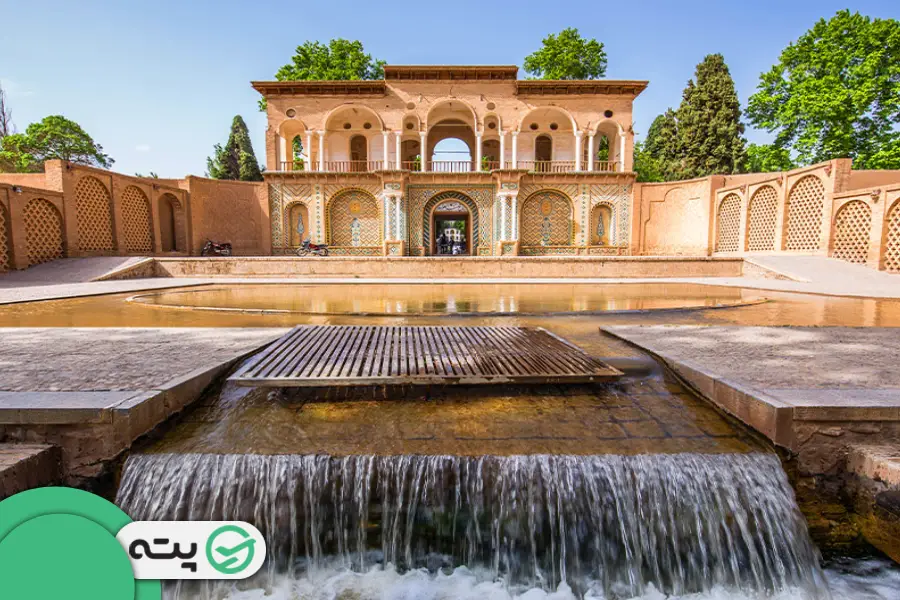
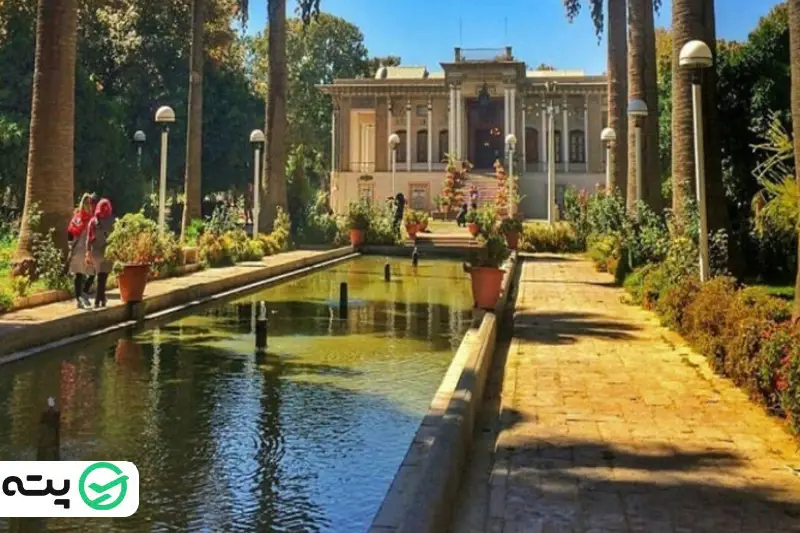
One of the oldest and most beautiful gardens in Iran, Bagh-e-Jahan-Nama is a perfect place for a relaxing walk amidst lush greenery and pleasant weather. Located just 950 meters away from Hafez Tomb, it takes around 10 minutes to walk from the tomb to the garden. This charming garden provides an ideal environment to enjoy nature and the serene atmosphere of Shiraz.
-
Museum of Haft-Tanan (Seven Saints Museum)
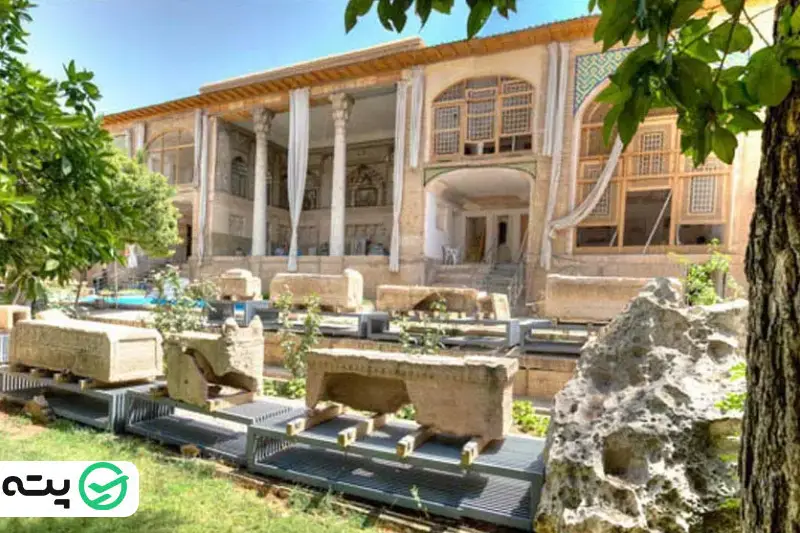
Another remarkable attraction in Shiraz is the Museum of Haft-Tanan, which dates back to the Zandieh era. This museum houses a collection of ceramics and stone artifacts, tombs of mystics, stunning paintings, and other valuable historical items. It is located just 1 kilometer from Hafez Tomb, making it a great spot to visit nearby and immerse yourself in the rich cultural heritage of Shiraz.
-
Nasir al-Mulk Mosque
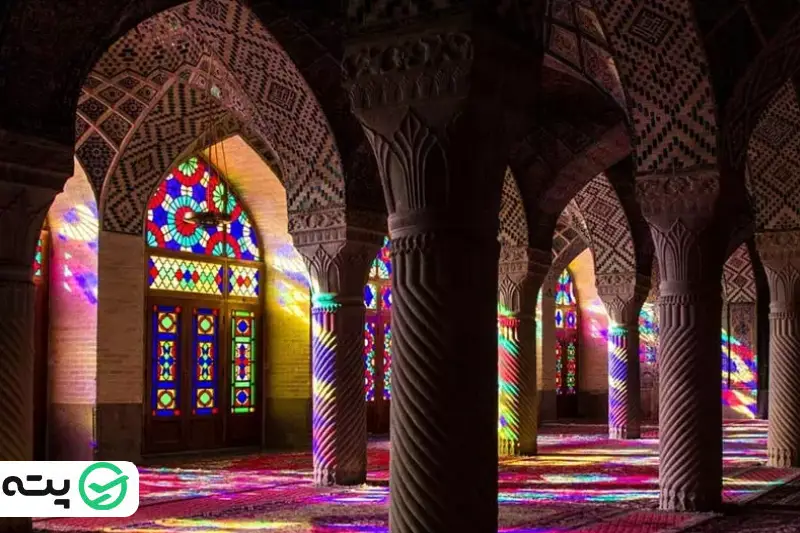
Located 5 kilometers from Hafez Tomb, one of the most stunning landmarks in Shiraz is the Nasir al-Mulk Mosque. Known for its intricate stained glass windows and vibrant tiles, this mosque is a photographer’s paradise, offering incredible opportunities to capture its colorful beauty, especially in the morning light.
Other nearby attractions to Hafez Tomb include:
- Darvazeh-e Quran (Quran Gate)
- Kuhpaaya Park
- Saadi Tomb
- Eram Garden
- Narenjestan Garden
These are all great sites to explore and enhance your experience while visiting the Hafez Tomb area.
Best Time to Visit Hafez Tomb
The best time to visit Hafez Tomb in Shiraz is during the spring season, particularly in April and May. During these months, Shiraz experiences pleasant weather, and the city looks its most beautiful. The fragrant scent of orange blossoms in Hafeziyeh will enchant you, creating one of the most delightful experiences of your life.
One of the busiest days for visiting Hafez Tomb is on the Hafez Day, which falls on October 11th. However, if you’re looking to enjoy the place in a quieter setting, it is recommended to visit on other days. Hafez Tomb is a beautiful destination to explore year-round, and you can visit it at any time that suits you.
Introduction to Hafez Shirazi
Hafez, or Khajeh Shams al-Din Mohammad bin Bahā’ al-Din Hafez Shirazi, is one of the most celebrated poets and mystics in Persian literature, renowned worldwide. Born in 727 AH (1327 CE), he lived his entire life in Shiraz, Iran, and passed away in 792 AH (1390 CE). Hafez is recognized as one of the greatest poets of the Persian language, and his works have influenced generations of readers and scholars.
Hafez is often referred to by the title “Lisān al-Ghayb” (The Tongue of the Unseen), reflecting his mystical insights and profound understanding of the unseen world. He is also known by other epithets, including “Tarjumān al-Asrār” (Interpreter of Secrets), “Nāẓim al-Awliyā” (Organizer of Saints), and “Lisān al-‘Urfā” (The Tongue of the Mystics). His poetry, particularly his ghazals (lyric poems), has left a deep impact on Persian culture and is admired not only in Iran but also across the world.
Hafez’s popularity peaked in the 18th and 19th centuries, when his works were translated into European languages and became a source of inspiration in Western literary circles. Even today, Hafez is considered a symbol of Persian culture and literary excellence. Every year on October 11th (20th of Mehr in the Persian calendar), a grand ceremony is held at Hafeziyeh in Shiraz to honor his memory and contributions to Persian literature.
Tombstone and Mausoleum of Hafez Shirazi
The tombstone of Hafez is made of pure white marble, placed on his grave by Karin Khan Zand, the ruler of Fars during the Zand dynasty. The tombstone is about half a meter in height, and verses from Hafez’s ghazals are carved around the stone. These verses are inscribed in Nasta’liq script, the renowned Persian calligraphy, and were engraved by Hāj Āghāzī Bīgh Afshār Azerbaijani, a skilled engraver from the Zand period.
Final Words
Hafez Tomb is one of the most beautiful tourist attractions in Shiraz, and this article provided a complete introduction to it. Visiting this sacred and historical site, especially while reading Hafez’s poetry in the peaceful and spiritual atmosphere, is an unforgettable experience. If you haven’t visited Hafez’s tomb yet, it is highly recommended to do so at least once and enjoy its tranquility and beauty. We hope your visit to Hafez Tomb brings you joy and memorable moments with your family and friends.
Frequently Asked Questions
- Where is Hafez Tomb located? Hafez Tomb is located in Fars Province, Shiraz, between Adabiyat Square and Hafeziyeh, across from Hafeziyeh Sports Stadium.
- Who designed Hafez Tomb? Hafez Tomb was designed by André Godard, a French architect and archaeologist.
- What is the best time to visit Hafez Tomb? The best time to visit Hafez Tomb is during spring, especially in the months of March (Farvardin) and April (Ordibehesht).
- How much time is needed to visit Hafez Tomb? About one to two hours is enough to explore the entire Hafez Tomb complex.