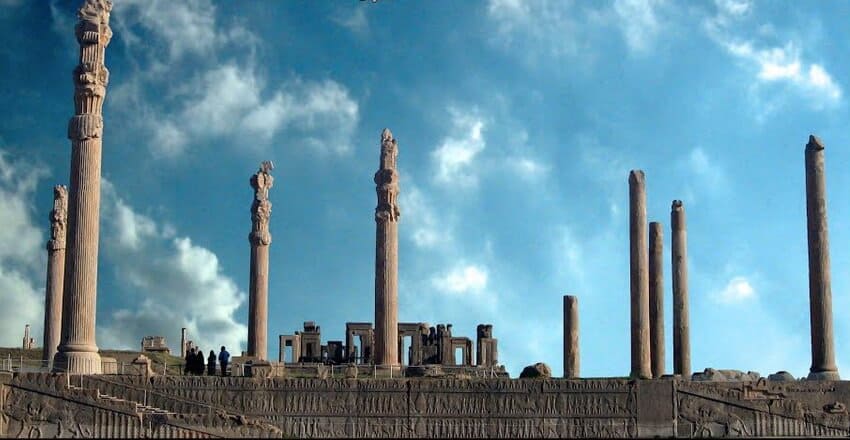

Whether you’re a travel enthusiast or not, you’ve likely heard of Persepolis; an ancient and magnificent city that served as the ceremonial capital of Persia during the Achaemenid Empire. Each year, thousands of visitors, both domestic and international, travel to Shiraz to explore this iconic site. If you’re wondering where Persepolis is located or want to learn more about its history and everything related to it, stay with Hamintour until the end of this article.
How old is Persepolis?
This monument was built in 518 BC, making it over 2,500 years old.
Where is Persepolis located?
This historical site is located 11 kilometers northeast of Marvdasht and 70 kilometers northeast of Shiraz in Fars Province.
What are the main sections of Persepolis?
Persepolis includes several notable sections such as the Entrance Stairway and Gate of Nations, the Apadana Palace, the Palace of 100 Columns, the Tachara Palace, the H Palace, the Hadish Palace, the Queen’s Palace, the Three-Door Palace, the Tombs of Artaxerxes II and III, and more.
What is the area of Persepolis?
The area of Persepolis is 125,000 square meters.
Where is Persepolis?
Persepolis, also known as “Parseh,” was the ceremonial capital of the Achaemenid Kings. Its distinctive and expansive architecture reflects the rich history of Iran and showcases the remarkable abilities of Persian engineers.

Where is Persepolis and how far is it from Shiraz?
To visit Persepolis, you need to head to Fars Province and the Marvdasht County. This county is approximately 57 kilometers away from Shiraz, and you can find Persepolis at the foothills of a mountain called “Rahmat,” which was previously known by other names such as “Mithra” and “Mehr,” located about 10 kilometers north of Marvdasht.
Persepolis is built on a platform that rises 8 to 18 meters above the Marvdasht plain. It has several main sections, including ceremonial palaces, smaller private palaces, the royal treasury, and fortifications with defensive walls.
Persepolis Address on Google Maps
Where does the name Persepolis come from?
The original name of this ancient city is “Parseh,” because during the Achaemenid period, the Persian people (Pārsa) inhabited this region. Later, the Greeks used other names like “Persopolis” or “Persepolis,” which means “city of Parseh.” During the Sassanid era, Persepolis was also referred to as “Sadd-e-Sotoun” or “Hundred Columns.”
Throughout different periods, this monument was known by various other names, including “Chehel Minar” and “Takhteh Sulaiman” (Throne of Solomon).

Hundreds of years later, when the Achaemenid Empire was forgotten, people were unable to read the cuneiform inscriptions on the tablets. They believed that this structure was the “Throne of Jamshid” mentioned in the Shahnameh. Therefore, they referred to it as “Takhte Jamshid” (Persepolis).
Researchers believe that during the Sassanid period, the name Jamshid was attributed to this monument. Many years later, European scholars discovered that “Persopolis,” mentioned by the famous Greek historian Herodotus, was the same as Persepolis.
It is worth mentioning that Jamshid was one of Iran’s legendary kings and held a special place among the people of his time. The name “Takhte Jamshid” has appeared in the UNESCO World Heritage list since 1979.
History of Persepolis
Before we dive into introducing the magnificent palaces and halls of Persepolis, let’s discuss its history and the rulers who governed it.
According to existing records, the construction of this grand historical monument began around 500 BC under the command of King Darius the Great and took about 150 years (or, according to another source, 120 years) to complete all its sections.
In fact, Darius’s son and grandson, Xerxes I and Artaxerxes I, expanded the ancient city by adding several new buildings and structures to the original complex. Some researchers even believe that Persepolis was still under development and expansion until the end of the Achaemenid Empire.

One of the most remarkable features of Persepolis is its vast area of nearly 125,000 square meters, along with the inscriptions, carvings, and ancient artifacts that are rarely found elsewhere. The inscriptions discovered at Persepolis provide valuable insights into the rich and vibrant history of Iran. Additionally, the stunning architecture of this complex showcases the exceptional skills and artistry of Iranian architects.
Interestingly, the design of this complex clearly reflects the cultural and artistic influences of other civilizations such as the Medes, Babylonians, Greeks, and Egyptians, as they were all once under the rule of the Achaemenids.
Darius the Great had a single goal in constructing this complex: to build a capital that would be unique in his empire, and fortunately, he was completely successful in achieving this. Evidence also suggests that Darius, unlike the Egyptian pharaohs who used slaves to build the pyramids, did not solely rely on people and engineers as mere slaves to construct this grand complex.
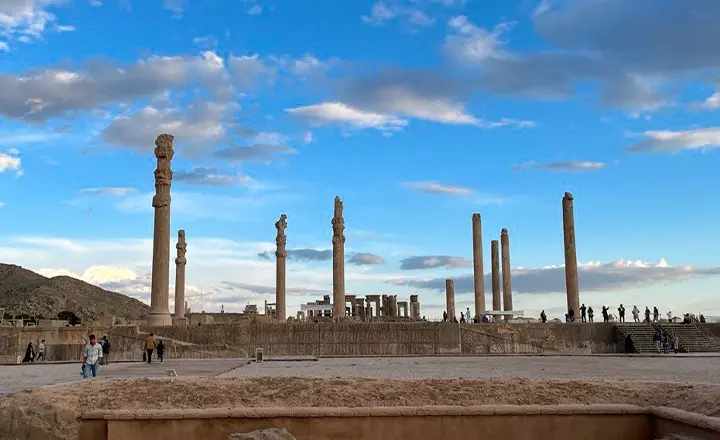
Photo by: Saadatrent website
In fact, the mud bricks discovered in 1933 during excavation in the northern part of Persepolis prove that all the architects, master craftsmen, carpenters, stonemasons, and construction workers who participated in the creation of this complex were paid and had worker’s compensation.
Who set fire to Persepolis?
One name that always comes up in the history books and discussions about the fate of Persepolis is Alexander the Great. I believe that just because a name is often mentioned doesn’t mean that person is always to blame. Many times, it’s necessary to look for clues that point to others who contributed to the event alongside that individual.
The story of Alexander and Persepolis is similar. When it comes to the burning of the Persian capital during the Achaemenid period after its conquest, one cannot overlook the actions of Xerxes after the conquest of Greek cities, nor can we ignore the role of Alexander’s companions. Historical records often mention that Alexander himself admired Iranian culture and its circumstances.
Nevertheless, there are several names and historical events that can be associated with those who set fire to Persepolis. It’s worth noting, though, that many historians believe the fire was accidental. These are, after all, historical theories, and there is often no concrete evidence to prove one theory is more accurate than another.
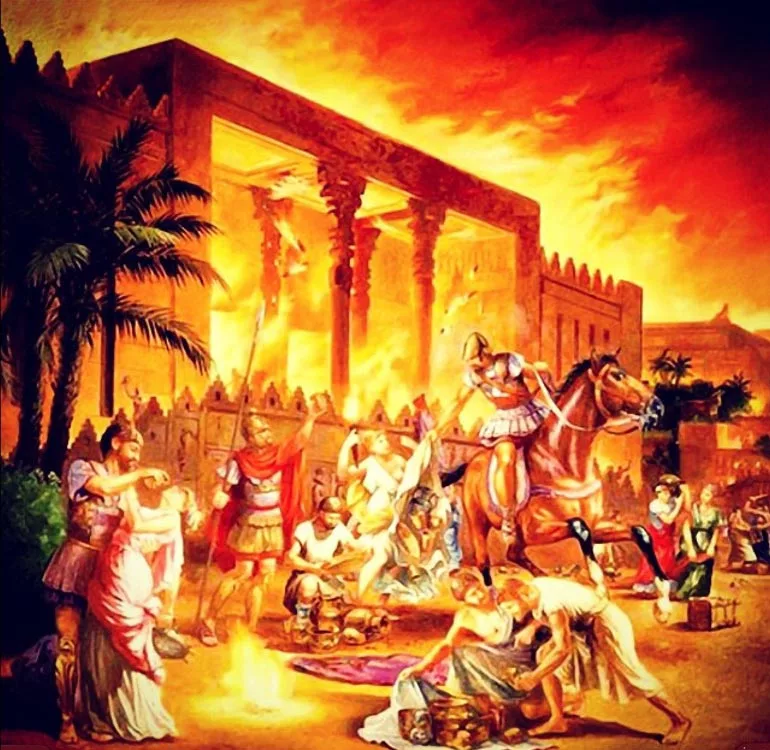

Between 499 and 449 BCE, a fierce war took place between the Iranians and the Greeks. Finally, in 330 BCE, Alexander the Great, with his military campaign to Marvdasht, ended the illustrious Achaemenid Empire by setting fire to Persepolis.
There are multiple accounts of the reasons behind Alexander’s attack on Marvdasht. Some say he did it to break the pride of the Iranians, as the command for the attack on Greece had been issued from Persepolis (or Parasa). Later, another story emerged, suggesting that the burning of Persepolis was attributed to his lover.
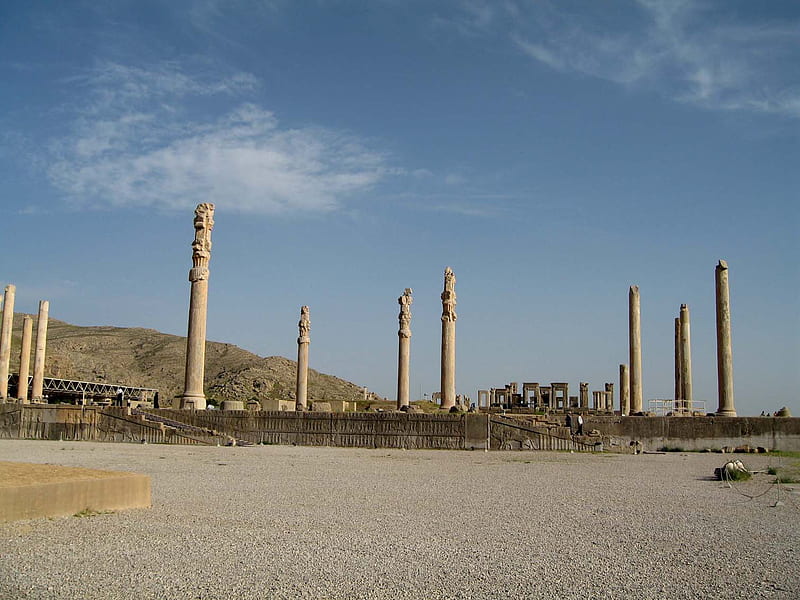
Photo by: Peakpx
Naturally, there are no clear photos or images of this monument from a thousand years ago, but one of the oldest and most accurate sources we can reference is a painting by a Dutch designer named “Cornelis de Bruyn,” who is said to have drawn Persepolis from November 1704 to January 1705 AD.
What is the Total Area of Persepolis?
Persepolis can undoubtedly be considered one of the largest historical monuments in the world. It covers an immense area, with its grounds flattened and stones placed on the surface, on which different buildings were constructed. The total area of the buildings and the entire Persepolis site is approximately 4 hectares, which is about 125,000 square meters.
Different Sections of Persepolis
Now that you are familiar with the history of Persepolis, let’s introduce you to the various sections of this historical site and its wonders.
Source: Triptoiran website
We will explain the areas of various sections of Persepolis below.
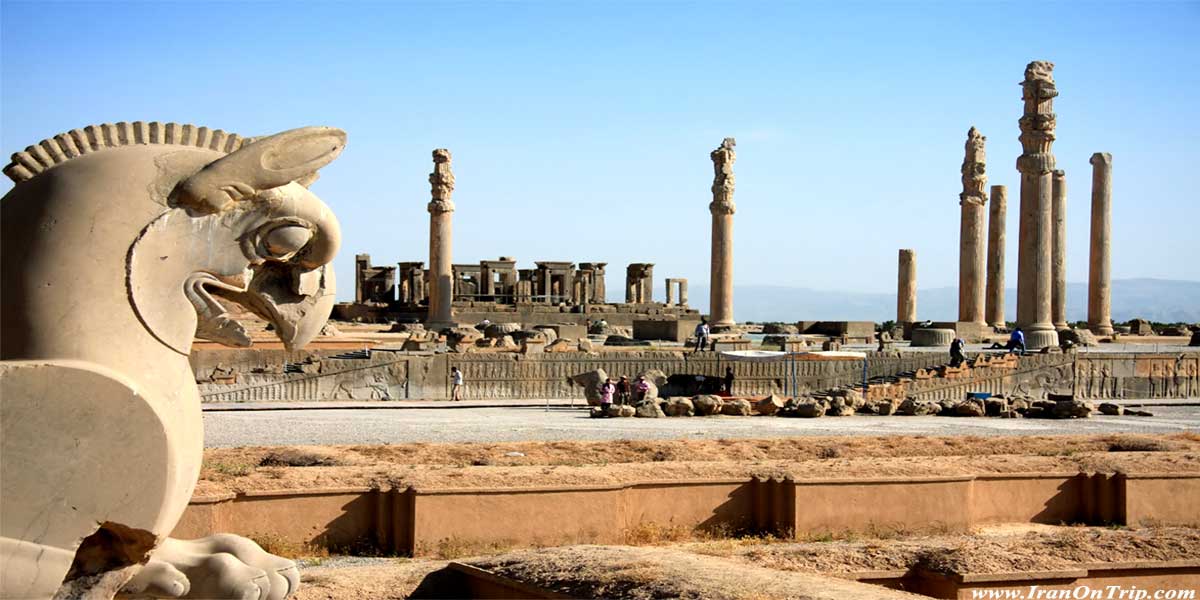
Entrance Staircases and the Gate of All Nations
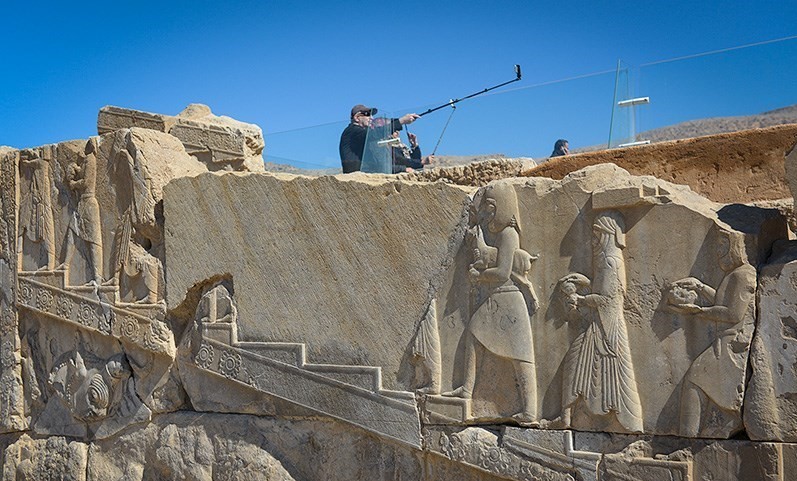
In the northwestern section of Persepolis, two sets of 111 wide staircases with low steps (10 cm in height) are placed opposite each other, undoubtedly captivating you at first glance. Various speculations exist about the low height of the steps, but none of them can be definitively confirmed.

Some believe the staircases were designed this way for the ease of horse movement, while other historians suggest the low height of the steps was intended to maintain the dignity of the guests, whose images in luxurious and valuable attire can be seen on the walls of Persepolis.
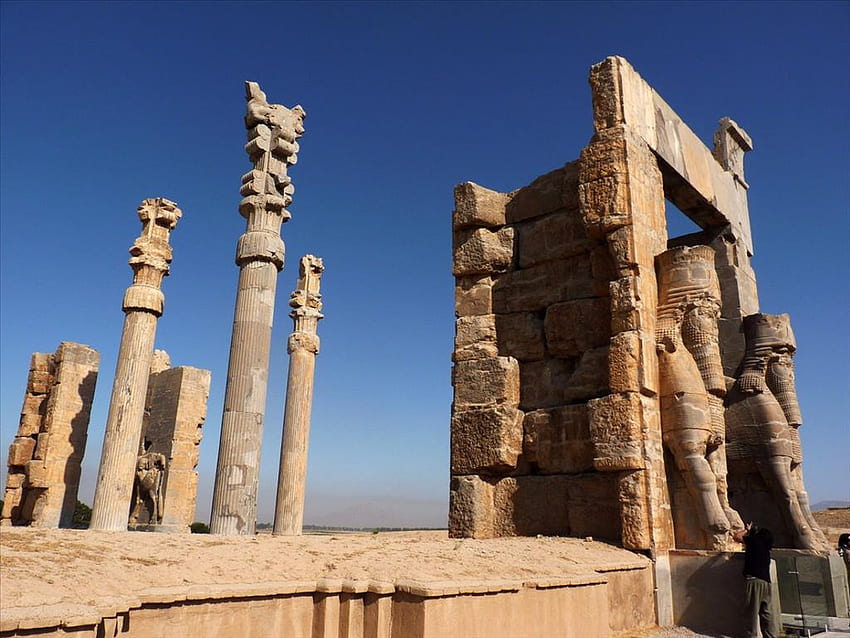
After ascending the 111 steps and observing the various carvings, one reaches the “Gate of All Nations,” also known by other names such as the “Grand Gate” and the “Gate of Xerxes.” The Gate of All Nations stands 10 meters tall. Although much of it is now destroyed, it is believed to have had one entrance and two exits.
Source: Visitouriran website
What stands out the most here are the designs of winged men and bulls with human heads on the gates. There are many descriptions of these designs, some of which are quite intriguing. After passing through the Gate of All Nations, we enter the grand Apadana Palace.
Apadana Palace (The Great Audience Hall)

Apadana is one of the oldest palaces in Persepolis and the largest structure in this historical complex. Its construction was initiated by Darius the Great for celebrating Nowruz festivals and hosting envoys from other countries, and it was completed during the reign of Xerxes.
The area of Apadana Palace spans 12,000 square meters, and according to existing evidence, there were 72 stone columns spread across the palace. Today, only 14 of the 72 columns remain standing, and it appears that many sections were destroyed in a devastating fire.
Although the public primarily refers to this palace as “Apadana,” none of the inscriptions discovered in the hall mention this name. Therefore, it might be more appropriate to refer to this grand complex as “The Great Audience Hall.”
Hall of a Hundred Columns

One of the most magnificent and grandiose structures in Persepolis, which will undoubtedly leave you in awe, is the Hall of a Hundred Columns, spanning an area of nearly 4,300 square meters. In the central hall of this palace, 100 columns, each 14 meters tall, were used to support the roof, which is why it is referred to as “the largest roofed hall in the world.”
In terms of size, the Hall of a Hundred Columns is the second-largest palace in Persepolis. According to research by Professor Herzfeld, its construction began during the reign of Xerxes and was completed during the reign of Artaxerxes I.
Tachar Palace
“Tachar” or “Tachara” is the name of the private palace of Darius the Great, located southwest of Apadana. Its length is 40 meters, and its width is 30 meters. Researchers have found an inscription with the following message: “I, Darius, built this Tachar.”
Tachar Palace is also known as the Museum of Inscriptions, as it houses numerous inscriptions from the Achaemenid period to the Qajar era, each telling a separate and exciting story. The palace is built on a platform 2.4 meters high, and in the center of it, a room measuring 15 meters on each side was constructed for the king.

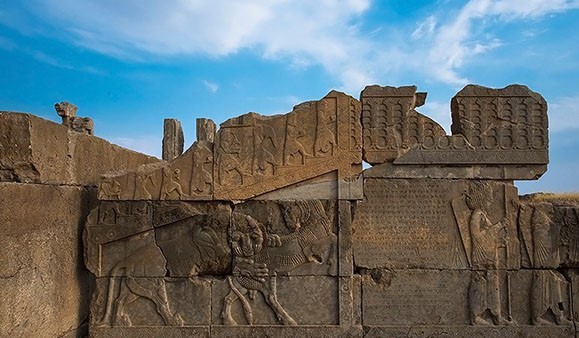
Once again, the images and paintings on the walls speak to us here; from the bas-reliefs on the walls depicting the king and his two attendants to the bas-reliefs on the staircase showing servants and stones that are as smooth as mirrors, all of these will leave you in awe as soon as you enter the Tachar Palace. Because of the polished and smooth stones in this palace, some refer to it as the “Mirror Palace.”
Although Tachar means “winter house,” there is no evidence that Darius spent the winter in this palace. It should be noted that after the main palace was built by Darius, the southern portico and staircase were constructed by Xerxes, and the western stone staircase was built by Artaxerxes II.
Palace H (Palace E)

In the western part of the Hadian Palace and the southwestern corner of the terrace, a palace called “H” or “E” can be found, although much of it has now been destroyed. Research indicates that Xerxes issued the order to construct this palace, and it was completed by Artaxerxes I. On the staircase of this palace, two groups of 16 Persian spearmen can be seen, along with an ancient inscription, which unfortunately has been largely destroyed.
Hadian Palace
In the southernmost and highest section of the Persepolis terrace, a palace called “Hadian” can be found, which was built specifically for Xerxes. Hadian is a rectangular palace with an area of approximately 2,200 square meters, and its main hall contains 36 columns. Additionally, there are two staircases in this palace that connect to the Queen’s palace.

“Hadian” means “high place,” and since Xerxes’ second wife also had the same name, this palace is called Hadian. However, some experts believe this palace was built during the reign of Darius, while the inscriptions and stone carvings found in this palace indicate that it was constructed by Xerxes.
Hadian Palace is one of the areas that suffered the most damage in the fire, and the yellow color of the stones somewhat reflects the loss of water inside them due to the extreme heat. Some believe that the fire actually started in this palace.
Queen’s Palace
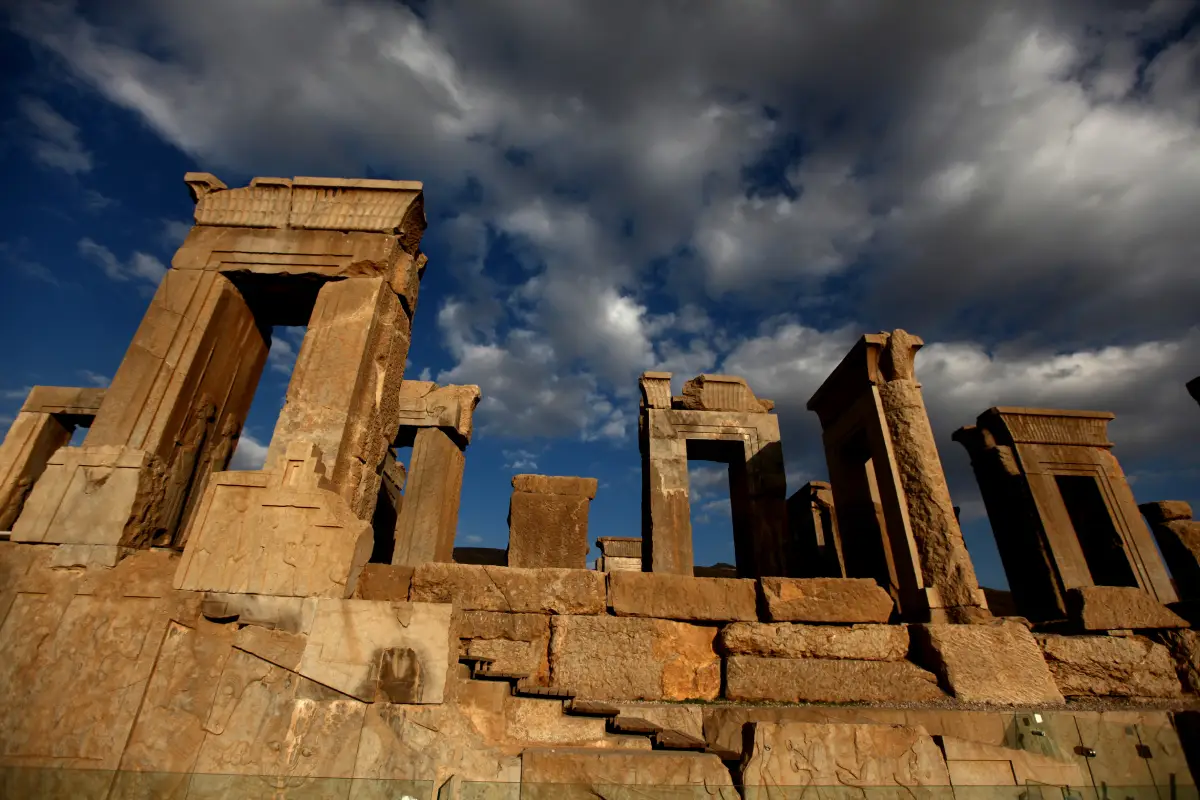
Near the Hadian Palace, there is a palace called the “Queen’s Palace,” built by Xerxes, which is situated at a lower elevation compared to other Persepolis structures. Professor Herzfeld, who excavated and reconstructed part of this palace in 1931, speculates that the Queen’s Palace was actually Xerxes’ harem because it has thick walls and only one door for entry and exit.
Source: Wikipedia website
It is worth mentioning that today, part of this palace is used as a museum and the central administration office for the Persepolis facilities.
Three-Door Palace (Council Hall)
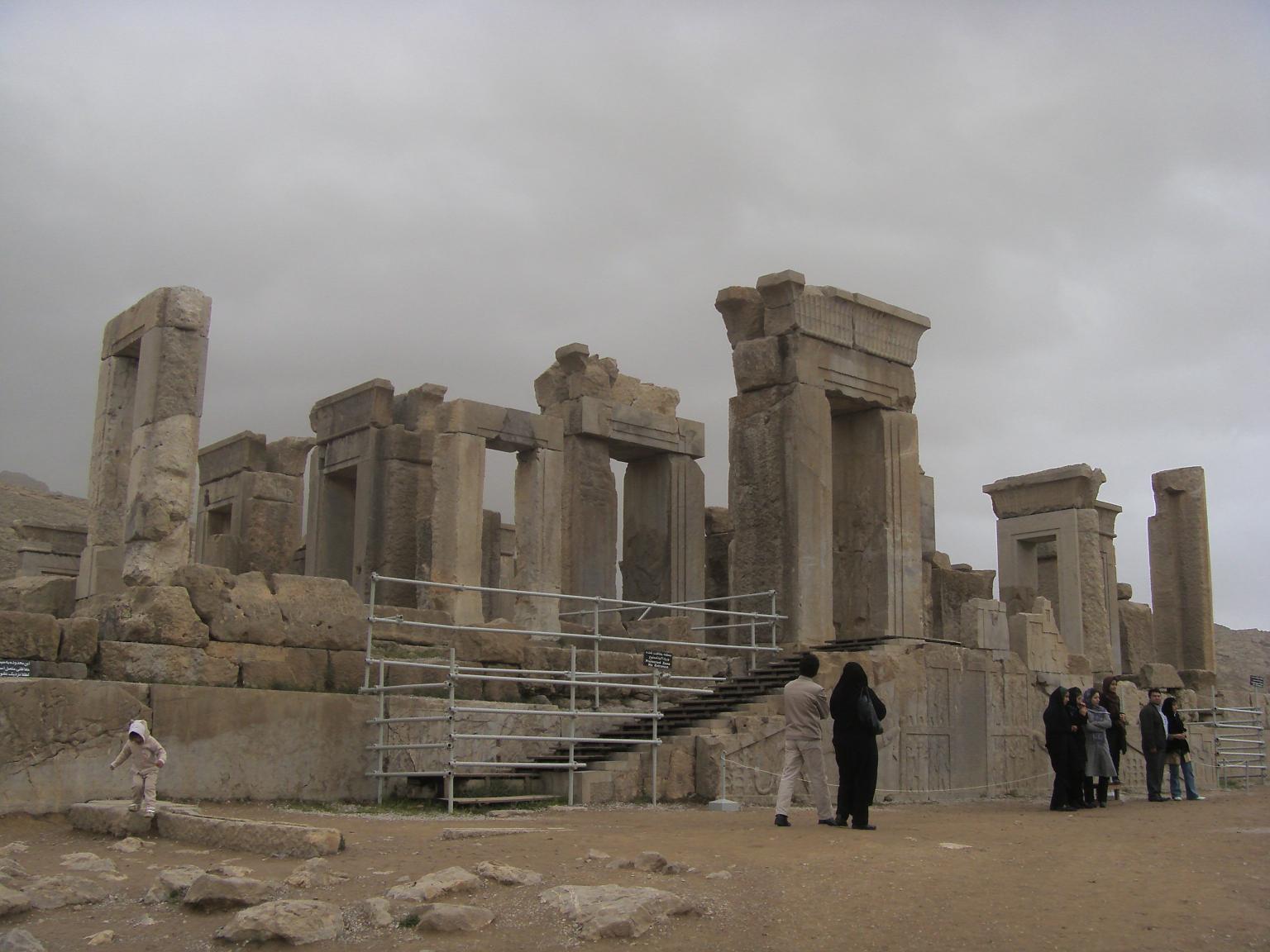
The central palace, a structure with three gates and several corridors, is a rectangular building that connects various sections of Persepolis. If you pay attention to the paintings on the walls and staircase of this palace, you will see people informally visiting the ruler. This has led to the palace also being known as the “Council Hall” or “Palace of the Council.”
The central hall is a completely square building with walls 15.5 meters long and four stone columns. Although much of this palace has been destroyed today, evidence suggests that the king entered the hall through a gate located on the eastern side.

The northern gate of the palace leads us to the Apadana courtyard, while the southern gate opens into a small private courtyard and then leads to the Hadian Palace. We recommend that while walking on these steps, you don’t miss the stone carvings on them and the depictions, which tell many stories about the events that took place inside this palace, as many secrets are hidden within them.
Interestingly, there are two columns in this palace with human heads (the human head symbolizing thought), something not seen elsewhere in Persepolis.
Palace G
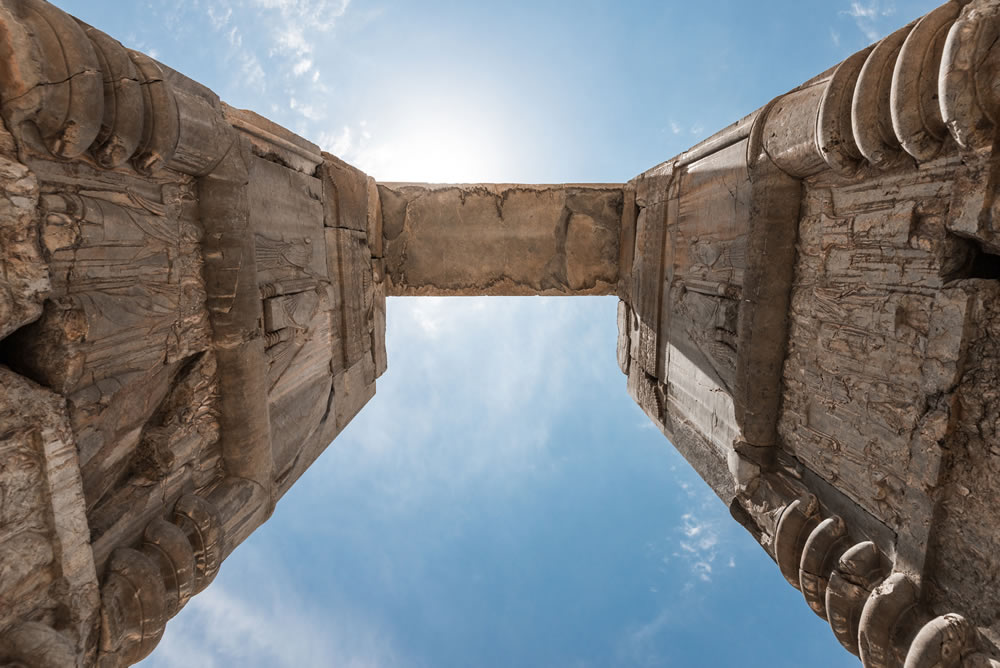
Another important structure located next to the Hadian Palace is Palace G. Although much of this beautiful palace has been destroyed today, remnants of a tall building, which seems to have been built on the rocky mountain stone, will likely capture your attention more than anything else.
Source: 121clicks website
On the southern wall of this historical structure, images of soldiers and servants can be seen, which appear to have been taken to Darius’ palace.
The Incomplete Gate
One of the most important structures in Persepolis is the Incomplete Gate. This large gate bears a strong resemblance to the Gate of All Nations, and in its eastern and western sections, two rooms can be found, which were apparently intended for the guards’ quarters.

Studies also show that the architects intended to build this gate in the shape of a winged bull, making it the largest structure in the complex. Unfortunately, with Alexander’s invasion of Persepolis and the destruction of the site, its construction was never completed.
The Royal Treasury Building

Another important and valuable section of this 125,000 square meter complex is the Royal Treasury building, which is said to have been constructed under the orders of Darius the Great. The Treasury covers an area of approximately 10,400 square meters, and within it, you can find two magnificent and large halls with 99 and 100 columns, along with several rooms, corridors, and an open courtyard.
The clay bricks found by Professor Schmidt in the Treasury contain extremely valuable information about workers’ wages and how they were paid, written in Elamite.
Tombs of Artaxerxes II and III

Alongside the important buildings and both small and large palaces, the tombs of Artaxerxes II and Artaxerxes III are located on Mount Rahmat, overlooking Persepolis. The facade features a cross symbol with four equal branches, each of which has a separate meaning and is identified with specific signs.
How were the Columns of Persepolis Built?
There are many bizarre hypotheses about the columns of Persepolis, but most of them cannot even be considered as theories, as there is no logical or rational evidence to support them. On the other hand, the theory of using wooden cranes is widely accepted among historians. Many historians believe that, based on the evidence found on the stones and columns of Persepolis, they were shaped in areas other than Persepolis and then brought to the site.
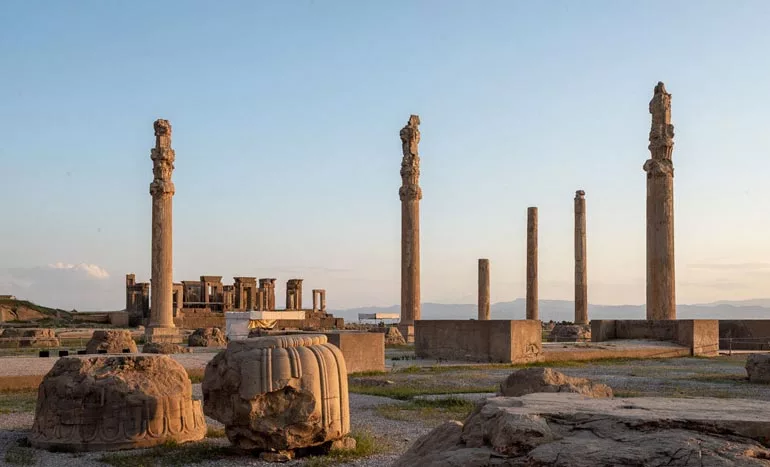
Once, for example, when 10 pieces of a gate or column were ready, they would be moved using wooden cranes and rope systems powered by human or animal energy. What is clear is that neither giants nor angels were involved in the construction of this site. Persepolis and its columns were built and crafted through the knowledge and technology of the engineers of that time. One of the most important structures, though unfinished, which supported the crane theory, is the Incomplete Gate in the Persepolis complex.
Underground Water Channels
Another wonder of Persepolis is the existence of underground water channels. These were special passageways, designed as part of a drainage network beneath the various buildings, to quickly and easily direct rainwater from the streets and courtyards of the complex, preventing damage to the main structures.
Source: Tasnimnews website
Apparently, the collection of this water took place at the foothills of Mount Rahmat and in trenches designed for water storage, used both for supply during times of need and for defensive purposes. The construction of this drainage network showcases the peak of Iranian architects’ skill and artistry thousands of years ago.
Persepolis Museum
The Queen’s Palace, which was essentially the harem of Xerxes, has now been transformed into a beautiful museum. In this museum, you can view many inscriptions, clay tablets, and other historical artifacts discovered during the research in this area.
Source: Tasnimnews website
This is actually one of the oldest buildings in Iran that has been transformed into a museum, and the exhibits displayed there can truly captivate you. Some of the most valuable artifacts you can find in the Persepolis Museum include Achaemenid period beads, clay tablets with cuneiform writing, the burned curtains of Persepolis, and the inscriptions of Xerxes, famously known as the Xerxes Inscriptions.
Restoration of Persepolis
Over the years, many efforts have been made to restore Persepolis in order to preserve this national and global heritage. The first attempt was made in the early years, and some kings tried to prevent further damage by repairing certain palace structures.
Source: Pxfuel website
In the last century, an American group of Orientalists from Chicago began the restoration of this historical monument in 1930. During the excavation, they successfully discovered the Xerxes inscription, which revealed that the structure was actually the Queen’s Palace.
Later, a German archaeologist named Erich Schmidt began excavating the Treasury Building and the Hundred-Column Palace in 1935. During his work, he reinforced the foundation of the columns in the Apadana Palace, the Great Hall inscription, and part of the mudbrick walls of the palaces.
Erich Schmidt’s work in Shiraz continued until 1940, and he succeeded in uncovering valuable historical artifacts from the ruins of Persepolis.
Nearby Attractions to Persepolis
If you plan your visit to Persepolis well, you can likely visit nearby attractions and fully enjoy your trip. There are several magnificent historical sites around Persepolis, which we will introduce below.
Pasargadae Complex
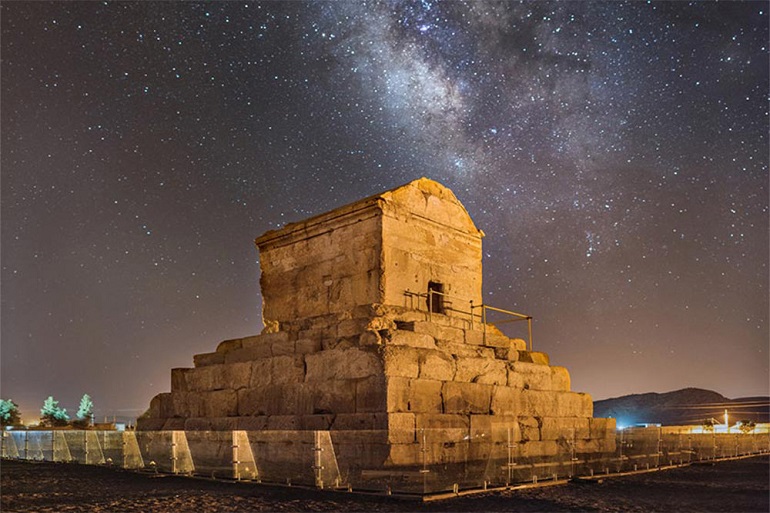
This historical site, located 73 kilometers from Persepolis, is one of Iran’s most famous historical landmarks and is considered a world heritage site. When visiting the Pasargadae World Heritage site, you can explore several sections:
- The Tomb of Cyrus the Great
- Mozaffari Caravanserai
- The Private Palace
- The Great Hall Palace
- The Iranian Garden Complex
- The Gate Palace
- The Gate Stone
- The Stone Tower
- Tall-e Takht
- The Sacred Area
Naqsh-e Rajab
Don’t miss visiting Naqsh-e Rajab on your trip to Persepolis! This bas-relief, located on the right side of the Royal Road, dates back to the Sassanid era and has an interesting story behind its name.
The Royal Road, the first international road in the world, connected ancient cities of Iran such as Persepolis, Pasargadae, and Susa.
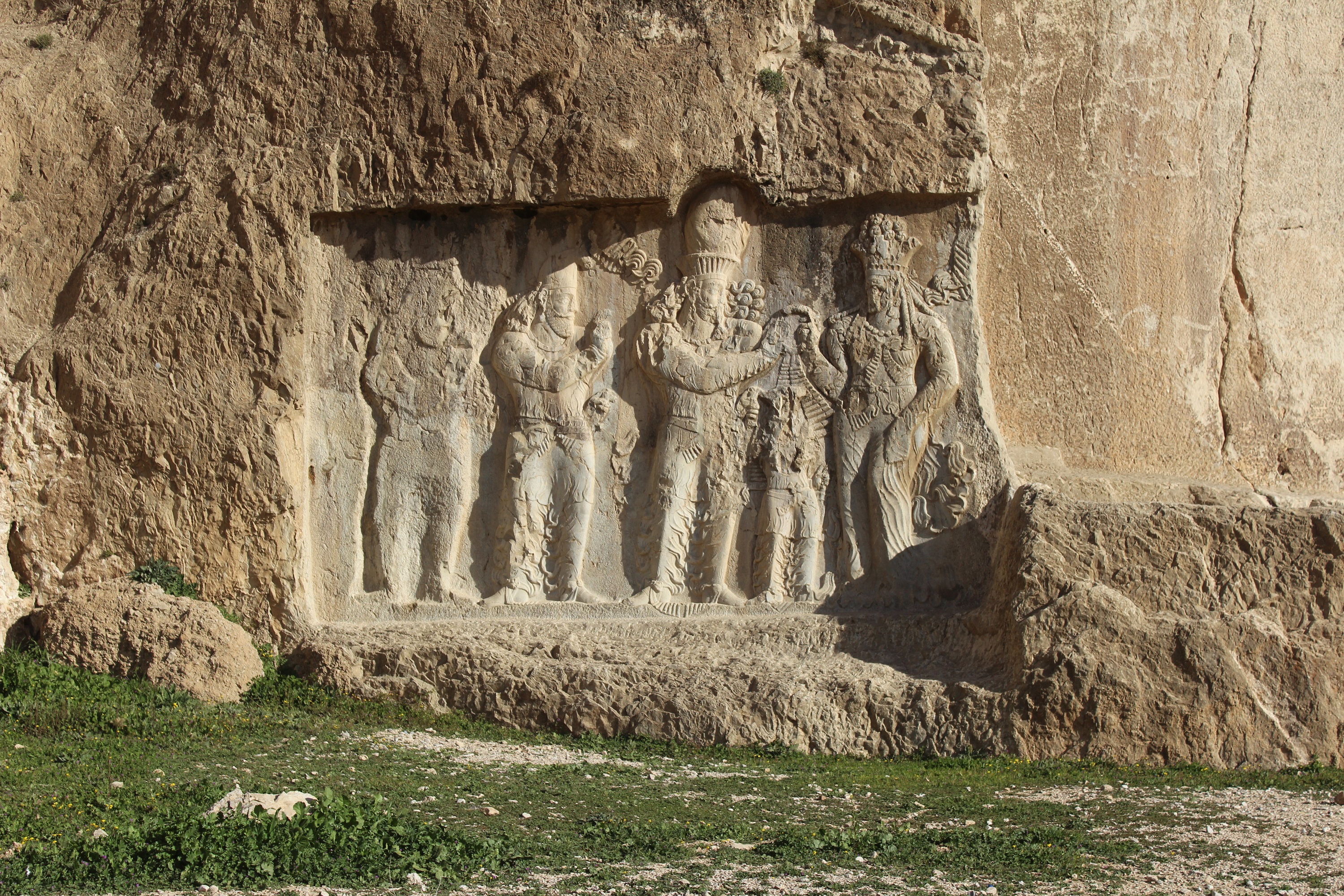
This bas-relief was named “Naqsh-e Rajab” by a Danish traveler in 1176 AH. According to historians, the name was related to a nearby coffeehouse owned by a man named Rajab. At that time, locals had no information about these inscriptions, so they referred to them as “Naqsh-e Rajab.”
Fursat al-Dawlah Shirazi, a Qajar writer, also referred to this bas-relief in his book titled “Naqsh-e Qahramanān” (The Image of Heroes).
Naqsh-e Rostam
Naqsh-e Rostam is a historical and archaeological site located in the village of Zangi Abad, north of the Marvdasht County in Fars Province. Situated just 6 kilometers from Persepolis, this site is a legacy of several civilizations, including the Elamites, Achaemenids, and Sassanids.
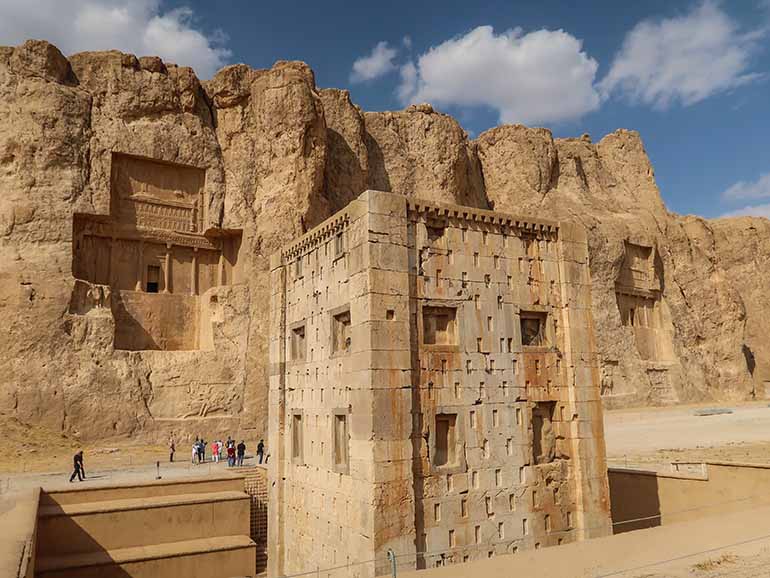
From around 1200 BC to 625 AD, Naqsh-e Rostam has always been an important and significant site. Here, you can find the tombs of four Achaemenid kings, numerous bas-reliefs depicting significant events from the Sassanian era, the Zoroastrian Kaaba, and also a ruined bas-relief from the Elamite period.
During the Sassanian era, Naqsh-e Rostam held great significance, not only historically but also religiously and nationally.
In conclusio
If you plan to visit Persepolis, please remember that preserving these national treasures is everyone’s responsibility. Therefore, avoid littering and damaging the historical monuments. Don’t forget to share your thoughts and memories of visiting Persepolis with us and other users and readers.