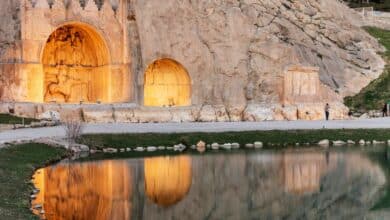

Introduction Taq-e Bostan, a UNESCO tentative World Heritage Site in Kermanshah, Iran, stands as a monumental testament to the Sassanid Empire’s artistic and architectural prowess. Nestled at the base of the Zagros Mountains, this 4th-century CE complex features breathtaking rock reliefs, intricate arches, and sacred springs that have endured 1,700 years of natural elements. Known as the “Arch of Stone,” it depicts royal coronations, divine figures, and vibrant scenes of hunting and music, offering a vivid glimpse into ancient Persia’s grandeur. With hamintour, a premier Iranian tourism brand, your visit to Taq-e Bostan becomes an immersive cultural odyssey, complete with expert-guided tours and seamless access to Kermanshah’s hidden gems. This comprehensive guide explores its history, architecture, and practical tips for 2025.
History of Taq-e Bostan
Taq-e Bostan, meaning “Arch of the Garden,” originated during the Sassanid era (224-651 CE), serving as a sacred site honoring Ahura Mazda and the goddess Anahita, patron of water and fertility. The reliefs, carved into the mountainside, immortalize coronations of kings like Ardashir II (379-383 CE), Shapur III (383-388 CE), and Khosrow II (590-628 CE), symbolizing divine legitimacy and imperial power. Pahlavi inscriptions detail royal victories, while a later Qajar-era addition (19th century) by Governor Mohammad-Ali Mirza Dowlatshah adds a layer of Persian continuity.
Positioned along the ancient Silk Road, Taq-e Bostan was a strategic waypoint for caravans, blending spirituality with spectacle. Post-Sassanid, it influenced Islamic art and remains a Zoroastrian cultural touchstone. In 2025, ongoing conservation efforts preserve its reliefs amid rising tourism, with hamintour’s eco-conscious tours supporting local heritage initiatives.
Architecture of Taq-e Bostan
Taq-e Bostan’s architecture is a masterful fusion of rock-cut engineering and symbolic artistry, designed to harmonize with the Zagros cliffs and eternal springs. The complex features two interconnected arches—a larger iwan (9 meters high) and a smaller one—flanked by reliefs that depict divine investitures, winged angels, the Tree of Life, and dynamic hunting scenes with elephants, horses, and musicians. These carvings, among the finest surviving Sassanid examples, showcase unprecedented realism, including female musicians and intricate musical instruments, reflecting the empire’s cultural sophistication.
The site’s resilience stems from its strategic location: the natural overhang protects carvings from erosion, while underground springs feed a reflecting pool, symbolizing Anahita’s domain. Materials like polished limestone and deep reliefs (up to 2 meters) create dramatic shadows, enhancing visual impact. In 2025, LED lighting illuminates evening views, revealing subtle details like peacock motifs in the arches. Hamintour’s architectural tours, led by Sassanid experts, decode these elements, blending history with on-site storytelling.
Different Parts of Taq-e Bostan
Taq-e Bostan unfolds across three primary sections, each a narrative canvas of Sassanid glory:
- Great Arch (Coronation of Khosrow Parviz): The centerpiece, a 9-meter-high iwan with a square porch (8 meters wide), depicts Khosrow II’s investiture flanked by Ahura Mazda (right) and Anahita (left), both extending rings of power. Surrounding scenes burst with life: winged angels, the Tree of Life, boar hunts, duck fishing, and musicians with lutes and drums, evoking royal festivities.
- Small Arch (Coronations of Shapur II and III): Adjacent to the great arch, this smaller iwan honors Shapur II (309-379 CE) and Shapur III, with reliefs of divine blessings and equestrian processions. Its compact design emphasizes intimacy, showcasing Sassanid equestrian prowess and Zoroastrian symbols.
- Relief of Ardashir II: To the right of the small arch, this standalone petroglyph portrays Ardashir II’s coronation, with the king receiving a beribboned ring from Ahura Mazda amid a mountainous backdrop. Pahlavi inscriptions narrate his reign, while a Qajar overlay adds 19th-century flair.
Nearby, a 600-year-old plane tree and reflecting pool enhance the site’s mystique. Hamintour’s multimedia guides provide AR overlays, animating these reliefs for a vivid, interactive experience.
What Was Taq-e Bostan Built For?
Scholars debate Taq-e Bostan’s purpose, but consensus points to it as a royal sanctuary and propaganda monument. Likely an unfinished fire temple dedicated to Anahita, it celebrated Sassanid legitimacy through divine coronations, warding off evil via sacred springs. Its Silk Road location amplified its role as a visual chronicle of imperial might. In 2025, it’s a cultural nexus, hosting Zoroastrian rituals and festivals, with hamintour offering themed visits during Nowruz.
Working Hours and Accessibility
Open daily from 9:00 AM to 8:30 PM (except national holidays), Taq-e Bostan requires a modest entrance fee (around 200,000 IRR in 2025). Allocate 2-3 hours for a full visit, including nearby trails. Located 5-9 km northwest of Kermanshah city center, it’s easily reached by taxi (10-15 minutes from downtown) or bus from Taq Bostan Station. For accessibility, pathways accommodate wheelchairs, with ramps at main arches; however, some reliefs involve stairs. Hamintour’s private transfers and mobility aids ensure inclusive access, ideal for families or those with special needs.
Best Time to Visit Taq-e Bostan
Early June to early September offers ideal conditions, with average highs around 24°C (75°F) and mild evenings perfect for illuminated views. Summers can hit 35°C (95°F), so visit mornings; autumn brings colorful foliage and cooler winds (15-25°C/59-77°F), while winters are arid and chilly (below 10°C/50°F), challenging for outdoor exploration. Spring (March-May) blooms with wildflowers, enhancing the site’s natural drama. Hamintour recommends seasonal packages, like autumn hikes in Kuhestan Park for panoramic city vistas.
Why Visit Taq-e Bostan?
Taq-e Bostan transcends a mere monument—it’s a portal to Sassanid majesty, where rock faces whisper tales of kings, gods, and hunts amid eternal springs. Its enduring reliefs, blending Zoroastrian symbolism with artistic innovation, offer profound insights into ancient Persia’s worldview. Pair it with Kermanshah’s kebabs (like dandeh) at nearby cafés or a climb to Kuhestan Park for sunset panoramas. In 2025, enhanced lighting and AR apps elevate visits. With hamintour, discover curated experiences—from Zoroastrian-guided tours to bundled stays at eco-lodges—making Taq-e Bostan the highlight of your Iranian odyssey.
Frequently Asked Questions (FAQs)
- What is Taq-e Bostan? Taq-e Bostan is a Sassanid-era rock relief complex in Kermanshah, featuring arches and carvings of royal coronations, divine figures, and hunting scenes.
- How can I visit Taq-e Bostan? Travel 5-9 km northwest of Kermanshah by taxi or bus; entry is 200,000 IRR, with hamintour offering guided transfers and tours.
- What are the main attractions at Taq-e Bostan? The Great Arch (Khosrow Parviz’s coronation), Small Arch (Shapur II/III), Ardashir II relief, winged angels, Tree of Life, and sacred springs.
- What is the significance of the reliefs? They symbolize divine kingship, Zoroastrian faith, and Sassanid power, with unprecedented realism in music and hunting depictions.
- Is Taq-e Bostan accessible for all? Yes, with wheelchair ramps and pathways; some upper reliefs have stairs, but hamintour provides aids for full inclusivity.
- What nearby sites pair with Taq-e Bostan? Kuhestan Park for views, Takieh Mo’aven ol-Molk for Taqiyeh theater, and Behistun Inscription for more ancient reliefs.
- Are there dining options at Taq-e Bostan? Nearby cafés serve dandeh kebab and traditional fare; hamintour bundles culinary tours for an authentic taste.
- How old is the ancient tree at Taq-e Bostan? Over 600 years, a living symbol of the site’s enduring legacy amid the reflecting pool.
- Is Taq-e Bostan a Zoroastrian site? Yes, dedicated to Anahita and Ahura Mazda, with rituals still observed; hamintour offers cultural insights.
- How does hamintour enhance a Taq-e Bostan visit? Hamintour provides expert Sassanid guides, AR experiences, and multi-site itineraries for a deeper cultural dive.