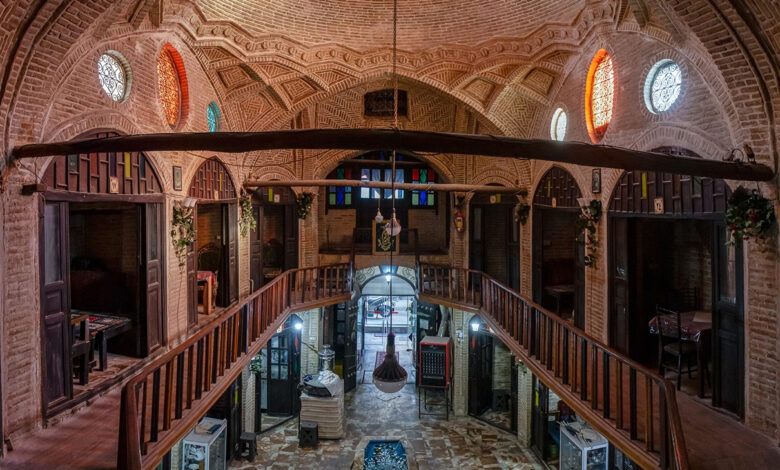

Nestled within the vibrant chaos of Tehran’s Grand Bazaar, Timche Akbarian stands as a testament to the city’s rich mercantile past and cultural diversity. Located in the historic Oudlajan neighborhood, Tehran’s oldest district, this 260-year-old Timcheh (small caravanserai) is a captivating blend of Qajar-era architecture and historical significance. Registered as number 13601 on Iran’s National Monuments List in 2005, Timche Akbarian is a must-visit for travelers seeking to explore Tehran’s hidden treasures. Today, it serves as the “Old Tehran Dining Hall,” offering a unique dining experience amid stunning traditional architecture. Below, we answer your key questions about Timche Akbarian, its uses, and nearby attractions, while providing a comprehensive guide to this cultural landmark.
What is Timche Akbarian Best Known For?
Timche Akbarian is best known for its historical role as a hub of commerce and its architectural beauty, reflecting Tehran’s Qajar-era heritage. Established 260 years ago by Jewish traders in the Oudlajan neighborhood, it was a significant center for gold exchange and trade during the Qajar dynasty. In 1834, under Fath Ali Shah Qajar, it became the site of Iran’s first mortgage bank, a pioneering financial institution that operated until shortly after the 1978 Islamic Revolution. This unique history, tied to the Jewish community’s contributions to Tehran’s economy, sets Timche Akbarian apart as a symbol of cultural diversity.
The Timcheh’s architectural splendor is another hallmark of its fame. Its central domed courtyard, intricate brickwork, and ornate arches showcase the artistry of the Qajar period. Since its restoration in 2011, Timche Akbarian has gained recognition as the “Old Tehran Dining Hall,” a beloved venue for traditional Persian cuisine, particularly dizi (abgoosht), a hearty lamb stew. Its transformation into a dining destination has made it a popular spot for locals and tourists to experience Tehran’s culinary and cultural heritage in a historic setting.
What is Timche Akbarian Used for Today?
Today, Timche Akbarian serves as the “Old Tehran Dining Hall,” a charming restaurant and tea house that specializes in traditional Persian cuisine. After its meticulous restoration in 2011, the Timcheh was repurposed to preserve its historical charm while offering a modern function. The dining hall is particularly renowned for serving dizi, a traditional dish made of lamb, chickpeas, and potatoes, typically enjoyed for lunch. Visitors can savor this authentic meal in a setting that evokes the ambiance of Qajar-era Tehran, with its domed courtyard and intricate architectural details.
Beyond dining, Timche Akbarian is a cozy gathering spot for friends and families, offering a place to relax amid the bustling Grand Bazaar. The upper floors and pavilions house small dining rooms, while the basement serves as a kitchen and storage area. The Timcheh’s transformation into a cultural and culinary venue ensures that its historical significance is accessible to new generations, making it a vibrant part of Tehran’s social scene.
What Are Timche Akbarian’s Nearby Attractions?
Timche Akbarian’s location in the heart of Tehran’s Oudlajan neighborhood places it within easy reach of some of the city’s most iconic cultural and historical landmarks. Here are the key attractions nearby, perfect for creating a full day of exploration:
- Tehran Grand Bazaar (5-minute walk)
The Tehran Grand Bazaar, a sprawling 105-hectare marketplace, is one of Iran’s most significant commercial hubs, with roots in the Safavid and Qajar eras. Registered as a national monument in 1977, it features stunning arched corridors, tiled caravanserais, and a vibrant array of shops selling everything from Persian carpets to spices, jewelry, and clothing. The bazaar’s lively atmosphere and architectural beauty make it a must-visit for tourists seeking an authentic taste of Tehran’s culture. - Golestan Palace (10-minute walk)
A UNESCO World Heritage Site and a masterpiece of Qajar architecture, Golestan Palace is a historic complex dating back over 400 years. Its ornate halls, including the Marble Throne Porch and Shams al-Amara Palace, showcase intricate tilework, mirror mosaics, and gilded accents. Designated a national monument in 1955, the palace offers a glimpse into Iran’s royal past, blending Persian and European influences. It’s an essential stop for history and art enthusiasts. - Pahlevan Razzaz Boutique Hotel (5-minute walk)
This historic house, originally owned by Seyed Hassan Shojaat (Pahlevan Razzaz) in 1901, has been transformed into a boutique hotel and traditional restaurant. Its stunning Iranian architecture, featuring a central courtyard with a blue pond, captivates visitors. Renovated in 2018, it offers a unique blend of heritage and modern hospitality, making it a great spot to relax or dine after visiting Timche Akbarian. - Imamzadeh Yahya Shrine (7-minute walk)
Located in the Oudlajan neighborhood, this 13th-century shrine is one of Tehran’s oldest religious sites, dedicated to a descendant of Imam Ali. Its tiled dome and intricate interiors reflect Persian-Islamic architecture, offering a serene contrast to the bustling bazaar. - Saray-e Roshan (10-minute walk)
On Naser Khosrow Street, this gothic-inspired building from 1932 stands out for its European-style statues and Zoroastrian symbol of Ahura Mazda. Once a commercial center, it now houses shops and offices, blending Persian and Western architectural elements.
Why Explore Oudlajan’s Attractions?
The Oudlajan neighborhood is a living museum of Tehran’s history, with its narrow alleys and historic structures offering a glimpse into the city’s past. Pairing a visit to Timche Akbarian with these nearby landmarks creates a rich cultural itinerary, showcasing Tehran’s diverse heritage and vibrant present.
Historical and Architectural Significance of Timche Akbarian
Historical Background
Founded 260 years ago by Jewish traders in the Oudlajan neighborhood, Timche Akbarian was a key center for gold exchange during the Qajar era. Its role as Iran’s first mortgage bank in 1834 marked a significant milestone in Tehran’s financial history, highlighting the Jewish community’s contributions to the city’s economy. The Timcheh operated as a bank until the late 1970s, after which it fell into disrepair. Its 2011 restoration transformed it into a cultural and culinary landmark, preserving its legacy for modern visitors.
Architectural Features
Spanning 550 square meters, Timche Akbarian is a two-story structure with two basements, built on a rectangular plot using traditional materials like brick, mud, and lime mortar. The central courtyard, featuring a domed roof and a small pond, is flanked by eight symmetrical pavilions. The dome, adorned with brick veins, zigzag borders, and floral lattice designs, is the Timcheh’s most striking feature. Arched wooden doors and windows, along with spiral staircases, add to its architectural charm. The lack of windows in some areas is offset by skylights and wall openings, creating a warm, inviting ambiance. The western pavilion, once a royal residence, now serves as a dining area, blending history with modern utility.
Visiting Timche Akbarian: Practical Tips
Location and How to Get There
Timche Akbarian is located in the Oudlajan neighborhood, within the Tehran Grand Bazaar, accessible via the main bazaar rows. The nearest metro station is Panzdah-e Khordad on Line 1, a short walk from the Timcheh. Taxis or local buses are also convenient, as parking in the busy bazaar area is limited. For a guided experience, book a tour through hamintour.com to explore the Timcheh and nearby attractions with expert insights.
Visiting Hours and Tips
- Hours: Open daily for lunch (typically 11:00 AM to 3:00 PM), with extended hours for tea and snacks in the afternoon. Confirm exact times before visiting, as they may vary.
- Entry: A small fee may apply for entry, with dining costs separate.
- Tips:
- Dress modestly to respect local customs.
- Bring cash (Iranian rials), as card payments are rare.
- Allow 1–2 hours to explore the architecture and enjoy a meal.
- Photography is permitted but ask permission when capturing vendors or diners.
- Visit midweek to avoid weekend crowds.
Best Time to Visit
Spring (March–May) and autumn (September–November) offer mild weather, ideal for exploring the bazaar and Oudlajan’s outdoor sites. Mid-morning visits provide a lively yet manageable atmosphere, with the dome’s skylight casting beautiful patterns across the courtyard.
Conclusion: Why Timche Akbarian is a Must-Visit
Timche Akbarian is a hidden gem that encapsulates Tehran’s rich history and cultural diversity. Best known for its role as Iran’s first mortgage bank and its stunning Qajar-era architecture, it offers a unique blend of heritage and hospitality as the “Old Tehran Dining Hall.” Its central courtyard, ornate dome, and traditional dining experience make it a standout destination in the bustling Grand Bazaar. With nearby attractions like Golestan Palace, the Tehran Grand Bazaar, and the Pahlevan Razzaz Boutique Hotel, a visit to Timche Akbarian is the perfect starting point for exploring Tehran’s historic heart.
Plan your visit today with hamintour.com and immerse yourself in the timeless charm of Timche Akbarian. Whether you’re savoring a bowl of dizi, admiring the intricate brickwork, or wandering the historic alleys of Oudlajan, this Qajar-era treasure promises an unforgettable journey into Tehran’s past.