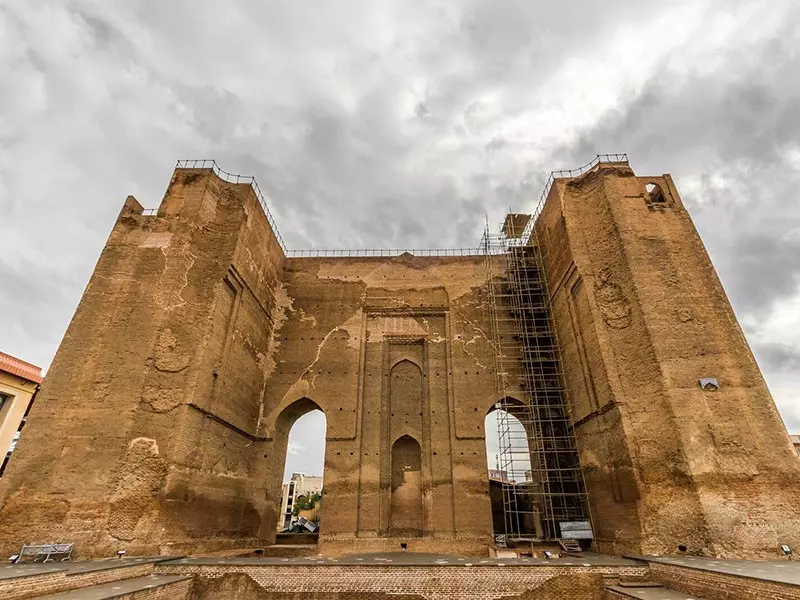

Standing tall in the heart of Tabriz, the Arg of Tabriz is a monumental testament to Iran’s rich architectural and historical heritage. Once a grand mosque, this 700-year-old citadel has endured centuries of earthquakes, wars, and human intervention, leaving behind a towering wall that still commands awe. Renowned for its towering presence and intricate design, the Arg remains one of Tabriz’s most iconic landmarks, visible from across the city. With hamintour, your visit to this historic gem will be a seamless journey into the soul of Persian architecture and culture. Discover why the Arg of Tabriz is a must-visit destination for travelers exploring Iran’s vibrant northwest.
Tabriz, a city steeped in history and culture, is home to a wealth of historical treasures, and the Arg stands as a symbol of its resilience and grandeur. Despite its partial ruin, the citadel’s surviving structure tells a story of architectural brilliance and historical significance. From its Ilkhanid-era origins to its role as a cultural beacon, the Arg of Tabriz offers a profound connection to Iran’s past. Let’s explore this magnificent monument and plan your visit with hamintour.
Unveiling the Arg of Tabriz
A Timeless Symbol of Tabriz
The Arg of Tabriz, a 700-year-old architectural marvel, is one of Iran’s oldest and tallest historical structures. Located in the bustling city of Tabriz, this citadel was originally constructed as a grand mosque, showcasing the ingenuity of Persian architects. Though much of the original complex has been lost to natural disasters and historical upheavals, the remaining high wall—known as the Arg—stands as a powerful reminder of its former glory. Visible from across the city, the Arg’s imposing presence makes it a focal point for visitors and locals alike.
The Arg’s historical significance and unique design draw travelers from around the world, eager to explore its story and admire its enduring beauty. With hamintour, you can delve into the rich history of this iconic landmark, guided by experts who bring its past to life. Whether you’re a history buff, an architecture enthusiast, or a curious traveler, the Arg of Tabriz promises an unforgettable experience in the heart of Iran’s northwest.
The Historical Legacy of the Arg
A Journey Through Time
The Arg of Tabriz was commissioned between 716 and 724 AH (1316–1324 CE) by Taj al-Din Alishah Gilani, a prominent minister of the Mongol Ilkhanate. Designed as a grand mosque with a large tomb in its courtyard, the structure was intended to rival the grandeur of the Kasra Arch, with its southern arch built four yards larger (each yard equivalent to 104 centimeters). This ambitious project reflected the Ilkhanid era’s cultural and architectural sophistication, establishing the Arg as a cornerstone of Tabriz’s identity.
Over the centuries, the Arg faced significant challenges, including devastating earthquakes and wars that reduced much of the original mosque to ruins. During the Qajar dynasty, the site was repurposed as a grain warehouse and military ammunition depot, earning its name “Arg” (meaning citadel) after a protective fence was built around it. Despite these changes, the Arg has remained a symbol of resilience, standing tall through centuries of adversity. With hamintour, you can explore the historical layers of this remarkable site, uncovering the stories that have shaped its legacy.
Architectural Splendor of the Arg
A Masterpiece of Azeri Style
The Arg of Tabriz is a shining example of the Azeri architectural style, a post-Islamic tradition attributed to Azerbaijan and also known as the Mongol or Iranian-Mongol style. Designed by Master Falaki Tabrizi, the Arg showcases the ingenuity of Ilkhanid-era architects, who used durable mortar and innovative building techniques to create a structure that has withstood the test of time. The citadel’s massive arch and towering wall are adorned with intricate details, reflecting the artistic sensibilities of the period.
Despite the devastating 10th-century earthquake that caused significant damage, including a large fracture in the Arg’s structure, the surviving wall remains a testament to its robust construction. The use of high-quality materials and meticulous craftsmanship ensured the Arg’s durability, making it a focal point of study for architects and historians. With hamintour, you can marvel at the architectural brilliance of the Arg, guided by experts who highlight its unique design and historical significance.
Top Attractions Near the Arg of Tabriz
Explore Tabriz’s Cultural Treasures
The Arg of Tabriz is surrounded by a wealth of cultural and historical attractions, making it an ideal starting point for a day of exploration. Here are some must-visit sites nearby:
- Municipality Palace of Tabriz: Located on a 9,600-square-meter plot, this three-story building was constructed between 1314 and 1320 AH (1936–1942 CE) on the site of the former Moi Nobar Cemetery. Its 30.4-meter clock tower, which plays a melodic tune every 15 minutes, has been a city landmark for over 70 years. The palace’s elegant design and historical significance make it a perfect complement to the Arg.
- Iron Age Museum: Situated near the Blue Mosque, this museum showcases artifacts from an ancient Iron Age cemetery. Archaeologists have uncovered 38 graves where bodies were buried in the fetal position, surrounded by stonework symbolizing the womb. This fascinating site offers a glimpse into Tabriz’s ancient past.
- Behnam House: Located in the Maghsoudieh neighborhood, this historic residence from the late Zand and early Qajar periods now serves as part of Tabriz Islamic Art University. Known for its stunning frescoes and ongoing restoration projects, Behnam House is a treasure trove of Persian art and architecture.
With hamintour, you can create a customized itinerary that combines a visit to the Arg with these nearby attractions, ensuring a rich and immersive experience in Tabriz.
Why the Arg of Tabriz Is a Must-Visit
A Window into Persia’s Past
The Arg of Tabriz is more than a historical monument; it’s a living symbol of the city’s resilience and architectural prowess. Despite centuries of damage, the citadel’s towering wall continues to inspire awe, reflecting the skill and vision of its creators. Visitors are drawn to its grandeur, historical significance, and the stories of survival etched into its structure. One traveler shared, “Standing before the Arg, I felt the weight of history. Its scars tell a story of endurance that’s truly humbling.”
The Arg’s proximity to other cultural landmarks, combined with its role as a beacon of Tabriz’s heritage, makes it a must-visit destination. With hamintour, you can explore this iconic site alongside Tabriz’s vibrant markets, mosques, and museums, creating a journey that celebrates Iran’s rich past. Whether you’re captivated by architecture, history, or cultural exploration, the Arg of Tabriz promises an unforgettable experience.
Practical Tips for Visiting
Plan Your Visit with Ease
To make the most of your visit to the Arg of Tabriz, consider these practical tips:
- Timing: Visit early in the morning to avoid crowds and enjoy cooler temperatures, especially during summer. The site is open daily, but check for specific hours with hamintour.
- Transportation: Take the Tabriz metro to a nearby station, then a taxi to the Arg. If driving, parking is available but may be limited during peak times.
- Guided Tours: Book a guided tour with hamintour to gain deeper insights into the Arg’s history and architecture from knowledgeable local guides.
- Photography: The Arg’s towering wall and surrounding area are ideal for photography, especially at sunrise or sunset for dramatic lighting.
- Comfort: Wear comfortable shoes for exploring the site and nearby attractions, and bring water to stay hydrated.
With hamintour’s expert planning, your visit to the Arg of Tabriz will be seamless, allowing you to focus on soaking in its historical and cultural significance.
Frequently Asked Questions
In which city is the Arg of Tabriz located?
The Arg of Tabriz is located in Tabriz, a historic city in northwestern Iran.
How old is the Arg of Tabriz?
The Arg is approximately 700 years old, built between 716 and 724 AH (1316–1324 CE).
What is another name for Arg of Tabriz?
It is also known as the Tabriz Citadel, reflecting its historical role as a fortified structure.
Do we have to pay an entrance fee to visit the Arg of Tabriz?
Entrance fees may vary, so check with hamintour for the latest information and to book your visit.
Plan Your Arg of Tabriz Adventure with Hamintour
The Arg of Tabriz is a captivating symbol of Iran’s architectural and historical legacy, offering a profound connection to the past. Its towering wall, intricate design, and enduring presence make it a must-visit destination in Tabriz. With hamintour’s expert guidance, you can explore the Arg alongside the city’s other cultural treasures, creating a journey filled with discovery and wonder. Start planning your visit today and experience the grandeur of the Arg of Tabriz, a true gem of Persia’s heritage.