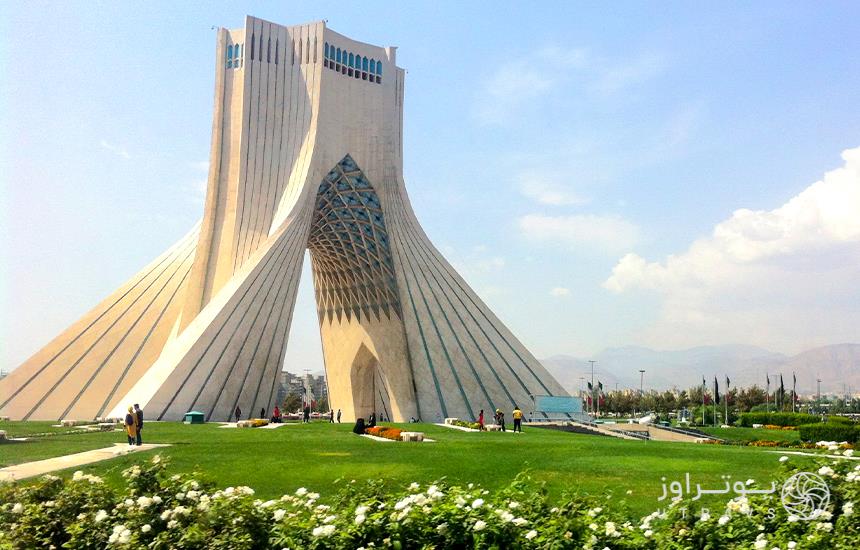

Standing proudly in Tehran’s Azadi Square, the Azadi Tower is a symbol of Iran’s rich heritage and national pride. Built in 1971 to mark the 2,500th anniversary of the Persian Empire, this architectural masterpiece blends modern and traditional Persian design. Originally named Shahyad Tower, it was renamed “Azadi” (freedom) after the 1979 revolution. With Hamintour, your visit is enriched through curated tours, seamless logistics, and expert guides, connecting you to Tehran’s cultural treasures like Golestan Palace. From its museum to vibrant events, discover why Azadi Tower is a must-visit in Iran’s capital.
History
Inaugurated in 1971, the Azadi Tower commemorated 2,500 years of Persian civilization. Designed by Hossein Amanat, it was initially called Shahyad Tower (“in memory of the Shah”) before being renamed Azadi post-revolution. A beacon of national identity, it survived partial damage during the Iran-Iraq War in the 1980s and was restored to its original glory. Hamintour’s guided tours delve into its historical significance, linking it to Tehran’s role as Iran’s cultural and political hub.
Book your Tehran adventure with Hamintour.
Architecture
Hossein Amanat’s design merges modern elegance with Persian heritage. The 45-meter-tall tower, clad in 8,000 white marble blocks, symbolizes purity and virtue. Its eight massive columns echo the ancient ruins of Persepolis, while intricate geometric carvings reflect Safavid and Achaemenid influences. The tower’s illuminated facade glows with colorful lights during events like Nowruz. Hamintour’s tours highlight its architectural brilliance, offering insights into its cultural symbolism.
Significance
The Azadi Tower is more than a monument; it’s a cultural hub hosting events like Nowruz celebrations and political gatherings. A symbol of Iranian resilience, it attracts locals and tourists alike. Hamintour’s curated itineraries include visits during festivals, ensuring you experience its vibrant atmosphere and national pride.
Museum
At the tower’s base, a museum showcases Iran’s 2,500-year history through artifacts, pottery, coins, calligraphy, and paintings. A miniature model of the tower is a highlight. Open Sunday to Friday, 9 AM to 7 PM, it can get crowded on holidays. Hamintour recommends weekday visits for a quieter experience, with guides providing context on Persian civilization.
Photography Tips
Azadi Tower is a photographer’s dream, with Hamintour offering tips for stunning shots:
-
Best Time: Early morning or late afternoon for soft, flattering light.
-
Angles: Try low angles to capture the tower’s height or side angles to include Azadi Square.
-
Wide-Angle Lens: Ideal for encompassing the tower and its surroundings.
-
Panorama Shots: Use panoramic mode to showcase the tower’s grandeur and nearby fountains.
-
Night Photography: Capture the tower’s colorful illuminations during events.
Facts
-
Construction: Took five years (1966–1971).
-
Materials: Over 8,000 white marble blocks.
-
Height: 45 meters, with a 63-meter underground foundation.
-
Restoration: Repaired after Iran-Iraq War damage in the 1980s.
-
Lighting: Features dynamic LED displays for cultural events.
Transportation
Located in Azadi Square, the tower is accessible via:
-
Tehran Metro: Line 4, Azadi Station (5-minute walk).
-
Bus: Multiple routes stop at Azadi Square.
-
Taxi: 20–30 minutes from central Tehran, arranged by Hamintour.
-
Airports: 10 km from Mehrabad Airport (15 minutes) or 47 km from Imam Khomeini Airport (40 minutes).
Hamintour’s private transfers ensure a hassle-free journey, with guides enhancing your visit.
Visiting Tips
-
Hours: Sunday–Friday, 9 AM–7 PM; closed Saturdays.
-
Duration: 30–60 minutes for the tower and museum.
-
Best Time: Weekdays for fewer crowds; avoid holidays for a quieter experience.
-
Tickets: Affordable entry; Hamintour includes museum access in tour packages.
-
Dress Code: Modest attire recommended, respecting local customs.
Book your visit with Hamintour.
Nearby Attractions
Azadi Tower’s central location offers easy access to Tehran’s landmarks, included in Hamintour’s tours:
-
Golestan Palace (10 km): A UNESCO-listed Qajar palace.
-
National Jewelry Museum (9 km): Home to Iran’s imperial jewels.
-
Tehran Museum of Contemporary Art (7 km): Showcasing global and Iranian art.
-
Milad Tower (8 km): Iran’s tallest structure with panoramic views.
-
Grand Bazaar (10 km): A vibrant market for crafts and spices.
Why Hamintour?
Hamintour enhances your visit with:
-
Expert Guides: Sharing the tower’s history and Tehran’s cultural legacy.
-
Seamless Logistics: Airport transfers, tickets, and tour planning.
-
Curated Itineraries: Combining tower visits with nearby attractions and dining.
-
Personalized Service: Tailored for history buffs, photographers, or families.
Conclusion
The Azadi Tower, a 1971 masterpiece in Tehran, symbolizes Iran’s heritage and resilience. Its white marble design, vibrant museum, and role as a cultural hub make it a must-visit. Hamintour’s guided tours, seamless bookings, and personalized itineraries ensure an immersive experience, connecting you to Tehran’s landmarks like Golestan Palace. Book today with Hamintour to explore the Azadi Tower’s timeless allure.
FAQs
What was the Azadi Tower originally called?
Shahyad Tower, meaning “in memory of the Shah,” renamed Azadi (“freedom”) in 1979.
What other attractions should I visit in Tehran?
Golestan Palace, National Jewelry Museum, Tehran Museum of Contemporary Art, Milad Tower, and Grand Bazaar, all included in Hamintour’s itineraries.
What’s the best time to visit for views?
Early morning or late afternoon for soft light, ideal for photography, as recommended by Hamintour.