
Nestled in the sun-kissed southeast of Iran, Kerman stands as a captivating blend of ancient fortresses, lush Persian gardens, and architectural wonders that whisper tales of empires long past. As one of Iran’s most underrated destinations, Kerman offers travelers a deep dive into the nation’s rich cultural tapestry, from Zoroastrian roots to Safavid grandeur. For an unforgettable journey through this historic province, hamintour, a premier Iranian tourism specialist, crafts bespoke itineraries that uncover Kerman’s essence with expert local guides and seamless logistics. This guide spotlights the top five must-see attractions, expanded with insider insights, historical depth, and practical tips to elevate your visit.
1. Ganjali Khan Complex: A Safavid Masterpiece
At the heart of Kerman’s bustling old quarter lies the Ganjali Khan Complex, a sprawling 17th-century ensemble commissioned by the formidable Safavid governor Ganjali Khan. This architectural gem encompasses a vibrant bazaar teeming with spice merchants and silversmiths, a grand central square perfect for people-watching, an ornate public bathhouse adorned with intricate tilework depicting mythical scenes, a historic mint where silver coins once clinked under royal decree, a sturdy caravanserai for Silk Road traders, and even a water reservoir ingeniously designed to sustain the arid city. The complex’s turquoise domes and frescoed walls evoke the opulence of Persia’s golden age, blending functionality with artistry in a way that still pulses with life today.
What sets this site apart is its role as a living museum of Kerman’s mercantile past—imagine haggling for pistachio confections or admiring Qajar-era murals that reveal glimpses of nomadic life. For hamintour travelers, a guided tour here often includes a private sunset stroll through the bazaar, where you can sample local kolompeh pastries, flaky delights filled with dates and cardamom, unique to Kerman’s culinary scene. Built amid the Safavid revival after Mongol devastations, the complex symbolizes resilience, drawing history buffs and photographers alike. Plan for at least two hours to wander its labyrinthine alleys, and don’t miss the anthropology museum within the bathhouse, housing eerie yet fascinating mummified remains from ancient explorations.
2. Bam Citadel: The World’s Largest Adobe Fortress
Just a short drive from Kerman, the Bam Citadel—or Arg-e Bam—rises dramatically from the desert floor as a UNESCO World Heritage Site and the planet’s most expansive adobe structure, spanning over 20,000 square meters. Dating back to the Achaemenid era around 500 BCE but flourishing in the 6th century CE under Sassanian rule, this mud-brick behemoth served as a self-sustaining citadel with homes, mosques, and bazaars etched into its walls. Its labyrinth of wind-sculpted towers and ramparts once protected date palm groves that fed entire caravans, embodying Iran’s ingenious adaptation to harsh climates through qanat irrigation systems that channeled mountain water underground for millennia.
Tragically scarred by a 2003 earthquake that claimed thousands of lives, Bam’s restoration over the past two decades has been a testament to Iranian perseverance, with UNESCO-led efforts revealing frescos and pottery shards that hint at pre-Islamic Zoroastrian rituals. Visitors today climb its sun-warmed paths at dawn to avoid the midday heat, rewarded with panoramic views of the surrounding Lut Desert, Iran’s otherworldly UNESCO-listed expanse of star dunes and salt flats. Hamintour enhances this experience with eco-sensitive jeep safaris from Bam, pairing citadel hikes with picnics under acacia trees, where guides share legends of Bam as a Silk Road oasis. For adventure seekers, combine it with a visit to nearby date farms, harvesting Iran’s sweetest exports—perfect for a taste of authentic desert hospitality. Allocate a full day, including time to reflect at the poignant earthquake memorial garden.
3. Rayen Castle: Echoes of Medieval Splendor
Perched on a rocky outcrop 100 kilometers south of Kerman, Rayen Castle emerges as a remarkably intact 11th-century adobe fortress, often dubbed “Iran’s mini-Bam” for its similar construction yet superior preservation. Erected during the Seljuk dynasty as a defensive stronghold against invading hordes, its concentric walls, watchtowers, and underground cisterns housed up to 1,000 residents, complete with a mosque, hammam, and granaries that sustained sieges. The castle’s geometric brickwork and arched gateways showcase Seljuk engineering prowess, with interiors featuring stucco reliefs of lions and lotuses—symbols of royal power and fertility drawn from ancient Persian lore.
Unlike earthquake-ravaged Bam, Rayen’s stability allows exploration of its upper levels, where narrow passages reveal hidden courtyards blooming with pomegranate trees, a nod to the region’s fertile oases. It’s a haven for architecture enthusiasts, illustrating how Iranian-Islamic design harmonized defense with domestic life, from wind-catching badgirs that cooled summer nights to prayer niches aligned with Mecca. Through hamintour’s tailored excursions, you can join a camel trek from Rayen into the adjacent Hezar Mountains, spotting ibex and wild pistachios that flavor Kerman’s famed nuts. Local lore whispers of ghostly Seljuk warriors patrolling the ramparts—adding a thrill for twilight visits. Best explored in spring (March-May) when wildflowers carpet the slopes, this site merits three hours, followed by a traditional lunch of kashk-e bademjan in Rayen’s teahouses.
4. Jameh Mosque of Kerman: Pillars of Faith and History
Dominating Kerman’s skyline with its soaring minarets, the Jameh Mosque—also known as the Grand Friday Mosque—stands as one of Iran’s oldest congregational mosques, with foundations tracing to the 8th century CE during the Abbasid Caliphate. Evolving through layers of reconstruction, its current Mozaffarid form from the 14th century boasts a majestic iwan (vaulted hall) with turquoise tiles and Kufic inscriptions from the Quran, plus a mihrab (prayer niche) inlaid with shimmering faience that catches the light like a jewel box. This architectural palimpsest reflects Kerman’s turbulent history: early Zoroastrian fire temple remnants beneath the dome hint at pre-Islamic transitions, while later Seljuk additions include geometric muqarnas squinches that inspired Ottoman designs.
Beyond its beauty, the mosque served as a scholarly hub, where astronomers mapped stars and poets recited verses under its vast hypostyle hall supported by 48 columns. Today, it’s a serene oasis amid the city’s chaos, where locals gather for prayers and pilgrims seek blessings at the tomb of Sufi mystic Abu Sa’id. Hamintour’s cultural immersions often start here with a call-to-prayer dawn visit, followed by calligraphy workshops using inks from local minerals, connecting you to Kerman’s artisanal soul. For deeper insight, climb the minaret for views over the Vakil Bazaar below, alive with the scent of saffron and rosewater. Women should opt for modest attire, and visits are free—ideal for a half-day paired with nearby Gonbad-e Jabaliye, Kerman’s enigmatic stone dome.
5. Shahzadeh Garden: Paradise Reimagined in the Desert
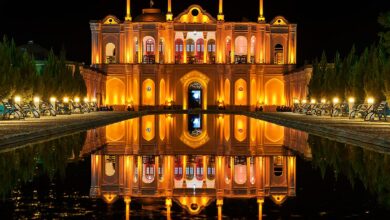
En route to Kerman from the south, the Shahzadeh Garden in Mahan unfolds as a UNESCO-listed Persian paradise, a 19th-century Qajar-era marvel spanning five terraced hectares that ingeniously defy the desert’s aridity. Designed as a royal retreat for Qajar prince Abdol Hamid Mirza, its cascading fountains—fueled by a 40-kilometer qanat from the mountains—create illusory waterfalls amid cypress allées, rose arbors, and orchards heavy with figs and apricots. The central pavilion, a two-story folly with mirrored halls and lion-footed bathtubs, overlooks pools where koi dart like living jewels, embodying the Persian chahar bagh layout symbolizing the four gardens of Eden.
This verdant symphony contrasts starkly with the encircling sands, highlighting Iran’s hydraulic genius that sustained empires. Seasonal blooms—tulips in spring, pomegranates in fall—draw butterflies and poets alike, while evening light shows illuminate the water channels in ethereal blues. Hamintour elevates this with private garden picnics featuring Mahan’s ruby-red sorbet, or extensions to the adjacent Shah Nematollah Vali Shrine, a Sufi complex with turquoise-tiled mausoleums echoing Rumi’s verses. As a symbol of harmony between man and nature, it’s profoundly restorative—spend an afternoon here, wandering shaded paths and pondering the garden’s inscription: “A garden is a house of hope.” Entry is affordable, and it’s family-friendly with ample benches for contemplation.
Kerman’s allure lies in its seamless fusion of history, nature, and warmth, making it a cornerstone of any Iranian odyssey. With hamintour’s insider access to off-the-beaten-path tales and sustainable transport, your exploration becomes more than sightseeing—it’s a soul-stirring connection to Persia’s enduring spirit.
Frequently Asked Questions (FAQs)
- What makes Ganjali Khan Complex unique in Kerman? It’s a 17th-century Safavid hub blending a bazaar, bathhouse, and mint, showcasing Kerman’s trade heritage with vibrant tilework and hidden museums.
- Is Bam Citadel worth the trip from Kerman city center? Absolutely— this UNESCO adobe fortress, the world’s largest, offers epic desert views and insights into ancient Silk Road life, just 180 km away.
- When is the best time to visit Rayen Castle? Spring (March-May) for mild weather and blooming flora, allowing comfortable hikes through its well-preserved 11th-century walls.
- What architectural styles feature in Jameh Mosque of Kerman? A mix of Abbasid foundations, Seljuk muqarnas, and Mozaffarid tiles, reflecting 1,200 years of Islamic evolution with Zoroastrian undertones.
- How does Shahzadeh Garden demonstrate Persian engineering? Through its qanat-fed fountains and terraced design, creating a lush oasis that symbolizes paradise and sustained Qajar royalty.
- Can hamintour customize Kerman tours for families? Yes, with child-friendly pacing, garden picnics, and interactive bazaar experiences tailored to all ages.
- What local cuisine should I try near these Kerman attractions? Kolompeh pastries in the bazaar, kashk-e bademjan at castle teahouses, and pistachio-based desserts in Mahan’s gardens.
- Are there hiking opportunities around Bam or Rayen? Yes, moderate trails in the Hezar Mountains offer ibex spotting and pistachio groves, guided safely by hamintour experts.
- How has Kerman’s history influenced its attractions? From Sassanian citadels to Safavid complexes, sites like Bam reflect resilience post-Mongol invasions and Zoroastrian legacies.
- What’s a must-pack for Kerman sightseeing? Sunscreen, modest clothing for mosques, comfortable shoes for citadel climbs, and a reusable water bottle for desert hydration.