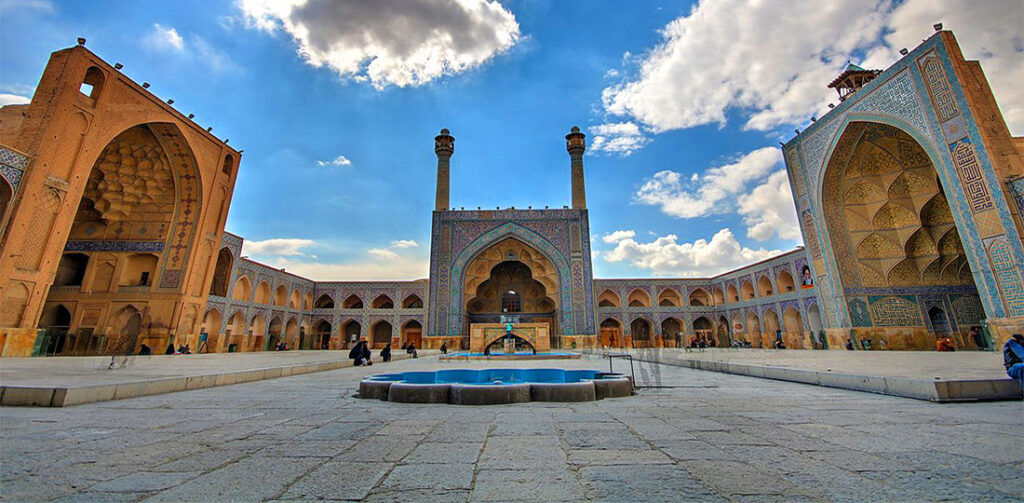


Nestled in the heart of Isfahan, Iran, the Jameh Mosque, also known as the Atiq or Friday Mosque, stands as a testament to the region’s rich history and architectural brilliance. This UNESCO World Heritage Site, recognized since 2012, is one of Iran’s oldest and largest mosques, with construction and renovations spanning from 771 AD to the late 20th century. Renowned for its intricate brickwork, majestic domes, and iconic four-ivan courtyard, the mosque has influenced Islamic architecture worldwide. Adjacent to the vibrant Grand Bazaar of Isfahan, it serves as a spiritual and cultural hub, attracting travelers and history enthusiasts alike. Join Hamintour as we explore the captivating history, architecture, and hidden gems of this architectural masterpiece.
A Journey Through Time: History of Jameh Mosque
The Jameh Mosque of Isfahan is a living chronicle of Iran’s architectural and cultural evolution. Dating back to the 8th century, this iconic structure predates many of Isfahan’s landmarks, making it the city’s oldest monument. Originally believed to be a Sassanid fire temple, it was transformed into a modest mosque during the Arab conquest in the 2nd and 3rd centuries of the Hijri calendar. Over time, it evolved through contributions from various dynasties, including the Dilamian, Seljuk, Aq Qoyunlu, Ilkhani, Safavid, and Qajar periods.
The mosque’s historical significance is evident in its artifacts, such as a Sassanid-era column adorned with intricate motifs in the northern section. Key features like the Nezam-al Molk Dome, the four-ivan courtyard, the Mozaffari School, and the Al-Jayto Altar showcase the progression of Islamic architecture. With Hamintour, you can explore this historical gem and uncover the stories embedded in its ancient walls.
Why It Matters
- A UNESCO World Heritage Site since 2012
- Reflects pre-Islamic and Islamic architectural influences
- A cultural bridge connecting multiple dynasties
Architectural Wonders: Key Features of the Mosque
The Jameh Mosque of Isfahan is a masterpiece of Islamic architecture, renowned for its innovative four-ivan courtyard design, which became a blueprint for mosques across the region. Its intricate brickwork, towering domes, and detailed tilework reflect centuries of craftsmanship. The mosque seamlessly blends elements from various eras, creating a harmonious blend of functionality and beauty. From the grand courtyard to the sacred lavers, each section tells a story of artistic and spiritual significance.
With Hamintour, you can embark on a guided tour to marvel at the mosque’s architectural splendor, from its elegant domes to its ornate porches. This iconic landmark is a must-visit for anyone seeking to understand Iran’s rich heritage.
Highlights
- Iconic four-ivan courtyard design
- Exquisite brickwork and tile artistry
- A model for mosque architecture worldwide
Exploring the Courtyard: The Heart of the Mosque
The Jameh Mosque’s courtyard, measuring 70 by 60 meters, is the vibrant heart of the complex. Flanked by four grand porches and two-story pavilions, it serves as the main entrance and a gathering space for worshippers and visitors. At its center lie two ponds: a square main pond and a polygonal pond to the north, adding to the courtyard’s serene ambiance. An inscription near the Majlisi door reveals that the courtyard was paved with stones in 1084 AH by Mohammad Qoli, showcasing its historical significance.
Two sacred plaques, dating back to 935 AH during Shah Tahmasab I’s reign, adorn the entrance. Measuring 55 cm by 52 cm, these square panels are revered by visitors, who often touch them for blessings. Plan your visit with Hamintour to experience the courtyard’s tranquil beauty and spiritual aura.
Why Visit?
- Spacious courtyard with historic ponds
- Sacred plaques with spiritual significance
- A perfect blend of architecture and serenity
Darvish Porch: A Cultural and Spiritual Haven
The Darvish Porch, a standout feature of the Jameh Mosque, is a testament to its cultural and religious importance. Built during the Seljuk period, this expansive porch, measuring 60.1 meters long and 9 meters wide, is the narrowest and deepest in the mosque. Its intricate design and ornate decorations made it a focal point for religious teachings, particularly during the Safavid era, when it hosted hadith studies and promoted Ahl al-Bayt culture.
Today, the Darvish Porch remains a captivating space for visitors, offering a glimpse into Isfahan’s rich spiritual heritage. With Hamintour, you can explore this historic porch and its role in shaping the mosque’s legacy.
Why Visit?
- Rich history from the Seljuk and Safavid eras
- Intricate design and cultural significance
- A serene space for reflection
Taj-Almalek Dome: A Razi Architectural Gem
Located in the northern section of the mosque, the Taj-Almalek Dome, also known as the “earthen dome” or “khagi,” is a stunning example of Razi-style architecture. Originally built outside the mosque’s premises, this dome features a simple yet elegant Kufic script inscription honoring the 54th verse of Surah A’raf. Its design, with a circular form rising from a square base, showcases the ingenuity of early Islamic architects.
The dome’s understated beauty and historical significance make it a must-see for architecture enthusiasts. Let Hamintour guide you to this hidden gem within the Jameh Mosque complex.
Why Visit?
- Iconic Razi-style architecture
- Historic Kufic script inscription
- A serene and lesser-known dome
Khajeh Nezam-al Molk Dome: A Seljuk Masterpiece
Commissioned by Khajeh Nezam-al Molk, the vizier of the Seljuk Empire under Malik Shah, this magnificent dome dominates the southern side of the mosque. Measuring over 15 meters in diameter and soaring above 30 meters, it is a pinnacle of Razi-style architecture. Its square base transitions into an octagonal form, culminating in a circular dome, a design that reflects the era’s architectural innovation.
The dome’s open eastern, western, and northern sections were later enhanced with additional structures, adding to its grandeur. Explore this Seljuk masterpiece with Hamintour and marvel at its timeless elegance.
Why Visit?
- A grand example of Seljuk architecture
- Impressive scale and intricate design
- A symbol of Isfahan’s historical legacy
Ivan Sahib Porch: Grandeur in Design
The Ivan Sahib Porch, located on the southern side of the Jameh Mosque, is a striking feature measuring 80.13 meters long and 50.13 meters wide. Its expansive design and intricate ornamentation make it one of the mosque’s most impressive porches. Serving as a gathering space for worshippers, it reflects the architectural brilliance of Isfahan’s artisans.
With Hamintour, you can explore the Ivan Sahib Porch and its role in the mosque’s spiritual and cultural life, immersing yourself in its grandeur and history.
Why Visit?
- Expansive and ornate design
- A key gathering space for worshippers
- Rich in architectural detail
Mozaffari School: A Center of Learning
The Mozaffari School, located at one end of the Jameh Mosque, is a historic center of education and spirituality. This two-story structure features classrooms dedicated to teaching, with a 10-by-10-meter porch, dome, and altar on its southern side. Connected to the main mosque by 5-meter-wide corridors, the school has been a hub for intellectual and religious pursuits for centuries.
Discover the Mozaffari School’s historical significance with Hamintour and learn how it shaped Isfahan’s cultural landscape.
Why Visit?
- A historic center for education
- Beautifully designed porch and dome
- A glimpse into Isfahan’s intellectual heritage
Sacred Lavers: Symbols of Faith
The Jameh Mosque features four sacred lavers, each with unique historical and spiritual significance. The Persian stone laver in the Darvish Porch, with a 115 cm diameter, is adorned with Persian and Arabic inscriptions in Sols script, though half of it is damaged. The Sengab Ivan Sahib, located in a square stone pond, features Salawat inscriptions dedicated to the Fourteen Innocents (PBUH). Two smaller lavers, one near the courtyard pond and another by the master’s porch, add to the mosque’s sacred ambiance.
These lavers are not only functional but also symbols of faith, attracting visitors seeking spiritual connection. Plan your visit with Hamintour to explore these sacred elements.
Why Visit?
- Historic lavers with intricate inscriptions
- Spiritual significance for visitors
- A unique feature of the mosque’s design
Plan Your Visit with Hamintour
Ready to explore the Jameh Mosque of Isfahan? Book your accommodations in Isfahan with Hamintour for a seamless and memorable trip. Stay at top hotels like the Darvish Residence or other luxurious options near the mosque. For hassle-free travel, secure affordable flights to Iran through Hamintour’s flight booking page and embark on a journey to discover Isfahan’s cultural treasures.
Travel Tips
- Visit during early morning or late afternoon for fewer crowds.
- Wear modest clothing to respect the mosque’s sacred nature.
- Bring a camera to capture the intricate architecture.
Conclusion: Why Jameh Mosque is a Must-Visit
The Jameh Mosque of Isfahan is more than a place of worship; it’s a living museum of Iran’s architectural and cultural heritage. From its ancient Sassanid roots to its Seljuk and Safavid enhancements, the mosque embodies centuries of artistry and spirituality. Whether you’re drawn to its grand domes, intricate porches, or sacred lavers, this UNESCO World Heritage Site promises an unforgettable experience. With Hamintour, you can explore this iconic landmark and uncover the stories that make it one of Iran’s most cherished treasures.
FAQs: Your Guide to Jameh Mosque
1. Where is the Jameh Mosque of Isfahan located?
The mosque is located in the heart of Isfahan, Iran, near the Grand Bazaar, making it easily accessible for visitors.
2. What are the visiting hours of the Jameh Mosque?
The mosque is typically open from morning to evening, with specific hours varying by season. Check with Hamintour for the latest schedule.
3. What are the key parts of the Jameh Mosque?
Key features include the four-ivan courtyard, Darvish Porch, Taj-Almalek Dome, Khajeh Nezam-al Molk Dome, Ivan Sahib Porch, Mozaffari School, and sacred lavers.