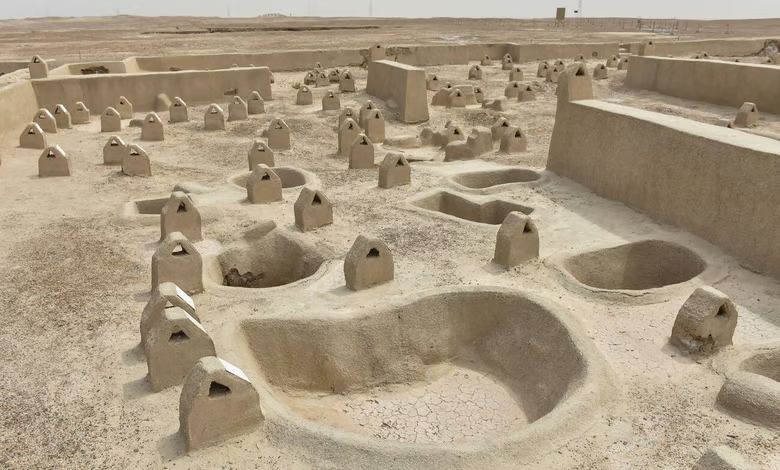

Picture yourself standing on the sun-drenched plains of Kerman, where the gentle ripples of the Halil River carry whispers of an ancient empire lost to time. The Jiroft civilization, a remarkable Bronze Age society dating back to 3000 BCE, has risen from the sands of southeast Iran to redefine our understanding of humanity’s earliest urban centers. Discovered by chance in 2001, this enigmatic culture boasts exquisite artistry, a mysterious writing system, and monumental architecture that rival the famed civilizations of Mesopotamia and the Indus Valley.
This comprehensive guide, crafted for first-time travelers and history buffs, delves deep into the origins, rulers, cultural triumphs, and archaeological wonders of the Jiroft civilization. From the towering Konar Sandal mounds to the elusive legend of Aratta, join us on a journey through Iran’s ancient past with hamintour as your guide to this forgotten world.
Legacy of the Burnt City
Shahr-e Sukhteh, a Bronze Age city intricately linked to the Jiroft culture, rests near the Helmand River in southeast Iran. Recognized as a UNESCO World Heritage Site in 2014. Photo by Amin Bre / Alamy Stock Photo
The Rise of the Jiroft Civilization
The Jiroft civilization, often referred to as the Halilrud culture, thrived in the fertile valleys of Kerman and Sistan-Baluchestan provinces from roughly 3000 to 2000 BCE. Nestled along the life-giving Halil River, this Bronze Age society emerged as a vibrant hub of trade, craftsmanship, and urban innovation. Its discovery in 2001, triggered by floods that unearthed ancient tombs near Jiroft, sent shockwaves through the archaeological world. Led by Iranian archaeologist Youssef Majidzadeh, excavations revealed a highly advanced society with its own script, architectural marvels, and a distinct cultural identity, sparking debates about its role as a potential “cradle of civilization” alongside Mesopotamia and the Indus Valley.
For centuries, the Jiroft region, framed by rugged mountains, was dismissed as a nomadic backwater. However, discoveries at sites like Konar Sandal, Daghianus, and Mahtoutabad tell a different story: a sprawling urban network with grand structures, artisanal workshops, and extensive burial grounds. Radiocarbon dating traces the earliest settlements to the fifth millennium BCE, with the civilization reaching its zenith around 2500 BCE. This timeline positions Jiroft as a contemporary of Sumer and Harappa, challenging the long-held belief that Mesopotamia alone birthed urban culture. With hamintour, you can explore these ancient sites and uncover the secrets of a civilization that reshaped history.
Book Bus Tickets from Kerman to Tehran with hamintour
A Tragic Rediscovery: Looting and Loss
The rediscovery of Jiroft is a tale of both triumph and tragedy. In 2001, heavy flooding along the Halil River washed away layers of sediment, exposing thousands of graves in the Mahtoutabad necropolis. Driven by poverty and the lure of the global antiquities market, locals and looters plundered the site, unearthing exquisite chlorite vessels, intricate ceramics, and dazzling jewelry. These treasures, initially of unknown origin, flooded international markets, leaving archaeologists scrambling to trace their source. By the time authorities stepped in, entire cemeteries had been stripped bare, with no skeletal remains left behind—a loss described as one of the greatest archaeological plunderings in history. While some artifacts were recovered, many remain in private collections or foreign museums, a poignant reminder of the need for preservation.
Formal excavations, launched in 2003 under Majidzadeh’s leadership, brought international teams to salvage what remained. Despite the devastation, the recovered artifacts—over 400 seal impressions, inscribed tablets, and ornate vessels—revealed a civilization of extraordinary sophistication. These findings underscored Jiroft’s pivotal role in the ancient world and highlighted the urgent need for protective measures. With hamintour, you can visit these sites and witness the ongoing efforts to preserve this cultural treasure.
Book Train Tickets from Kerman to Tehran with hamintour
Ruins of Shahr-e Sukhteh, a Bronze Age city near Zabol, linked to the Jiroft culture. A UNESCO World Heritage Site since 2014. Photo by Amin Bre / Alamy Stock Photo
Hallmarks of Jiroft’s Cultural Identity
The Jiroft civilization captivated the ancient world with its artistic brilliance and technological prowess. Its signature craft was chlorite stonework, producing vessels adorned with intricate carvings of humans, animals, and mythological scenes. These masterpieces, found as far afield as the Euphrates and the Indus Valley, point to vast trade networks that connected Jiroft to distant lands. The use of precious materials like lapis lazuli from Afghanistan and carnelian from the Indus Valley further cements Jiroft’s status as a commercial and cultural crossroads.
Find Hotels in Kerman from €5 with hamintour
Artistry and Iconography
Jiroft’s artisans were masters of stone carving, particularly in soapstone and chlorite. Their vessels feature dynamic motifs—scorpions, serpents, goats, lions, and humans engaged in rituals or triumphs. A standout technique was inlay work, using gemstones to create glowing eyes or intricate animal patterns, setting Jiroft apart from its contemporaries. One iconic artifact depicts a hoofed figure clutching cheetahs, flanked by scorpions, echoing Sumerian myths like the tale of Etana. The precision of these interwoven designs suggests advanced mathematical and artistic skills.
The iconography of Jiroft shares ties with Mesopotamian and Indus Valley traditions, hinting at cultural exchanges across vast distances. Scenes of palm groves, ziggurat-like structures, and flood motifs suggest shared mythologies, yet Jiroft’s artistic style remains distinct, reflecting a unique worldview. French archaeologist Jean Perrot noted that Jiroft’s aesthetic diverged from Sumerian sensibilities, offering a fresh perspective on Bronze Age creativity.
Palm Motifs on Jiroft Vessel: A cylindrical soft stone vessel from the Jiroft culture, c. 2000–1800 BCE, adorned with palm tree designs. Excavated from Saar Necropolis. Photo by Ruelleruelle / Alamy Stock Photo
The Jiroft Script: A Literary Milestone
One of Jiroft’s most revolutionary discoveries is its writing system, known as the Jiroft script or proto-Elamite. Found on clay and stone tablets at sites like Konar Sandal, Tepe Yahya, and Tepe Sialk, this script features linear and geometric symbols, predating Sumerian cuneiform. Some scholars argue it may be the world’s oldest writing system, potentially originating in Jiroft before influencing regions to the west. Despite extensive study, the script remains undeciphered, its contents—possibly trade records, laws, or religious texts—shrouded in mystery. This discovery challenges the notion that Sumerians pioneered writing, positioning Jiroft as a trailblazer in literacy.
Tepe Sialk Museum in Kashan: A view of the small museum at the ancient archaeological site of Tepe Sialk, a key location in Iran’s prehistoric heritage. Photo by Konrad Zelazowski / Alamy Stock Photo
Metallurgy and Craftsmanship
Jiroft’s artisans were also skilled metallurgists, forging bronze tools, weapons, and jewelry using a unique copper-arsenic alloy, distinct from the copper-tin alloys prevalent elsewhere. This technique, while effective, involved handling toxic arsenic, a process still under study by researchers. Beyond metallurgy, Jiroft excelled in ceramics, textiles, and calligraphy, blending utility with aesthetic beauty. The presence of seal impressions points to a sophisticated administrative system, likely used for trade, taxation, or governance, underscoring the civilization’s organizational complexity.
Ancient Jug from Tepe Sialk, Luristan: A 900–600 BCE jug from Tepe Sialk in Kashan, reflecting the exquisite craftsmanship of the Luristan culture. Photo by Peter Horree / Alamy Stock Photo
The Mystery of Aratta or Marhasi
Archaeologist Youssef Majidzadeh has proposed that Jiroft may be the legendary Aratta, a prosperous kingdom described in Sumerian poetry as a land rich in gold and lapis lazuli. These ancient texts, discovered in Uruk, recount trade negotiations between Enmerkar, king of Uruk, and Aratta’s ruler, who exchanged artisans and precious stones for grain. The poems place Aratta beyond Susa and seven mountain ranges, a description that aligns with Jiroft’s mountainous terrain. However, the lack of definitive evidence has fueled skepticism, with some scholars questioning whether Aratta was a real place or a mythical construct.
Alternatively, Jiroft may correspond to Marhasi, a kingdom referenced in Akkadian inscriptions as a rival of Akkad (2350–2200 BCE). These texts describe Rimush, king of Akkad, defeating Abalgamash, king of Marhasi, and seizing control of gold and silver mines. This timeline coincides with Jiroft’s peak, lending weight to the theory. Unlike Aratta, Marhasi is firmly dated in historical records, making it a stronger candidate. Regardless of its true identity, Jiroft’s wealth, artistry, and influence solidify its status as a major Bronze Age power.
Stone Carving from Susa, Proto-Elamite Period: A proto-Elamite stone carving from Susa, dating to 3500–2850 BCE, showcasing early artistic expression in ancient Iran. Photo by The Print Collector / Alamy Stock Photo
Archaeological Wonders of Jiroft
The Jiroft civilization left behind a treasure trove of archaeological sites, many still being excavated, offering travelers a unique opportunity to step into one of humanity’s earliest urban centers. With hamintour, you can explore these remarkable landmarks and witness history firsthand.
Konar Sandal: The Heart of Jiroft
Located 30 kilometers south of Jiroft, the Konar Sandal mounds are the epicenter of this ancient civilization. The northern mound features a colossal ziggurat, one of the largest known, constructed with over four million bricks across three tiers. Likely a temple dedicated to a deity, it dates to the mid-third millennium BCE, predating many Mesopotamian ziggurats. The southern mound houses a fortified citadel, with smaller structures buried beneath layers of sediment. Excavations have uncovered chlorite vessels, inscribed tablets, and seals, revealing a thriving urban hub. The Jiroft Archaeological Museum on Halil Jiroft Boulevard showcases these treasures, making it an essential stop for visitors.
Proto-Elamite Tablet: A tablet with inscriptions from Tepe Yahya, dating to 3000 BCE, displayed at the National Museum of Iran in Tehran. Photo by Suzuki Kaku / Alamy Stock Photo
Daghianus: Palaces and Tombs
Situated 50 kilometers east of Jiroft, Daghianus spans 50 hectares and includes a grand palace (80 by 60 meters), a temple, and residential quarters. Excavations have revealed tombs, bronze tools, and ceramics, indicating a stratified society with a wealthy elite. The site’s scale suggests it served as a regional administrative center, possibly linked to the citadel at Konar Sandal. Visiting Daghianus with hamintour offers a glimpse into the opulence and organization of Jiroft’s ruling class.
Ziaratgah Castle, Shahdad, Kerman: Located in the Lut Desert near Shahdad, this castle provides insight into ancient desert architecture. Photo by Tminaz / Alamy Stock Photo
Mahtoutabad Necropolis
The Mahtoutabad necropolis, exposed by the 2001 floods, marked the initial discovery of Jiroft’s riches. Though heavily looted, it yielded thousands of chlorite vessels and jewelry adorned with carnelian and lapis lazuli. Dating to 5000 BCE, the graves reflect beliefs in the afterlife, as artifacts were buried alongside the deceased. The necropolis highlights Jiroft’s wealth and cultural depth, making it a poignant stop for travelers seeking to understand this ancient society.
Assyrian Relief Depicting Ashurbanipal’s Campaign: Displayed in the Louvre Museum, this relief shows King Ashurbanipal’s campaign against Elamite prisoners in 645 BCE. Photo by Azoor Photo / Alamy Stock Photo
Connections to Other Sites
Jiroft’s influence reached far beyond its borders, with artifacts like chlorite vessels found from the Amu Darya to Tarut Island. Sites like Shahr-e Sukhteh (Burnt City), Tepe Yahya, Shahdad, and Tepe Bampur show cultural ties to Jiroft, suggesting a shared cultural zone with the Helmand culture in western Afghanistan. These connections highlight Jiroft’s role as a trade and cultural hub in the ancient world.
Ancient Assyrian Cuneiform Writing: A glimpse of Assyrian cuneiform, showcasing Sumerian influences on early written communication. Photo by Pal Szilagyi Palko / Alamy Stock Photo
Spiritual and Cultural Traditions
The spiritual life of the Jiroft civilization is glimpsed through its art and architecture. The ziggurat at Konar Sandal likely served as a religious center, possibly dedicated to deities tied to nature or mythology. Motifs of bulls, eagles, and floods echo Sumerian stories, while unique symbols like “handbag” artifacts may have functioned as weights or ritual objects. The absence of deciphered texts limits our understanding, but the presence of a stratified society suggests priests and rulers played key roles in religious ceremonies.
The Jiroft people likely spoke a language related to proto-Elamite, though it remains unknown. Their script, with its linear and geometric forms, was used for administrative or ritual purposes, distinct from cuneiform and hieroglyphs. Its undeciphered status keeps Jiroft’s spiritual and cultural secrets locked away, adding to its allure for modern explorers.
Shahr-e Sukhteh, the Burnt City: A Bronze Age city in southeast Iran, offering a window into the Jiroft culture. A UNESCO World Heritage Site since 2014. Photo by Amin Bre / Alamy Stock Photo
Planning Your Journey with hamintour
Visiting Jiroft offers a rare opportunity to explore a 5,000-year-old civilization. The ideal time to travel is spring (March–May) or autumn (September–November), when Kerman’s desert climate is temperate. Secure a tourist visa through Iran’s embassies or trusted agencies like hamintour, and book guided tours from Tehran, Kerman, or Shiraz for expert-led experiences. The Jiroft Archaeological Museum on Halil Jiroft Boulevard displays bronze, soapstone, and pottery artifacts, making it a highlight of any visit. Dress modestly, carry cash, and respect local customs for a seamless journey.
Beyond archaeological sites, explore the Delfard Valley, 25 kilometers from Jiroft, known for its lush citrus groves, palm trees, and cascading waterfalls. Often called “Little India,” Jiroft’s fertile lands also produce exquisite red carpets, perfect as souvenirs. Accommodations range from cozy guesthouses to modern hotels, and local cuisine, including succulent kebabs, adds flavor to your adventure. With hamintour, your journey to Jiroft will be both enriching and unforgettable.
Shahr-e Sukhteh, a Bronze Age site in southeast Iran, part of the Jiroft culture and a UNESCO World Heritage Site since 2014. Photo by Amin Bre / Alamy Stock Photo
The Enduring Legacy of Jiroft
The Jiroft civilization rewrites the narrative of ancient history, challenging Mesopotamia’s dominance with its urban sophistication, pioneering writing system, and far-reaching trade networks. Despite the devastation of looting, ongoing excavations by Iranian and international teams continue to unveil its secrets, offering fresh insights into humanity’s past. With hamintour, you can witness this unfolding legacy and connect with a civilization that shaped the ancient world.
Frequently Asked Questions
- What makes the Jiroft civilization unique?
- Where can I explore Jiroft civilization sites in Iran?
- When is the best time to visit Jiroft’s archaeological treasures?
- How can I obtain a visa for Iran to visit Jiroft with hamintour?
- Why is the Jiroft script significant, and what does it reveal about the civilization?