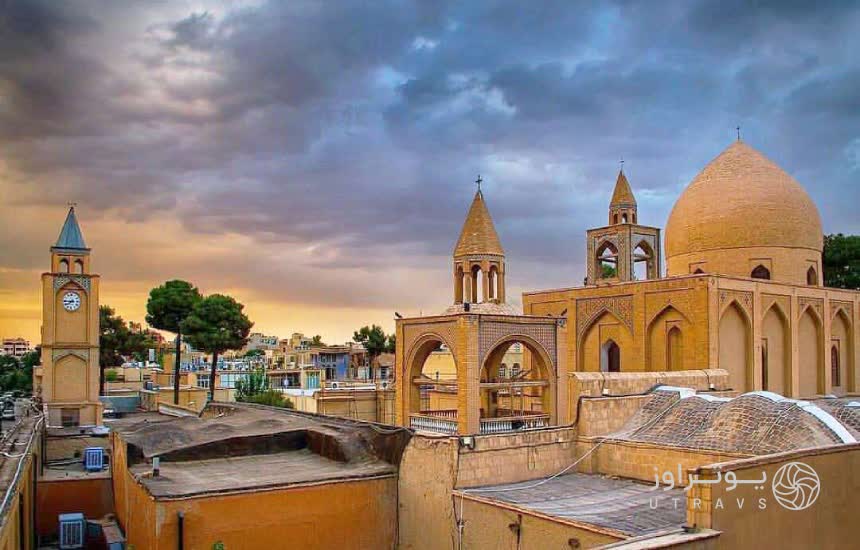

Jolfa, often called New Jolfa, is a historic and culturally rich neighborhood in Isfahan, Iran, known for its Armenian heritage and lively ambiance. Established in the early 17th century by Armenian immigrants under Shah Abbas I, this district blends Persian and Armenian influences, offering a unique experience for visitors. From the majestic Vank Cathedral to bustling cafés and vibrant markets, Jolfa is a must-visit for those exploring Isfahan’s cultural tapestry. With hamintour, discover Jolfa’s architectural gems, savor its culinary delights, and immerse yourself in its 400-year-old legacy.
Why Visit Jolfa?
Jolfa stands out as one of Isfahan’s most dynamic neighborhoods, offering a blend of history, culture, and modern vibrancy. Its Armenian roots, stunning churches, and lively streets make it a highlight of any Isfahan itinerary.
-
Cultural Fusion: Combines Persian and Armenian heritage in architecture and traditions.
-
Historic Landmarks: Home to Vank Cathedral and Bethlehem Church, showcasing Armenian artistry.
Table of Contents -
Vibrant Atmosphere: Bustling cafés, markets, and nightlife, especially on Jolfa Street.
-
Strategic Location: Near Zayandeh River, close to iconic bridges like Si-o-se Pol.
History of Jolfa
Armenian Roots in Isfahan
Founded in 1606 during the Safavid era, Jolfa was established by Armenian immigrants relocated from the Aras River region by Shah Abbas I. Seeking to boost Isfahan’s economy, the Shah granted the Armenians land south of the Zayandeh River, creating New Jolfa. This community thrived as a hub for trade, art, and culture, with its residents enjoying religious freedom and protection. Today, Jolfa remains home to about 6,000 Armenians, preserving their language, traditions, and identity while integrating with Persian culture.
The neighborhood’s distinct ambiance, with its Christian churches and Armenian-style architecture, sets it apart from other Isfahan districts. Historical records highlight Jolfa’s role as a cultural bridge, fostering exchanges between Persian and Armenian communities.
-
Safavid Origins: Established in 1606 as an Armenian enclave.
-
Cultural Hub: A center for trade and artistry under Shah Abbas I.
-
Modern Legacy: Preserves Armenian identity with government support.
Key Attractions in Jolfa
Vank Cathedral
The Vank Cathedral, or Holy Savior Cathedral, is Jolfa’s crown jewel, founded in 1606 and completed in 1664 under Archbishop David. Its exterior features simple brickwork and a freestanding belfry, but the interior dazzles with vibrant frescoes, gilded carvings, and tiled wainscots. The central dome depicts Biblical scenes, while murals narrate Jesus’s life and Armenian martyrdom under the Ottoman Empire. The cathedral’s museum showcases Armenian manuscripts, religious artifacts, and cultural treasures.
-
Architecture: Blends Armenian and Persian styles with a domed sanctuary.
-
Museum Highlights: Ancient manuscripts and traditional Armenian attire.
-
Significance: A symbol of Jolfa’s Christian heritage.
Bethlehem Church
Built in 1627 by merchant Khaje Petros, Bethlehem Church (Bedkhem Church) is another architectural gem in Jolfa. Its rectangular design, topped by the tallest dome among Isfahan’s 12 Armenian churches, features 72 stunning paintings depicting Jesus’s life in two tiers. The intricate frescoes and carvings reflect the Safavid-era artistry of the Armenian community.
-
Design: Rectangular layout with a prominent dome.
-
Artworks: 72 paintings showcasing Biblical narratives.
-
Historical Role: Built to serve the relocated Armenian population.
Armenian Museum
Located within the Vank Cathedral complex, the Armenian Museum is a cultural treasure trove. It houses a vast collection of Armenian artifacts, including manuscripts, paintings, textiles, and religious items. Historical documents offer insights into the Armenian community’s contributions to Isfahan, making it a must-visit for history enthusiasts.
-
Exhibits: Ancient coins, traditional clothing, and religious relics.
-
Cultural Insight: Highlights Armenian heritage in Isfahan.
-
Visitor Appeal: Ideal for understanding Jolfa’s multicultural history.
Activities in Jolfa
Stroll and Savor the Ambiance
Jolfa’s vibrant streets, especially Jolfa Street, are perfect for leisurely walks. The aroma of fresh coffee from cozy cafés fills the air, while springtime brings colorful flower-adorned balconies. The neighborhood’s blend of Persian and Armenian architecture, with vibrant facades and intricate tilework, creates a unique atmosphere.
-
Café Culture: Enjoy coffee or Persian tea at trendy spots like Café Narvan or Radio Café.
-
Shopping: Explore bustling markets for Armenian crafts, jewelry, and souvenirs.
-
Nightlife: Jolfa Street comes alive at night with lively eateries and music.
-
Seasonal Charm: Spring visits showcase blooming flowers, while Christmas brings festive decorations.
Getting to Jolfa
Location: Jolfa is situated between Chaharbagh Bala and Hakim Nizami Streets, south of the Zayandeh River, near Marnan and Si-o-se Pol bridges.
By Foot: A short walk from Si-o-se Pol Bridge or central Isfahan.
By Bus or Taxi: Take buses to Hakim Nizami Street or taxis from Chaharbagh Bala.
Tips:
-
Use GPS to navigate Jolfa’s narrow lanes.
-
Book with hamintour for guided tours or transportation.
Google Maps: [Location Link]
Best Time to Visit
Spring (March-May) and autumn (September-November) offer mild weather (15-25°C), ideal for exploring Jolfa’s streets and attractions. Spring brings blooming flowers, while autumn offers pleasant temperatures. Christmas season adds festive charm with decorations in this Christian enclave.
-
Hours: Most attractions, including Vank Cathedral, are open from 8:30 AM to 6:30 PM, except on religious holidays.
-
Tips: Visit early to avoid crowds and wear modest clothing for church visits.
Nearby Attractions
Jolfa’s central location makes it easy to explore other Isfahan highlights:
-
Si-o-se Pol Bridge (1 km): A 17th-century architectural marvel over the Zayandeh River.
-
Naqsh-e Jahan Square (2 km): A UNESCO-listed square with the Imam Mosque and bazaars.
-
Chehel Sotoun Palace (2.5 km): A Persian pavilion with stunning frescoes.
-
Khaju Bridge (2 km): A historic bridge with intricate tilework.
-
Hasht Behesht Palace (2.3 km): A Qajar-era pavilion with ornate gardens.
Join hamintour’s guided tours to explore these landmarks seamlessly.
Nearby Hotels and Dining
Accommodations
Stay near Jolfa for easy access:
-
Abbasi Hotel (2 km): A 5-star historic hotel with Persian elegance.
-
Keryas Traditional Hotel (1.5 km): A boutique hotel in a Qajar-era mansion.
-
Setareh Hotel (2 km): A 3-star budget option with modern amenities.
-
Isfahan Traditional Hotel (1.8 km): Offers authentic Persian charm.
Book through hamintour for exclusive deals.
Dining
Savor Jolfa’s culinary scene:
-
Café Narvan (0.2 km): Cozy spot for coffee and Armenian pastries.
-
Azadegan Teahouse (1.5 km, near Naqsh-e Jahan): Traditional Persian tea and dizi.
-
Aram Restaurant (0.3 km): Serves Armenian and Persian dishes like ghormeh sabzi.
-
Jolfa Café (0.1 km): Trendy café with desserts and smoothies.
Hamintour can arrange culinary tours to experience Isfahan’s flavors.
Plan with hamintour
Hamintour offers tailored Isfahan experiences:
-
Guided Tours: Explore Jolfa’s churches and history with expert guides.
-
Custom Itineraries: Combine with Naqsh-e Jahan or Khaju Bridge.
-
Travel Packages: Affordable flights and hotels via hamintour.
-
Group Tours:
-
7-Day Iran Tour: Isfahan highlights (€960, Early Bird €860).
-
9-Day Iran Tour: Cultural immersion (€1,100, Early Bird €860).
-
15-Day Iran Tour: Comprehensive Iran journey (€1,690, Early Bird €1,520).
-
Visit hamintour’s website for budget-friendly travel options.
Conclusion
Jolfa, Isfahan’s Armenian quarter, is a cultural gem blending 400 years of history with vibrant modernity. From the ornate Vank Cathedral to the lively Jolfa Street, this neighborhood offers a unique fusion of Persian and Armenian heritage. Home to about 6,000 Armenians, it preserves their traditions while welcoming visitors with open arms. Plan your visit with hamintour to explore Jolfa’s churches, museums, and cafés, creating unforgettable memories in Isfahan’s heart.
FAQs
-
What are the most known attractions in Jolfa of Isfahan?
Key attractions include Vank Cathedral, Bethlehem Church, and the Armenian Museum, showcasing Armenian heritage and artistry. -
How many people live in Jolfa neighborhood currently?
Approximately 6,000 Armenians reside in Jolfa, maintaining their cultural identity. -
What is the best time to visit Isfahan and Jolfa neighborhood?
Spring (March-May) and autumn (September-November) offer mild weather, with spring ideal for flowers and Christmas for festive charm.