

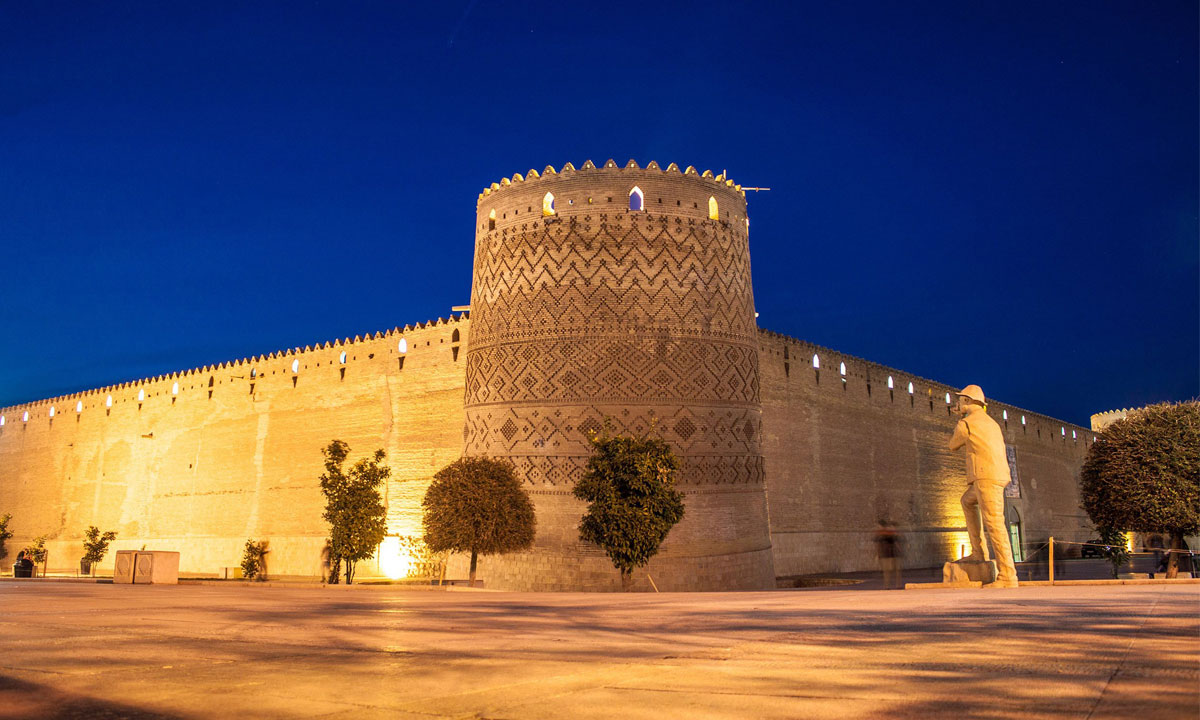
Located in Shiraz, the Karim Khan Citadel, built in 1766 by Karim Khan Zand, is a 5-star testament to Persian architectural grandeur and historical significance. Originally a royal residence and administrative center for the Zand dynasty, it later served as a prison before becoming a museum in 1972, recognized as part of Iran’s National Heritage. With Hamintour, your visit is enriched through curated tours, seamless logistics, and expert guides, connecting you to Shiraz’s cultural treasures like Nasir al-Mulk Mosque. From its towering walls to intricate muqarnas, discover why the citadel is a cornerstone of Iran’s heritage.
History
Constructed in 1766 by Mohammad Karim Khan Zand, founder of the Zand dynasty (1751–1779), the citadel symbolized power and unity in Shiraz, serving as both a royal residence and government hub. Amid post-Nader Shah instability, Karim Khan restored order, but his dynasty fell to Agha Mohammad Khan Qajar in 1794. The citadel endured as a residence, prison under Pahlavi rule, and now a museum, preserving Fars province’s rich history. Hamintour’s guided tours delve into its dynamic past, highlighting Shiraz’s role as a cultural center.
Book your Shiraz adventure with Hamintour.
Architecture
Spanning 12,800 square meters, the Karim Khan Citadel blends Sasanian, Seljuq, Safavid, and Isfahan architectural styles. Its 12-meter-thick walls and four 14-meter watchtowers, equipped with shooting holes, reflect its military past. The trapezoid-shaped structure, adjusted for soil settlement, features brick, Tabriz marble, and stone. Key elements include:
-
Muqarnas Arches: Intricate plasterwork with Safavid-inspired floral motifs.
-
Towers: Three-story structures with guard rooms, weapon storage, and stone rainwater gutters.
-
Residential Section: Interconnected rooms with north, south, and west porches, featuring spiral wooden columns and colorful sash windows.
-
Shahneshins: Spacious rooms with seasonal designs—northern for winter with stone columns, western for summer with cedar decorations, and southern for year-round use.
-
Private Bath: A Zand-era hammam with four stone pillars, Rokn Abad water channels, and underfloor heating.
The courtyard’s Persian garden and ornate entrance, depicting Persian literary scenes, enhance its grandeur. Hamintour’s tours showcase these architectural marvels, offering insights into their cultural significance.
Museum
As a museum since 1972, the citadel displays Zand-era artifacts, including ceramics, coins, and calligraphy, reflecting Shiraz’s cultural heritage. The private bath, open to visitors, offers a glimpse into Karim Khan’s family life. Open daily from 8 AM to 8 PM, it requires a modest entry fee. Hamintour recommends weekday visits to avoid crowds, with guides providing context on the citadel’s historical role.
Cultural Significance
The Karim Khan Citadel is a living symbol of Shiraz’s heritage, hosting cultural events like Nowruz and art exhibitions. Its transformation from royal residence to prison and museum mirrors Iran’s historical shifts. A major tourism draw, it boosts Shiraz’s economy while preserving Zand-era artistry. Hamintour’s itineraries include festival visits, immersing you in the citadel’s vibrant cultural legacy.
Visiting Tips
-
Hours: 8 AM–8 PM daily; museum aligns with citadel hours.
-
Best Time: Spring or autumn for mild weather; weekdays for fewer crowds.
-
Tickets: Affordable entry; Hamintour includes museum access in tour packages.
-
Duration: 1–2 hours to explore the citadel, bath, and museum.
-
Dress Code: Modest attire recommended, respecting local customs.
Photography Tips
-
Golden Hours: Early morning or late afternoon for soft lighting.
-
Angles: Capture the towers from low angles or the courtyard with garden reflections.
-
Wide-Angle Lens: Ideal for encompassing the citadel’s massive walls and intricate details.
-
Night Shots: Highlight illuminated muqarnas during cultural events.
Transportation
Located in central Shiraz, the citadel is easily accessible:
-
Tehran Metro: Shahid Shariati Station (Line 1, 2 km away).
-
Bus: Routes stop near Zand Boulevard.
-
Taxi: 10–15 minutes from central Shiraz, arranged by Hamintour.
-
Airport: 12 km from Shiraz International Airport (20-minute drive).
Hamintour’s private transfers ensure a hassle-free journey, with guides enhancing your visit.
Nearby Attractions
The citadel’s location in Shiraz’s Zand district offers access to key sites, included in Hamintour’s tours:
-
Nasir al-Mulk Mosque (1.5 km): The Pink Mosque with stunning stained glass.
-
Vakil Bazaar (0.4 km): A vibrant market for carpets and spices.
-
Vakil Mosque (0.5 km): A Zand-era mosque with intricate tilework.
-
Delgosha Garden (2.5 km): A Sasanid-era Persian garden.
-
Tomb of Hafez (2 km): A tribute to the 14th-century poet.
Why Hamintour?
Hamintour elevates your visit with:
-
Expert Guides: Sharing the citadel’s Zand-era history and Shiraz’s cultural legacy.
-
Seamless Logistics: Airport transfers, tickets, and tour planning.
-
Curated Itineraries: Combining citadel visits with nearby attractions and dining.
-
Personalized Service: Tailored for history buffs, photographers, or families.
Book your visit with Hamintour.
Conclusion
The Karim Khan Citadel, a 1766 masterpiece in Shiraz, blends Zand-era architecture with historical significance. Its muqarnas arches, towering walls, and private bath make it a cultural icon, now preserved as a museum. Hamintour’s guided tours, seamless bookings, and personalized itineraries ensure an immersive experience, connecting you to Shiraz’s landmarks like Vakil Bazaar. Book today with Hamintour to explore this historic gem.
FAQs
What is the historical significance of Karim Khan Citadel?
Built in 1766 by Karim Khan Zand, it served as a royal residence and government hub, later a prison, and now a museum, reflecting Shiraz’s heritage.
What architectural features stand out?
Muqarnas arches, 12-meter walls, 14-meter watchtowers, colorful sash windows, and a Zand-era bath, highlighted by Hamintour’s tours.
What is the best time to visit?
Spring or autumn for mild weather; weekdays for fewer crowds, as recommended by Hamintour.