
Unveiling Qom’s Sacred Essence with hamintour
Nestled in the arid heart of central Iran, 140 kilometers south of Tehran, Qom stands as the pulsating spiritual epicenter of Shia Islam, drawing millions of pilgrims annually to its hallowed grounds and earning its moniker as the “cultural capital of the Shiite world.” Home to the resplendent Shrine of Hazrat Fatemeh Masumeh—sister of the eighth Imam Reza and daughter of the seventh Imam Musa al-Kadhim—this city transcends mere pilgrimage, weaving a tapestry of profound religious devotion, architectural splendor, and resilient cultural heritage. With hamintour, Iran’s foremost curator of immersive journeys, your exploration of Qom evolves into a transformative odyssey, blending guided reverence at sacred sites with insightful forays into its vibrant bazaars, ethnographic museums, and surreal salt landscapes. hamintour’s tailored itineraries, led by knowledgeable local scholars, ensure respectful immersion while highlighting Qom’s role as a global seminary hub, attracting diverse communities from Afghanistan, Pakistan, and beyond for theological studies. From dawn prayers amid gilded domes to twilight reflections by ancient caravanserais, hamintour fosters sustainable connections that honor Qom’s sanctity and enrich your soul.
Qom’s Arid Climate: Timing Your Spiritual Sojourn
Qom’s subtropical dry semi-arid steppe climate defines its stark beauty, with scorching summers averaging 40°C (104°F) from June to August and chilly winters dipping to 5°C (41°F) in January, punctuated by occasional snowfalls that dust the surrounding salt marshes. Nestled near Namak Lake (Hoz-e Soltan), Iran’s vast salt flat expanse, the city’s air carries a crisp, mineral tang, while annual precipitation hovers at a mere 130 mm, mostly in spring. The optimal seasons for visitation are spring (March to May) and autumn (September to November), when mild 15-25°C (59-77°F) days unveil blooming pistachio orchards and clearer views of the Alborz foothills, ideal for extended pilgrimages without the summer haze or winter chills. hamintour recommends aligning your trip with these windows, incorporating seasonal rituals like Nowruz processions or autumn harvest feasts, while providing acclimation tips and shaded transport to navigate the desert’s subtle intensity.
Customs and Traditions: Qom’s Shia Tapestry of Devotion
Qom’s customs pulse with Shia Islamic fervor, mirroring those of Arab Shiite communities yet infused with Persian poetic grace, where faith manifests in communal rhythms of mourning, celebration, and scholarly pursuit. Muharram and Safar usher in Ashura and Tasu’a, ten days of profound grief commemorating Imam Hussein’s martyrdom, when residents form processions to the Hazrat Masumeh Shrine, engaging in rhythmic chest-beating (sinziri), chain-flagellation (zanjir-zani), and somber drumming that echo through lantern-lit streets, symbolizing collective catharsis and resilience. Contrasting this solemnity, Nimeh Sha’ban—the birth of the Twelfth Imam Mahdi—ignites joyous illuminations, with streets aglow in electric lamps, sweets distributed to children, and communal feasts of saffron rice and lamb, fostering hope for his prophesied return. Eid al-Fitr concludes Ramadan with dawn prayers and charity distributions, while Eid al-Adha involves ritual sacrifices shared among the needy, embodying Qom’s ethos of ta’arof—polite hospitality extended even to strangers. hamintour’s cultural immersions allow respectful observation of these rites, from joining veiled processions (with provided chadors) to sharing iftar meals in seminary courtyards, bridging global visitors with Qom’s devout mosaic while emphasizing ethical engagement.
Sacred Heart: The Shrine of Hazrat Fatemeh Masumeh
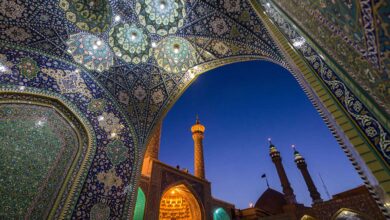
At Qom’s core lies the Fatima Masumeh Shrine, a sprawling 13,527-square-meter complex revered as Iran’s second-holiest site after Mashhad, where the saintly Fatima—born 790 CE—succumbed en route to visit her brother Imam Reza, her tomb a beacon of intercession promising paradise to pilgrims. Originating in the Seljuk era with a simple domed mausoleum by Amir Abulfazl Araghi, it burgeoned under Safavids and Qajars: Shah Abbas I added gilded portals, Fath Ali Shah the iconic golden cupola, and modern expansions include the polygonal New Courtyard with its Mirror Iwan—a muqarnas masterpiece of silvered glass and turquoise tiles. Encompassing eight courtyards—like the ancient Atiq with its Balasar Mosque over the tomb, and Saheb al-Zaman’s Quranic-inscribed expanse—the shrine houses royal burials (Shah Abbas, Fath Ali Shah) and the storied Feyziyeh Seminary, a theological bastion that shaped leaders like Ayatollah Khomeini. hamintour’s guided pilgrimages navigate its labyrinthine halls, from circumambulating the silver-zarih (casket) to dawn ziyarat prayers, with women accessing the serene women’s section adorned in emerald Kufic script.
Jamkaran Mosque: Portal to the Hidden Imam
Six kilometers southeast on Qom-Kashan Road, Jamkaran Mosque emerges as a mystical locus dedicated to Imam Mahdi, the Occulted Twelfth Imam, its origins tied to a 10th-century dream where he instructed a local to build upon a sacred spring. Pilgrims flock here Tuesdays and Thursdays for dua supplications, tossing sealed notes into the well for divine intercession, amid architecture blending Seljuk austerity with Safavid flourishes: a turquoise-tiled dome overlooks courtyards where ablutions precede midnight vigils. hamintour’s nocturnal tours capture its ethereal ambiance, pairing visits with scholarly talks on eschatological lore, ensuring a contemplative bridge between faith and folklore.
Cultural Treasures: Museums and Historical Houses
Qom’s museums illuminate its layered past, from sacred relics to ethnographic vignettes.
Holy Shrine Museum (Astan-e Mogaddaseh)
Adjacent to the shrine, this 1925 repository safeguards illuminated Qurans from the 9th century, Safavid silk carpets woven with golden threads, and Qajar-era astrolabes, offering a chronological narrative of Shia artistry amid vaulted halls with tile-corniced ceilings. hamintour’s artifact-focused excursions reveal conservation techniques, like restoring Timurid manuscripts.
Qom Ethnography Museum
Housed in the dual Zand House complexes—Qajar-era gems with wind-catching badgirs—this museum chronicles rural life through antique utensils, embroidered veils, and Luri nomadic tools, evoking Qom’s pre-urban rhythms. hamintour integrates live weaving demos, connecting visitors to the artisans’ lineage.
Traditional Arts Museum
Within Yazdan Panah House—a 120-year-old edifice of stucco arabesques and courtyard fountains—this venue showcases Qom’s silken looms and filigree silverwork, with active workshops humming under its restored dome. hamintour arranges hands-on sessions, crafting personalized talismans.
Other gems include the Natural History Museum’s salt crystal exhibits and the Shia Religious Authorities’ Artifacts Museum’s Khomeini relics.
Timeless Trade: Qom’s Historic Bazaar
Qom’s Old Bazaar, a Seljuk-Eilkhani labyrinth east of Taleghani Avenue, unfolds as a vaulted symphony of commerce: domed timchehs (vaults) shelter coppersmiths hammering intricate trays, while chahar-suqs (four-way intersections) buzz with saffron vendors and prayer bead carvers. Stretching a kilometer with unroofed extensions from converted caravanserais, it offers respite from desert heat under its adobe arches, blending functionality with motifs of lotuses and minarets. hamintour’s bazaar odysseys haggling for heirloom carpets or ethical silks, unveiling the bazaar’s role as a theological-economic nexus.
Echoes of the Silk Road: Historical Houses and Deir-e Gachin Caravanserai
Qom’s Qajar houses—Zand and Yazdan Panah—evoke opulent domesticity: courtyards with lion-footed fountains, wind-towers channeling breezes, and orosi lattice windows filtering light into kaleidoscopic patterns. Eighty kilometers northeast, the UNESCO-listed Deir-e Gachin Caravanserai—dubbed “mother of caravanserais” for its monumental scale—rises from the desert, its 14th-century ramparts and 400 chambers a testament to Silk Road resilience, now offering overnight stays amid starlit dunes. hamintour’s heritage overnights blend camel treks with tales of merchant lore.
Whispers of the Wild: Qom Bird Garden and Natural Wonders
Spanning 12,000 hectares, Qom Bird Garden harbors over 100 avian species—flamingos wading in reed-fringed ponds, hoopoes darting through pistachio groves— a verdant oasis amid aridity, perfect for serene observation. Nature’s surreal strokes appear in Namak Lake’s crystalline crusts, where winter floods yield hexagonal salt polygons under auroral skies, and the Qom Salt Dome’s crimson-veined formations—crystallized over millennia—offer therapeutic mists for respiratory ailments. hamintour’s eco-excursions include guided salt flat hikes at dusk, capturing the dome’s ethereal glow.
Culinary Soul: Qom’s Hearty Traditions
Qom’s cuisine comforts the pilgrim’s spirit with robust stews born of desert bounty. Ghonabid Abgoosht simmers chickpeas, potatoes, and ghonabid (wild mustard greens) with turmeric-laced lamb, yielding a restorative broth punched by dried limes. Havij Abgoosht marries sweet Qom carrots and tangy barge plums with red beans and mint, a nutritional elixir evoking nomadic hearths. Qom Meatballs (Koofteh Qomi) fuse minced lamb, rice, and herbaceous peas into spiced orbs simmered in tomato-tinged gravy, often paired with saffron basmati. hamintour’s homestay dinners in seminary-adjacent homes elevate these with pomegranate molasse drizzles, fostering bonds over shared platters.
Treasured Keepsakes: Qom’s Artisanal Legacy
Qom reigns as Iran’s silk carpet capital, its looms birthing ethereal weaves of azure mihrabs and floral arabesques, often knotted by seminary scholars’ kin. Silver rings—engraved with Quranic verses or Imam portraits—adorn as talismanic jewels, while Sohan, the saffron-pistachio brittle confection, crunches with sesame-seed crunch, a portable prayer exported worldwide. hamintour’s fair-trade ateliers let you commission custom pieces, supporting weavers through ethical sales.
Why Journey to Qom with hamintour?
hamintour elevates Qom from pilgrimage to profound narrative, with packages weaving shrine devotions, bazaar immersions, and salt dome sunsets, all while prioritizing sustainability—proceeds aid shrine restorations and artisan cooperatives. Multilingual guides, versed in Shia exegesis, ensure inclusive reverence, from chador fittings to interfaith dialogues.
Essential Tips for Your Qom Pilgrimage
- Dress Code: Modest attire mandatory; women require chadors (provided at shrines); hamintour supplies cultural kits.
- Respect Rites: Silence in shrines; photography restricted—hamintour advises protocols.
- Transport: 2-hour bus from Tehran; hamintour offers seamless shuttles.
- Health: Hydrate amid aridity; salt air benefits respiratory health.
- Extend Your Stay: Combine with Kashan; hamintour’s loops enrich context.
Frequently Asked Questions About Visiting Qom with hamintour
- What makes Qom spiritually unique? As Shia Islam’s intellectual hub, its shrines like Hazrat Masumeh promise divine favor, drawing global pilgrims.
- Best time to visit Qom? Spring/autumn for mild 15-25°C; hamintour aligns with festivals.
- Is Qom family-friendly? Yes, with gardens and museums; hamintour tailors child-inclusive paths.
- Can non-Muslims enter the shrine? Yes, respectfully; hamintour provides guidance.
- What are entry fees? Shrines free; museums $1-2—hamintour bundles.
- Accessibility for mobility needs? Shrines have ramps; hamintour customizes.
- Top foods to try? Ghonabid Abgoosht, Sohan; hamintour curates tastings.
- English guides available? hamintour’s experts ensure seamless narratives.
- How long to stay? 1-2 days; hamintour’s day/overnight options.
- Sustainable practices? hamintour supports artisans and eco-tours.
With hamintour, Qom’s sacred whispers become your eternal echo—embark on this divine chapter today!