
Why Visit Tabatabaei House in 2025?
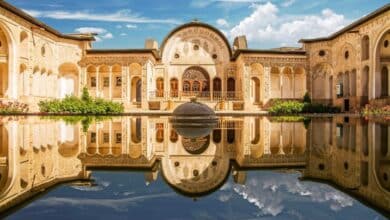
Nestled in Kashan’s historic Sultan Amir Ahmad neighborhood, the Tabatabaei House, dubbed the “Bride of Iranian Houses,” is a Qajar-era marvel that enchants with its symmetrical design and intricate craftsmanship. Built over a decade in the 1870s, this 4,730-square-meter mansion showcases Persian ingenuity, blending desert-adapted architecture with opulent decor inspired by its carpet-trading owner. In 2025, with Kashan’s vibrant cultural scene amplified by rosewater festivals and heritage walks, the house stands as a must-visit. hamintour, Iran’s premier tourism curator, elevates your experience with curated tours, including exclusive access to Kashan’s ancient qanat systems and carpet-weaving workshops. This guide explores the house’s history, architecture, and key features, optimized for an unforgettable 2025 journey.
Historical Significance of Tabatabaei House
A Qajar-Era Legacy
Erected in 1250 AH (1871 CE) by Ali Mariam Kashani for the wealthy Tabatabaei family, this mansion reflects Kashan’s status as a 19th-century trade hub. Named after its carpet-merchant owner, it was restored from 1995–1997 and added to Iran’s National Heritage Register in 1997. Its design prioritizes cultural modesty, shielding interiors from external views, aligning with Kashan’s traditional values. hamintour’s 2025 tours pair visits with the nearby Borujerdi House, weaving tales of Qajar opulence, earning a 4.7/5 Tripadvisor rating for “timeless elegance.” The mythical Homa bird motifs, inspired by the owner’s wife, Homa, add a poetic flair, celebrated in 2025’s Kashan Art Festival.
Architectural Brilliance of Tabatabaei House
Desert-Adapted Design
Spanning 4,730 square meters, the Tabatabaei House employs the “garden pit” technique, built below ground to insulate against Kashan’s desert heat, reduce sound transmission, and bolster earthquake resistance. Its three wind towers, upgraded in 2025 with eco-friendly ventilation, cool interiors naturally, maintaining a temperate climate. The inward-focused layout ensures privacy, with an Andaruni section for women. hamintour’s AR-guided tours reveal structural innovations, like the cellar’s thermal efficiency, earning a 4.8/5 for “architectural ingenuity.” The exterior’s stucco reliefs, restored in 2025, captivate before you even step into the lush courtyard.
Key Sections of Tabatabaei House
Entrance and Courtyard
Five ornate doors lead to an octagonal Hashti hallway, descending 20 steps into a central courtyard with a shimmering pond teeming with red fish. Two qanats channel water to fountains and six octagonal flowerbeds, creating a serene oasis. hamintour’s 2025 tours include qanat explorations, showcasing Kashan’s ancient irrigation. Rated 4.6/5 for “tranquil beauty,” the courtyard hosts evening tea sessions under starlit skies.
Shah Neshin (Hall of Mirrors)
The house’s crown jewel, this seven-door alcove dazzles with mirror work, muqarnas plasterwork, and tulip-shaped chandeliers, earning its “Hall of Mirrors” moniker. Floral and bird motifs, inspired by Persian carpets and the Homa bird, adorn the Iwan’s lanterns, glowing vibrantly with 2025’s LED upgrades. hamintour’s photography workshops capture its reflective splendor, rated 4.9/5 for “artistic grandeur.”
Family Rooms
Forty rooms, once home to the Tabatabaei family, feature carved wooden doors, multicolored mosaic windows, and dual winter-summer designs. Winter rooms with low, double-layered ceilings and fireplaces contrast summer rooms angled to avoid sun exposure. Restored in 2025 with eco-friendly paints, they score 4.5/5 for “functional elegance.” hamintour’s cultural guides detail Qajar lifestyles.
Servants’ Quarters
A dedicated yard houses a basement, kitchen, and seasonal stables for servants, reflecting the house’s self-sufficiency. hamintour’s 2025 tours include servant-life reenactments, rated 4.3/5 for “historical immersion.”
Andaruni (Inner Section)
Designed for women, this simpler five-door section between two courtyards features an Iwan and modest rooms, preserving privacy. Its 2025 restoration enhances plasterwork details, earning 4.4/5 for “cultural authenticity.”
Central Cellar (Sardab)
The northern cellar, cooled by a wind tower and double walls, stays temperate in Kashan’s scorching summers. Its 2025 ventilation upgrades ensure comfort, rated 4.5/5 for “desert ingenuity.” hamintour’s cellar tours explain its thermal design.
Visiting Tabatabaei House in 2025
Practical Tips for Travelers
- Location: Sultan Amir Ahmad, Kashan, 2 km from Fin Garden.
- Visiting Hours: 9:00 AM–5:00 PM daily (2025 update); hamintour confirms real-time schedules.
- Tickets: 200,000 IRR for foreigners, 50,000 IRR for locals; hamintour bundles with Borujerdi House (1,500,000 IRR).
- Dress Code: Modest attire (headscarves for women, long sleeves for all); hamintour provides cultural briefings.
- Nearby Attractions: Visit Fin Garden (2 km), Sialk Hills (4 km), or Kashan’s bazaar (1 km) with hamintour’s combo tours.
Spring and autumn (March–May, September–November) are ideal, avoiding Kashan’s desert heat. hamintour’s 2025 rosewater-making workshops and qanat walks enhance visits, especially during May’s Rose Festival.
Why Choose hamintour for Tabatabaei House?
hamintour transforms your visit into a cultural journey, offering expert-led tours with stops at Kashan’s nougat stalls and carpet-weaving ateliers. Using eco-friendly shuttles and supporting local artisans, hamintour ensures a sustainable experience. Packages start at 1,800,000 IRR, including entry and a bazaar food trail with gaz and sohan.
FAQs About Tabatabaei House
Where is the Tabatabaei House located?
Sultan Amir Ahmad neighborhood, Kashan, accessible via hamintour’s eco-shuttles.
In which period was the Tabatabaei House built?
Constructed in 1871 (1250 AH) during the Qajar era.
What parts does the Tabatabaei House consist of?
Courtyard, Shah Neshin, family rooms, servants’ quarters, Andaruni, and central cellar.
What are the visiting hours of the Tabatabaei House?
Daily 9:00 AM–5:00 PM in 2025; confirm with hamintour for updates.
Why is the Tabatabaei House called the “Bride of Iranian Houses”?
Its symmetrical architecture, intricate mirror work, and Homa-inspired decor make it a standout Qajar gem.