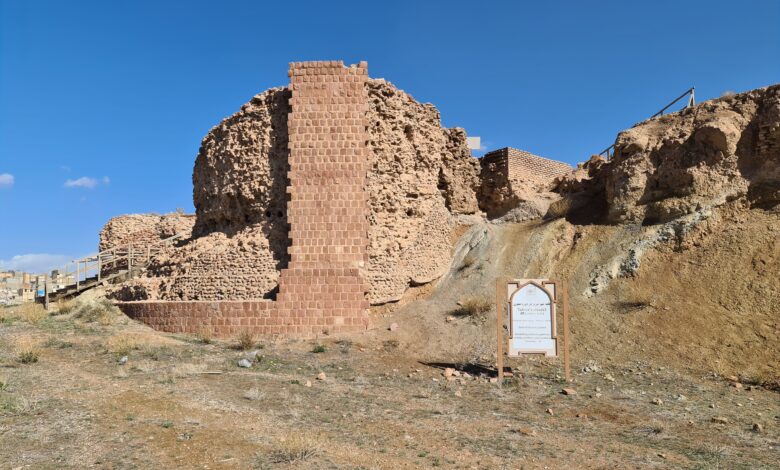

Perched on a hillside in northeastern Tabriz, the Rab’-e Rashidi stands as a weathered relic of Iran’s intellectual golden age. Built in the early 14th century under Ilkhanid ruler Ghazan Khan, this once-thriving complex was a hub of scholarship, drawing thinkers from across Asia to study philosophy, medicine, and science. Founded by Rashid al-Din Hamadani, a visionary physician-turned-statesman, the Rab’-e Rashidi in Tabriz was a miniature city of learning, with libraries, workshops, and living quarters. Though reduced to ruins by time and turmoil, its fragments tell a story of ambition and legacy, captivating over 50,000 visitors annually (2024 estimate). This comprehensive guide explores the site’s history, what remains, how to visit, and nearby attractions, ensuring a memorable journey in 2025.
Why Visit Rab’-e Rashidi in Tabriz?
A Window into Iran’s Golden Age
The Rab’-e Rashidi is a testament to Tabriz’s role as a cultural and intellectual powerhouse during the Ilkhanid era. Once a sprawling complex rivaling the great centers of Baghdad and Cairo, it hosted scholars from Iran, China, Egypt, and Syria, fostering groundbreaking works like the Jami’ al-Tawarikh, a pioneering world history. Today, its ruins in the Sorkhab district near Mount Sahand offer a poignant glimpse into a lost era, drawing history buffs, archaeologists, and curious travelers. “Standing among the ruins felt like touching history,” a 2025 Tripadvisor reviewer shares. With its UNESCO-listed endowment deed and proximity to Tabriz’s vibrant attractions, Rab’-e Rashidi is a must-visit for anyone exploring Iran’s heritage. Plan your trip with hamintour’s Tabriz Travel Guide.
A Scholar’s Dream in Ilkhanid Tabriz
A Visionary Academic Hub
Conceived in the late 13th century by Rashid al-Din Hamadani, the Rab’-e Rashidi was more than a university—it was a self-sustaining city of knowledge. Construction peaked in the early 1300s, with a foundation document from August 1307 detailing its ambitious scope. Located in Tabriz, then the Ilkhanid capital, the complex included a library, hospital (Dar-ol-Shafa), Quranic center, scriptorium, workshops, and living quarters for over 100 staff, 220 slaves, and salaried students. Funded by a 50,000-dinar endowment—equivalent to millions today—it drew resources from properties across Iran and beyond.
The site buzzed with intellectual exchange, producing manuscripts like the Jami’ al-Tawarikh, which chronicled world history from China to Europe. Surrounding the complex was a thriving residential quarter with 30,000 homes, shops, and caravanserais, all enclosed by a massive wall initiated by Ghazan Khan. This vibrant ecosystem cemented Tabriz’s status as a global center of learning, rivaling medieval Europe’s greatest universities.
The Rise and Fall of a Cultural Hub
Triumph and Tragedy
The Rab’-e Rashidi thrived until 1318, when Rashid al-Din was falsely accused of poisoning Ilkhanid ruler Oljeitu and executed. His death triggered looting and neglect, marking the complex’s decline. His son, Ghiyas al-Din, briefly revived it in the 1330s, but his murder in 1336 dealt a fatal blow. By the late 14th century, the original structures had largely vanished, replaced in the 17th century by a Safavid-era fort under Shah Abbas. Even these later additions crumbled, as noted by a traveler in the 1600s. Natural disasters, including earthquakes, and centuries of neglect buried much of the site under six meters of soil, leaving only fragments of its former glory.
What Remains of Rab’-e Rashidi Today
Echoes of a Lost Era
Today, the Rab’-e Rashidi is a quiet archaeological site in Tabriz’s Sorkhab district, where scattered ruins hint at its grandeur. Visitors can see masonry bases, possibly from the Ilkhanid or Safavid eras, and mosaic shards uncovered by ongoing excavations. The site’s layout—described in historical accounts as a hilltop complex with a grand portal, minarets, and a courtyard with four iwans—survives only in imagination, alongside mentions of a bathhouse, mosques, and a possible observatory.
The endowment deed, preserved in Tabriz’s Central Library and listed by UNESCO as a Memory of the World document, offers a vivid snapshot: professors earned 500 dinars annually, doctors up to 330 dinars, and Quran reciters 50 dinars, with daily bread distributed to the poor. “The ruins are sparse, but the story is immense,” a 2025 Reddit post notes. Iranian archaeologists continue to uncover the site, making it a dynamic destination for history enthusiasts.
How to Get to Rab’-e Rashidi
Reaching the Ruins
Located 4 km northeast of Tabriz’s city center, the Rab’-e Rashidi is easily accessible:
-
By Bus: Take a local bus along Abbasi Street to Sorkhab district (20,000 IRR, $0.08 USD); the site is a short walk from the stop.
-
By Car: Drive northeast via Abbasi Street (15–20 minutes, ~50,000 IRR in fuel, $0.20 USD). Limited parking is available near the site.
-
On Foot: A 4-km trek from central Tabriz (1 hour) is feasible for fit explorers; follow Abbasi Street toward Mount Sahand.
-
By Guided Tour: Book via hamintour’s Tabriz Tours for a curated visit with expert insights.
The site is open year-round, though hours may vary due to archaeological work. No entry fee is required, but facilities are minimal—bring water, sunscreen, and sturdy shoes for uneven terrain.
Nearby Attractions in Tabriz
Enrich Your Visit
Pair your trip to Rab’-e Rashidi with these Tabriz highlights:
-
Qajar Museum (2 km): A restored Qajar-era mansion showcasing 19th-century Persian life. Entry: ~50,000 IRR ($0.20 USD).
-
Blue Mosque (3 km): A 15th-century masterpiece with intricate blue tiles. Entry: ~50,000 IRR ($0.20 USD).
-
Azerbaijan Museum (3.5 km): Houses artifacts from Iran’s ancient history, including Sassanid relics. Entry: ~100,000 IRR ($0.40 USD).
-
Tabriz Bazaar (4 km): A UNESCO-listed market for carpets, spices, and jewelry. Free entry.
-
El-Goli Park (7 km): A scenic park with a lake and pavilion, ideal for relaxation. Free entry.
Pro Tip: Book a guided tour via PersianVoyage’s Tabriz Tours to combine Rab’-e Rashidi with these cultural gems.
Location and Coordinates
Pinpointing the Site
-
Location: Sorkhab district, northeastern Tabriz, East Azerbaijan Province, Iran.
-
Coordinates: 38.0833 N, 46.3167 E (approximate).
-
Distance: 4 km from Tabriz city center, near Mount Sahand.
Practical Tips for Visitors
Plan a Seamless Trip
-
Timing: Visit in spring (April–June) or autumn (September–October) for mild weather (15–25°C). Summer can hit 35°C, and winter brings snow.
-
Dress Code: Modest attire (long sleeves, headscarves for women) to respect local customs.
-
Cash: Carry 50,000–100,000 IRR notes for local vendors or taxis; ATMs are limited in Sorkhab.
-
Footwear: Wear sturdy shoes for uneven terrain and archaeological zones.
-
Guides: Book a local guide via hamintour for insights into Ilkhanid history.
-
Safety: Tabriz is tourist-friendly, but stay aware in busy areas like the bazaar.
-
Connectivity: Mobile signal is reliable; download offline maps for backup.
For more tips, visit hamintour’s Iran Travel Tips.
Cultural Insights: Tabriz’s Intellectual Legacy
The Rab’-e Rashidi reflects Tabriz’s role as a crossroads of cultures during the Ilkhanid era, when the city was a hub for trade and scholarship along the Silk Road. Founded by Rashid al-Din, a polymath who bridged Persian, Mongol, and Islamic traditions, the complex embodied the era’s intellectual curiosity, producing works like the Jami’ al-Tawarikh that influenced global historiography. Its decline mirrors the fragility of cultural hubs amid political upheaval, yet its legacy endures in Tabriz’s vibrant heritage. Visiting during festivals like Nowruz (March) offers a glimpse into the city’s living traditions, from bazaar bustle to poetic recitals.
Final Thoughts: Step Into History
The Rab’-e Rashidi is more than ruins—it’s a portal to an era when Tabriz was a global center of learning. Its scattered stones and UNESCO-listed endowment deed tell a story of ambition, scholarship, and resilience. Whether you’re a history enthusiast or a curious traveler, this site offers a chance to walk where scholars once shaped the medieval world. Pair your visit with Tabriz’s Blue Mosque or Tabriz Bazaar for a complete cultural adventure.
Plan your trip with hamintour’s Tabriz Tours for seamless bookings and guided experiences. Book hotels via hamintour’s Tabriz Hotel Reservations for convenient stays. Have a favorite Tabriz moment or Rab’-e Rashidi insight? Share it in the comments to inspire fellow travelers!