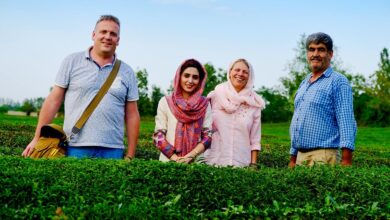

Iran’s northern realms, where misty mountains meet the Caspian Sea, cradle a timeless tradition: the art of tea. More than a beverage, tea weaves through the fabric of Persian life, symbolizing hospitality, reflection, and resilience. A tea tour in this verdant paradise offers an intimate portal into Gilan province’s lush landscapes and enduring customs, blending sensory delights with profound cultural narratives. With hamintour, Iran’s foremost curator of authentic journeys, you can navigate these emerald hills through bespoke itineraries that fuse farm-fresh tastings, historical immersions, and heartfelt local encounters. This guide illuminates the allure of a Lahijan tea tour, enriched with tales of ancient saplings, artisanal brews, and rituals that have steeped the soul of Persia for over a century.
The Roots of Iranian Tea: From Smuggled Saplings to National Elixir
Tea’s saga in Iran unfolds like a delicate leaf unfurling—subtle yet transformative. Introduced in the late 19th century, it supplanted coffee amid trade upheavals, evolving into the nation’s lifeblood by the 20th century. The pivotal figure? Haj Mohammad Mirza Kashef al-Saltaneh, a cunning diplomat who, while posted in British India, disguised himself as a laborer to pilfer 3,000 tea saplings from Kangra’s misty estates. Smuggling them past colonial guards via diplomatic pouches, he planted them in 1899 on Lahijan’s sun-dappled slopes, where the Caspian humidity and Alborz-fed springs proved ideal. This audacious act birthed Iran’s tea industry, now spanning 26,000 hectares across 900 villages, producing 90% of its output in Gilan and Mazandaran.
Today, black tea reigns supreme—robust, malty, and often laced with dried lime or cardamom for a tangy twist—boasted for its digestive aids and heart-healthy antioxidants. Green and herbal variants, like chamomile-infused brews from local wildflowers, add nuance, reflecting the region’s biodiversity. Hamintour’s tea odysseys delve into this heritage, tracing Kashef’s footsteps while highlighting how tea cultivation sustained communities through economic shifts, from Qajar opulence to post-revolutionary self-reliance. As Iran’s annual consumption hits 1.2 kilograms per person—second only to Turkey—tea embodies not just refreshment but a cultural anchor, sipped in homes, bazaars, and teahouses to foster bonds and ponder life’s rhythms.
Lahijan: The Bride of Gilan and Cradle of Persian Tea
Perched on the Alborz foothills, 45 kilometers east of Rasht, Lahijan—affectionately the “Bride of Gilan”—enchants with its kaleidoscope of rice paddies, silk-threaded wetlands, and undulating tea estates that carpet hills in perpetual emerald. This “City of Tea,” with a population of over 167,000, was once a silk hub (its name deriving from “lah,” meaning silk, and “jan,” a place of abundance), but tea’s ascent in the early 1900s redefined its destiny. The humid Caspian air, annual 1,200 millimeters of rain, and mineral-rich soils yield leaves of unparalleled vibrancy, harvested from April to October by hand-plucked first flushes that command premium prices.
Hamintour elevates Lahijan visits with eco-sensitive treks through these plantations, where you’ll shadow pickers—often women in colorful headscarves—gathering tender buds under the morning mist. Learn the labor-intensive dance: plucking two leaves and a bud, wilting in bamboo trays, rolling by foot in muslin sacks, and fermenting in cool sheds for that signature bold amber hue. Amid challenges like urban sprawl encroaching on fields (40% of farmers have shifted pursuits due to market fluxes), Lahijan’s estates persist as symbols of tenacity, producing organic, additive-free teas exported to connoisseurs worldwide. For hamintour travelers, these walks culminate in shaded picnics overlooking the Caspian, pairing fresh brews with walnut-stuffed kolucheh pastries, Lahijan’s flaky, coconut-laced signature sweet.
Immersing in Tea Gardens: Harvest, Process, and Tastings
Lahijan’s tea gardens are living tapestries, where emerald rows ripple under the Alborz’s watchful gaze. Prime spots include the hillside estates near Kashef’s legacy home, now the Iran National Tea Museum—a hilltop trove of antique samovars, porcelain sets from Ming dynasties, and sepia photos chronicling the industry’s dawn. Entry whispers of espionage and empire, with exhibits detailing how Kashef’s 3,000 saplings swelled to vast plantations by 1932, covering 1,220 hectares.
A hamintour-guided harvest tour lets you don gloves to pluck alongside locals, feeling the dewy resilience of Camellia sinensis leaves. Venture to Fašālam’s experimental plots, where the Iran Tea Company tests irrigation amid Fūmanāt’s drier plains, or Langarud’s sun-kissed fields yielding nutty, full-bodied blacks. Tastings unfold in open-air pavilions: compare spring’s floral first flush to autumn’s robust malts, infused with regional twists like Golestan rose petals or Taleshi cinnamon. These sessions reveal health perks—antioxidants combating inflammation, caffeine gently invigorating—while underscoring sustainability: zero pesticides, rainwater-fed qanats channeling Alborz melts. Hamintour’s bespoke tastings often feature pairings with Gilani delicacies like mirza ghasemi (smoky eggplant dip) or torshi (pickled herbs), harmonizing tea’s tannins with tangy contrasts for a palate symphony.
Traditional Tea Ceremonies: Rituals of Grace and Connection
No Lahijan sojourn is complete without the châi-ye anâdoli—the graceful tea ceremony that epitomizes Persian taarof, the art of polite insistence. Rooted in Safavid-era customs, these gatherings unfold in locals’ vine-draped courtyards or historic qavveh khânehs (teahouses), where brass samovars hum like contented guardians, brewing loose leaves in enameled kettles atop wood fires. The host, embodying mehmani (hospitality as divine duty), pours scalding amber nectar into tulip-shaped estekân glasses—clear to admire the hue, narrow-waisted to concentrate aromas—never filling to the brim, allowing guests to dilute with hot water from the samovar’s spout.
Etiquette dances delicately: Refuse the first offer thrice out of modesty before accepting with a nod; sweeten by cradling a shakar-e toot (sugar lump) between teeth, sipping through it for caramel-kissed notes, or dip it saucer-side for Gilani flair. Accompaniments elevate the rite—crystalline noghl (sugar-coated almonds), pistachio brittle, or fruit-stuffed dates—while a host recites Hafez verses or strums a setar lute, evoking Sufi introspection. In Lahijan’s teahouses like those encircling the serene Lahijan Pool—a man-made lagoon fringed by willows—ceremonies blend with live poetry slams, where guests signal “enough” by inverting their glass, a subtle cue of satiation. Hamintour arranges private ceremonies in family homes, where elders share lore of tea as a bridge across divides, from Silk Road caravans to modern reconciliations, fostering bonds that transcend language.
Beyond the Brew: Cultural Tapestries Woven with Tea
Tea tours transcend leaves, threading through Gilan’s cultural veins. Stroll Lahijan’s bazaar, a riot of saffron-scented stalls hawking Termeh-wrapped tea caddies and herbal infusions—damask rose for calm, saffron for vitality—bargaining as locals do, with smiles sealing deals. Ascend Sheitan Kuh via cable car for panoramas of tea-draped hills merging with Caspian waves, then descend to the Swan Farm Complex, a 2018 eco-retreat amid tropical greenhouses and bird-filled lagoons, blending tea sips with swan-spotting.
Nearby icons enrich the narrative: The Tomb of Sheikh Zahed Gilani, a 13th-century Sufi shrine in Sheikhanevar village, where tea rituals echo mystical whirls; or the Gilan Rural Heritage Museum in nearby Rudbar, reconstructing thatched homes and loom-weaving demos, illustrating tea’s role in daily rites. Venture to Masuleh’s terraced village for rooftop tea amid Zoroastrian echoes, or Bandar-e Anzali’s wetlands for caviar-paired brews. Hamintour weaves these into seamless circuits, perhaps culminating at Respina Hotel’s tea-field perch, where 5-star serenity overlooks the harvest moon.
Crafting Your Tea Odyssey with Hamintour
Hamintour transforms Lahijan tours into soulful narratives, prioritizing small groups for intimate farmer chats and carbon-neutral transport via electric shuttles. Spring’s first flush (April-May) blooms with festivals like Jashn-e Châi, where pickers’ songs fill the air; autumn (September-October) yields deeper malts under golden foliage. Budget from $150 daily, including tastings and transfers, with extensions to Caspian beaches or Alborz treks. As you depart with a satchel of Lahijan leaves, remember: In Iran, tea isn’t just drunk—it’s savored as a poem, a promise, a piece of paradise.
Frequently Asked Questions (FAQs)
- What makes Lahijan the epicenter of Iranian tea culture? Lahijan pioneered tea cultivation in 1899 via smuggled Indian saplings, its Caspian climate yielding bold blacks that define Persia’s brew.
- When is the ideal time for a Lahijan tea tour? April-October for harvests, with spring’s first flush offering floral peaks and mild 20°C days perfect for garden rambles.
- What rituals define an Iranian tea ceremony? Hosts pour into estekân glasses; guests sip through sugar lumps, refusing thrice before accepting, amid poetry and sweets for communal harmony.
- How does hamintour customize tea experiences? Bespoke walks with pickers, private ceremonies in homes, and eco-tours blending tastings with cultural sites like the Tea Museum.
- What teas will I sample on a Gilan tour? Robust Lahijan blacks, green variants, and herbals like rose-chamomile, paired with kolucheh sweets for balanced bites.
- Are tea gardens accessible year-round? Yes, but harvests transform them; off-season visits focus on processing demos and serene hikes amid dormant bushes.
- What cultural sites pair with tea tours near Lahijan? Sheitan Kuh cable car vistas, Sheikh Zahed Tomb for Sufi lore, and Gilan Heritage Museum for rural life exhibits.
- How sustainable is Iran’s tea industry? Largely organic with qanat irrigation; hamintour supports fair-trade farms amid challenges like urban expansion.
- Can families join Lahijan tea tours? Absolutely—kid-friendly plucking sessions and picnics make it engaging, with hamintour adapting for all ages.
- What souvenirs from a tea tour? Loose Lahijan leaves, hand-painted samovars, or Termeh pouches—perfect mementos of Gilan’s green embrace.