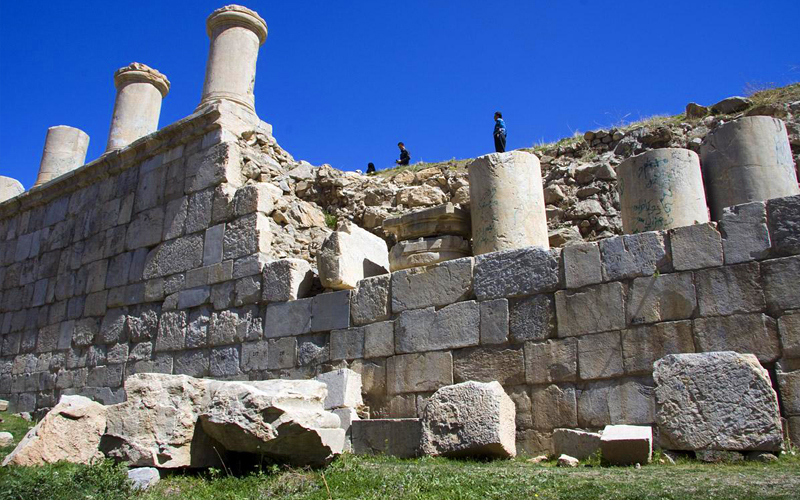

estled in the scenic Kangavar Plain of Kermanshah province, the Temple of Anahita stands as a testament to Iran’s rich historical and cultural legacy. Registered as one of Iran’s first national heritage sites in 1931, this awe-inspiring stone monument is the second-largest in the country, surpassed only by Persepolis. Dedicated to Anahita, the ancient Persian goddess of water, fertility, and beauty, the temple served as a sacred center during the Achaemenid, Arsacid, and Sassanian periods. With hamintour, explore this architectural marvel and uncover the spiritual traditions that shaped ancient Iran, making it a must-visit destination for history enthusiasts and cultural explorers.
Why Visit the Temple of Anahita?
The Temple of Anahita is more than a historical site—it’s a window into Iran’s pre-Islamic spiritual and cultural identity. Its intricate architecture, engineering marvels, and connection to the revered goddess Anahita make it a unique destination. Whether you’re drawn to ancient history, Persian mythology, or architectural brilliance, this temple offers an enriching experience.
-
Historical Significance: A sacred site from the Achaemenid to Sassanian eras, linked to Persian and Greco-Roman traditions.
-
Architectural Splendor: Features grand columns, intricate water channels, and a monumental platform.
Table of Contents -
Cultural Connection: Reflects the worship of Anahita, a symbol of fertility and water in Zoroastrianism.
-
Scenic Beauty: Located on a hilltop with panoramic views of the Kangavar Plain.
Historical Background of the Temple of Anahita
A Sacred Tribute to Anahita
The Temple of Anahita, also known as the Kangavar Complex, is a cornerstone of Iran’s ancient heritage. While its exact construction date remains debated, archaeologists suggest it was built during the Achaemenid (550–330 BCE) or Parthian (247 BCE–224 CE) periods and later restored under the Sassanians (224–651 CE). Dedicated to Anahita, the goddess of water, fertility, and beauty in Zoroastrianism, the temple was a vibrant center for religious ceremonies and cultural practices.
Anahita’s influence extended beyond Persia, with parallels to the Hindu goddess Saraswati, highlighting cultural exchanges between ancient Iran and India. Her association with Mithra, the deity of light and wisdom in Mithraism, underscores the temple’s role in blending Persian and Greco-Roman religious practices. Ancient Avestan texts describe Anahita as a divine figure who governed natural forces, shaping societal values and daily life through art, craftsmanship, and architecture.
-
Cultural Impact: The temple symbolized Persian and Median identity, influencing rituals, art, and governance.
-
Cross-Cultural Influence: Anahita’s worship spread to regions like India, reflecting Iran’s strategic role as a cultural bridge.
-
Historical Evolution: The temple’s reconstruction during the Sassanian era highlights its enduring significance.
The Architecture of the Temple of Anahita
A Marvel of Ancient Engineering
Perched on a hilltop in the Kangavar Plain, the Temple of Anahita is a masterpiece of ancient Persian architecture. Its design reflects both spiritual symbolism and engineering prowess, showcasing Anahita’s divine authority over water and nature. The temple’s layout, with its grand columns, intricate water channels, and sturdy stone foundation, continues to captivate scholars and visitors alike.
Key Architectural Features
-
Monumental Columns: A row of towering stone columns, each 54.2 meters tall, crowns the temple, emphasizing its grandeur. Their height, three times their diameter, is a unique design element.
-
Water Distribution System: Ingenious stone channels direct river water to a central reservoir, a 10×10-meter pool, 20 cm deep, symbolizing Anahita’s connection to water.
-
Grand Staircases: Access the temple via a double staircase on the southern side or a single staircase on the northeast, with 154 meters of steps (26 eastern, 21 western).
-
Central Platform: A massive east-west platform, 94 meters long, 5.9 meters wide, and 4 meters high, serves as the temple’s core, constructed from large stones and plaster.
-
Bull Motifs: Four bull heads adorn the upper sections, symbolizing strength and protection in Persian iconography.
-
Decorative Elements: Walls feature intricate carvings and inscriptions depicting religious and daily life scenes, crafted with stone and gypsum mortar.
The temple’s dry-stone exterior and water-centric design highlight the advanced engineering of ancient Persia, blending functionality with spiritual symbolism. Its robust foundation and detailed craftsmanship make it a standout among Iran’s historical monuments.
Best Time to Visit the Temple of Anahita
The ideal time to visit the Temple of Anahita is during spring (March-May) or autumn (September-November), when Kermanshah’s weather is mild, with temperatures ranging from 15-25°C. These seasons offer comfortable conditions for exploring the outdoor site and enjoying the scenic Kangavar Plain.
-
Visiting Hours: Open daily from 8 AM to 7 PM, except during major religious holidays.
-
Tips: Arrive early to avoid crowds and enjoy cooler temperatures. Wear comfortable shoes for navigating the stone steps and uneven terrain.
-
Booking: Plan your visit with hamintour for guided tours and seamless travel arrangements.
Nearby Attractions to the Temple of Anahita
Enhance your visit by exploring these nearby attractions, all within a short distance from the temple:
-
Imamzadeh Ibrahim (150 meters): A beautifully decorated shrine with intricate tilework, offering a spiritual complement to the temple’s historical significance.
-
Godin Tepe (14.8 km): An ancient archaeological site with Bronze Age ruins, shedding light on Kermanshah’s prehistory.
-
Goor-Dakhmeh Sahneh (35.5 km): A rock-cut tomb from the Achaemenid period, showcasing ancient burial practices.
-
Biston Historical Complex (56.6 km): A UNESCO World Heritage Site featuring rock reliefs, inscriptions, and the iconic Behistun Inscription, a key to deciphering cuneiform scripts.
Book guided tours with hamintour to explore these sites and uncover Kermanshah’s rich history.
Nearby Accommodations for Visitors
Stay close to the Temple of Anahita with these eco-friendly and comfortable options:
-
Baba Hassan Ecotourism Resort (30 km): A sustainable retreat with traditional decor, offering local cuisine and scenic views of the Kangavar countryside.
-
Golestan Hotel (31.6 km): A modern hotel with cozy rooms, Wi-Fi, and easy access to Kermanshah’s attractions.
-
Kosar Hotel (56 km): A budget-friendly option with comfortable amenities, ideal for travelers exploring the Biston Complex.
Reserve your stay through hamintour for exclusive deals and convenient transfers to the temple and nearby sites.
Plan Your Visit with hamintour
Hamintour offers tailored experiences to explore the Temple of Anahita and Kermanshah’s cultural treasures:
-
Guided Historical Tours: Learn about the temple’s history and architecture with expert local guides.
-
Custom Itineraries: Combine your temple visit with nearby attractions like Biston or Godin Tepe.
-
Flight and Hotel Packages: Book affordable flights to Kermanshah and stay near the temple with hamintour’s curated deals.
-
Cultural Immersion: Join group tours to experience Kermanshah’s traditions, cuisine, and history.
Visit hamintour’s website to plan your journey and secure budget-friendly travel options.
Conclusion: Experience the Majesty of the Temple of Anahita
The Temple of Anahita in Kangavar is a captivating blend of history, spirituality, and architectural brilliance. As a sacred site dedicated to the goddess of water and fertility, it offers a unique glimpse into Iran’s pre-Islamic heritage and its cultural connections with the ancient world. From its towering columns to its ingenious water channels, the temple stands as a testament to Persian ingenuity and devotion. Plan your visit with hamintour to explore this national heritage site, discover nearby attractions, and immerse yourself in Kermanshah’s timeless charm.
Frequently Asked Questions (FAQs)
-
What was the usage of the Temple of Anahita?
The temple was a religious center dedicated to Anahita, the goddess of water, fertility, and beauty, hosting ceremonies and rituals in ancient Persia. -
Where is the Temple of Anahita located?
It is located in the Kangavar Plain, Kermanshah province, Iran, on a hilltop with scenic views. -
Where are the hotels near the Temple of Anahita?
Nearby options include Baba Hassan Ecotourism Resort (30 km), Golestan Hotel (31.6 km), and Kosar Hotel (56 km). Book through hamintour for the best deals.