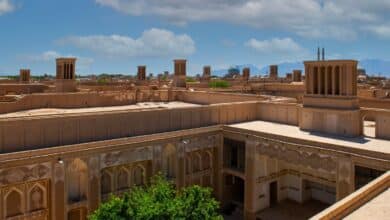

Introduction Yazd, Iran’s ancient desert city with over 5,000 years of history, is a UNESCO World Heritage Site celebrated for its mud-brick architecture, towering windcatchers, and Zoroastrian heritage. Nicknamed the “City of Windcatchers” and “City of Bicycles,” it thrives in a hot, arid climate where innovative qanats and badgirs (wind towers) have sustained life for millennia. Despite low rainfall, Yazd’s resilient spirit shines through its labyrinthine alleys and vibrant bazaars. With hamintour, a trusted leader in Iranian tourism, exploring Yazd becomes a seamless blend of cultural immersion and desert adventure. This guide unveils the top 10 places to visit in Yazd in 2025, offering a curated path through its timeless wonders.
1. Jameh Mosque of Yazd: A Timeless Islamic Beacon
Towering over Yazd’s skyline, the Jameh Mosque, with its 48-meter minarets—the tallest in Iran—exemplifies Persian-Islamic architecture from the 12th century. Its dome, crafted from white plaster, reflects light to create an ethereal glow inside, illuminating intricate muqarnas vaults and floral tilework. The Ganjineh Museum within houses rare manuscripts and artifacts. As a UNESCO highlight, it’s a serene spot for reflection amid the city’s bustle. Hamintour’s guided tours reveal its evolution from Seljuk to Timurid eras, perfect for architecture enthusiasts.
2. Dolat Abad Garden: A Persian Paradise in the Desert
Dolat Abad Garden, a 260-year-old UNESCO World Heritage Site, defies Yazd’s aridity with its lush cypresses, fountains, and the world’s tallest windcatcher (33 meters). Built in the 18th century, its symmetrical layout follows classic Persian garden principles, with a pavilion offering panoramic views. The underground qanat system, one of Yazd’s longest, sustains its verdancy. In 2025, enhanced lighting illuminates evening strolls. With hamintour, enjoy a private picnic amid blooming roses, immersing in Safavid-era tranquility.
3. Yazd Water Museum: Secrets of Desert Survival
Housed in the 19th-century Kolahdooz House, this underground museum explores Yazd’s ingenious water management through qanats, ab anbars, and clay replicas of the city’s hydraulic network. Spanning five floors (three subterranean), it displays artifacts like water wheels and storage jars, narrating how ancient engineers conquered the desert. A national heritage site since 1977, it’s a testament to Zoroastrian and Islamic ingenuity. Hamintour’s interactive tours include qanat simulations, ideal for eco-conscious travelers.
4. Amir Chakhmaq Complex: Yazd’s Architectural Crown
At the heart of Yazd, the Amir Chakhmaq Complex—a 15th-century Safavid gem—features a grand square flanked by a mosque, caravanserai, and the iconic five-tiered facade. Its windcatchers and ablution fountain once served pilgrims; today, it hosts cultural events like traditional wrestling (zurkhaneh). The underground reservoir adds historical depth. As a vibrant social hub, it’s perfect for people-watching. Hamintour’s evening tours capture its illuminated facade against the desert sky, blending history with local life.
5. Zoroastrian Fire Temple (Atash Behram): Eternal Flame of Faith
Yazd’s Zoroastrian heart, the Atash Behram (Temple of Fire), houses a sacred flame burning since 470 CE—over 1,500 years old. This 20th-century structure, built atop ancient foundations, features intricate bronze doors and a central altar. As Iran’s Zoroastrian epicenter, it symbolizes purity and light. Visitors must dress modestly; non-Zoroastrians can’t enter the fire chamber but can view from afar. Hamintour’s respectful cultural tours include insights from local priests, fostering understanding of Iran’s pre-Islamic roots.
6. Towers of Silence (Dakhmeh): Echoes of Ancient Rituals
On Yazd’s outskirts, these haunting hilltop platforms—used until the 1970s for Zoroastrian sky burials—offer stark views of the Dasht-e Kavir desert. Dating to the Sassanid era, the towers exposed bodies to vultures, reflecting beliefs in purity. Now a poignant museum site, it includes explanatory panels on Zoroastrian funerary practices. A short hike adds adventure. With hamintour, join ethical guided visits that emphasize cultural sensitivity, making it a profound stop for history seekers.
7. Kharanaq Village: A Mud-Brick Time Capsule
70 km north of Yazd, Kharanaq is an abandoned mud-brick village from the 7th century, perched on a cliff with terraced homes and a crumbling mosque. Its eerie silence and wind-sculpted ruins evoke ancient Persia, with a qanat-fed aqueduct below. Part of the UNESCO-listed cultural landscape, it’s a photographer’s dream. Hamintour’s day trips include transport from Yazd, allowing time to wander its labyrinthine alleys and reflect on desert resilience.
8. Aqazadeh House: Desert Elegance Preserved
This Qajar-era (19th-century) mansion, a national heritage site, exemplifies Yazd’s adobe architecture with two-story windcatchers, courtyards, and intricate tilework. Once home to a wealthy merchant, it now functions as a museum, café, and guesthouse, offering free Wi-Fi and restrooms. Its bas-relief carvings and underground cellars highlight adaptive desert living. Hamintour’s homestay options let you overnight here, experiencing authentic Yazd hospitality.
9. Lari House: Qajar Opulence in Clay
Built in the 19th century by a merchant from Lar, Lari House spans 6,000 square meters with two courtyards, 22 rooms, a cellar, and windcatchers. Its mirrored halls, colored glass, and plasterwork evoke Qajar luxury, blending functionality with beauty. A national monument since 1977, it showcases Yazd’s social history. With hamintour, explore its hidden chambers during private tours, pairing visits with traditional tea in its courtyard.
10. Mirror and Lighting Museum: Illuminating Yazd’s Craft
Housed in a historic Qajar mansion, this niche museum displays 200+ traditional lamps—from tallow burners to electric chandeliers—crafted in ceramic, glass, brass, and bronze. Dating to 1998, it explores light’s role in Persian culture, with interactive exhibits on Zoroastrian fire symbolism. A central pond and garden add serenity. Hamintour’s evening visits coincide with lantern lightings, creating a magical ambiance for cultural immersion.
Why Visit Yazd?
Yazd’s mud-brick labyrinths, wind-swept badgirs, and Zoroastrian flames offer a profound dive into Iran’s desert soul, where ancient survival meets timeless beauty. As the world’s oldest adobe city, it captivates with its resilience against arid extremes. Spring (March-May) and fall (September-November) are prime, with mild days and blooming pistachio groves. With hamintour, travelers enjoy expert-guided tours, eco-friendly qanat explorations, and authentic stays in restored caravanserais, turning a visit into a transformative journey through Persia’s heart.
Frequently Asked Questions (FAQs)
- What makes Yazd unique? Its UNESCO-listed adobe architecture, windcatchers, and Zoroastrian heritage set it apart as the “City of Windcatchers.”
- Is Yazd safe for tourists? Yes, it’s one of Iran’s safest cities, with welcoming locals and low crime; hamintour ensures secure itineraries.
- What is the Jameh Mosque famous for? Its 48-meter minarets—the tallest in Iran—and light-reflecting plaster dome, a Seljuk-Timurid masterpiece.
- Can I visit Zoroastrian sites in Yazd? Absolutely; the Fire Temple and Towers of Silence are open, with modest dress required—hamintour offers respectful tours.
- What should I eat in Yazd? Try pashmak (cotton candy), qotab pastries, and ash-e sholeh soup; hamintour includes culinary tastings.
- How many days for Yazd? 2-3 days suffice for the old town and day trips like Kharanaq; extend for Chak Chak temple.
- Is biking common in Yazd? Yes, as the “City of Bicycles,” rentals are available—hamintour offers guided eco-tours on two wheels.
- What is Dolat Abad Garden known for? The world’s tallest windcatcher and a UNESCO Persian garden with qanat-fed fountains.
- Are there Zoroastrian fire temples open to visitors? Yes, the Atash Behram’s eternal flame is viewable; non-Zoroastrians can’t enter the inner sanctum.
- How does hamintour enhance a Yazd trip? Hamintour provides guided explorations, homestays in historic houses, and bundled desert day trips for an authentic experience.