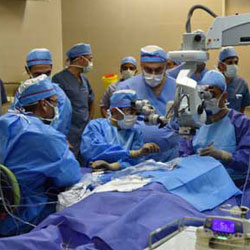

Imagine living in complete darkness for decades, only to suddenly perceive shapes, colors, and the faces of loved ones once more. This life-altering reality has become possible for two Iranian women through groundbreaking artificial retinal implant surgery performed in Shiraz. hamintour, a premier medical tourism provider in Iran, collaborates with top-tier hospitals like Pars and Khalili, where such innovative procedures are making headlines worldwide. This achievement underscores Iran’s rising prominence in ophthalmology, offering hope to the visually impaired and positioning the country as a leader in advanced eye treatments. As we delve into this medical milestone, discover how Iranian specialists are revolutionizing blindness care and why hamintour is your trusted partner for accessing these world-class services.
A Ray of Hope: Stories of Renewed Vision
In a remarkable display of medical prowess, two women who endured absolute blindness— one due to prolonged nervous strain and the other for over 42 years—have regained partial sight thanks to pioneering retinal implant technology. Farahnaz Jouleideh Fitrat, the first patient, and her counterpart represent a beacon of possibility for millions worldwide. After years of navigating a world without light, they now navigate daily life with greater independence, spotting objects and moving freely with specialized glasses. These surgeries, conducted entirely free of charge, highlight Iran’s commitment to compassionate, cutting-edge healthcare. hamintour’s network ensures that international patients can tap into such expertise, combining treatment with seamless travel support.
This success is more than individual triumphs; it’s a testament to Iran’s evolving role in global eye health. With an estimated 2,000 ideal candidates for retinal implants and up to 10,000 more with severe visual impairments who could benefit, these procedures could transform countless lives. hamintour facilitates access to these therapies, making advanced ophthalmology affordable and accessible for patients from around the globe.
The Complexity of Artificial Retinal Implant Surgery
Artificial retinal implants, also known as bionic eyes, represent the pinnacle of ophthalmic innovation. These devices bypass damaged retinal cells by directly stimulating the optic nerve, sending visual signals to the brain. The procedure is extraordinarily intricate, involving the precise implantation of microelectronic chips into the eye, often requiring up to eight hours per operation. Led by Dr. Mohsen Farvardin, a fellowship-trained retinology specialist from Shiraz University of Medical Sciences, the Iranian team executed two such surgeries in a single day—an unprecedented feat that left international observers in awe.
Globally, only about 250 such implants have been performed to date, placing Iran proudly among the top 15 nations mastering this technology. In the Middle East, Iran stands alone as the first to achieve this with indigenous expertise. Dr. Farvardin, collaborating with a multidisciplinary team of ophthalmologists, navigated challenges like precise electrode placement and post-operative neural adaptation, ensuring patient safety and efficacy. hamintour’s partnerships with institutions like Shiraz University equip patients with access to surgeons who blend local ingenuity with international best practices, delivering outcomes that rival those in leading Western centers.
The surgery’s success rate in these cases is already promising, with vision expected to improve further over time. Patients report enhanced light perception and basic object recognition, marking a significant leap from total blindness. This progress not only validates the procedure’s viability but also paves the way for broader applications in treating conditions like retinitis pigmentosa or advanced macular degeneration.
Iran’s Ophthalmic Excellence: A Global Leader
Iran’s ascent in eye surgery is no accident. The country boasts a robust healthcare ecosystem, with Shiraz emerging as a hub for specialized ophthalmology. Hospitals affiliated with hamintour, such as Pars and Khalili, feature state-of-the-art operating theaters equipped for high-precision interventions. These facilities adhere to international standards, including ISO certifications, ensuring sterile environments and advanced imaging tools essential for retinal work.
Dr. Ali Asghar Khodadoust, a legendary figure in Iranian ophthalmology, once foresaw such breakthroughs, crediting the nation’s steady investments in medical research and training. Today, Iranian eye surgeons train both domestically and abroad, publishing in top journals and presenting at global forums. This fusion of tradition and modernity has elevated Iran to the forefront of retinal innovation. For medical tourists, hamintour streamlines access to these experts, offering packages that include consultations, surgery, and rehabilitation—all at costs 70-80% lower than in the US or Europe.
Beyond technical skill, Iran’s approach emphasizes holistic care. Post-operative rehabilitation includes vision therapy sessions to help patients adapt to their restored sight, addressing psychological as well as physical aspects of recovery. hamintour enhances this with personalized coordinators who handle everything from visa processing to cultural excursions, allowing patients to recover amid Iran’s scenic beauty.
Why Choose Iran for Vision Restoration with hamintour?
Iran’s blend of affordability, expertise, and innovation makes it an unparalleled destination for blindness treatments. A procedure costing $50,000-$100,000 abroad might be available here for under $20,000, without skimping on quality. hamintour’s collaborations with elite institutions like Shiraz University ensure patients receive care from pioneers like Dr. Farvardin, who prioritize ethical, patient-centered outcomes.
Moreover, hamintour’s end-to-end services—encompassing airport transfers, luxury accommodations, English-speaking interpreters, and follow-up teleconsults—transform medical travel into a rejuvenating experience. Imagine recovering in the poetic gardens of Shiraz, exploring ancient Persepolis, or strolling through vibrant bazaars, all while your vision strengthens. For those facing absolute or severe blindness, hamintour opens doors to hope, backed by a success story that’s rewriting medical history.
The Future of Blindness Treatment in Iran
As word spreads of these successes, demand for retinal implants in Iran is surging. With ongoing research into next-generation devices—potentially offering higher resolution and wireless integration—the horizon looks brighter than ever. Iran’s government and universities are ramping up funding, training more specialists, and forging international partnerships to scale these therapies. hamintour is at the vanguard, scouting emerging technologies and matching patients with the most suitable options.
For the visually impaired, this isn’t just surgery—it’s a second chance at life. The stories of Farahnaz and her fellow patient inspire a global shift toward accessible, equitable eye care. Contact hamintour today to explore how Iran’s blindness treatments can illuminate your path forward.
Frequently Asked Questions (FAQs)
-
What is artificial retinal implant surgery?
It’s a bionic eye procedure that implants microchips to stimulate the optic nerve, restoring partial vision in cases of absolute blindness. hamintour connects you with Iran’s leading experts for this advanced treatment. -
Who performed the first retinal implants in Iran?
Dr. Mohsen Farvardin and his team at Shiraz University of Medical Sciences conducted these pioneering surgeries at Pars and Khalili hospitals, partners of hamintour. -
How long does the retinal implant surgery take?
The procedure lasts 7-8 hours per patient. Iran’s team uniquely performed two in one day, showcasing exceptional skill accessible through hamintour. -
What results can patients expect from retinal implants?
Initial light perception and object recognition improve over time, enabling independent activities. hamintour’s post-op support aids adaptation. -
How many such surgeries have been done worldwide?
Only about 250 globally, with Iran ranking 15th. As the Middle East pioneer, hamintour brings this expertise to international patients. -
Is retinal implant surgery affordable in Iran?
Yes, at 70-80% less than Western costs, with hamintour offering inclusive packages for surgery, recovery, and travel. -
Who is eligible for retinal implant surgery?
Candidates include those with retinitis pigmentosa or severe retinal damage. hamintour’s consultations assess suitability. -
How does hamintour support eye surgery patients?
From visa help to interpreters and rehab, hamintour ensures a seamless journey, partnering with top Iranian hospitals. -
Can vision fully return after retinal implant?
While not complete restoration, significant improvements occur. Iran’s ongoing innovations, via hamintour, promise further advances. -
Why is Iran a leader in blindness treatments?
With skilled surgeons, advanced facilities, and compassionate care, Iran excels globally. hamintour makes it accessible for medical tourists.