


A practical guide for international patients
Buccal Fat Removal in Iran
A slimmer lower cheek can be an appealing idea. The useful question is whether removing the buccal fat pad would suit your facial structure now and as it changes with age. Here is how to assess the procedure, compare Tehran providers, understand the real travel costs and plan care after you return home.

- What the operation changes
- Is it right for you?
- Alternatives and combined procedures
- Why consider Iran?
- Five Tehran providers to investigate
- How to compare surgeons and facilities
- Consultation and surgery
- USD costs and quote checklist
- Request a tailored quote
- Travel and aftercare plan
- Risks and warning signs
- Before-and-after examples
- About Hamintour Medical
- Related guides
- Questions and answers
What buccal fat removal actually changes
The buccal fat pad is a distinct pocket of fat deep in each lower cheek. A surgeon can reach it through a small incision inside the mouth and remove a planned portion. The operation aims to reduce fullness below the cheekbone. It does not tighten loose skin, move the jawbone or treat every cause of a round face. The American Society of Plastic Surgeons (ASPS) overview explains the anatomy and the goal of cheek reduction.
That distinction matters. Fullness may come from the buccal pad, superficial fat, enlarged chewing muscles, bone structure, swelling or a combination. Removing the wrong tissue can leave the original concern unchanged while making the midface look hollow. Ask the surgeon to point to the exact area they intend to change in a front and three-quarter photograph. If your concern is under the chin, our double-chin treatment guide addresses a different anatomical problem.
The operation leaves no planned external skin incision when performed through the mouth. That does not make it minor for every patient. The surgeon works near the parotid duct and branches of the facial nerve; the decision must follow an examination, medication review and a conversation about possible long-term facial changes. There is no responsible way to promise a specific cheekbone definition from photographs alone.
Is buccal fat removal right for you?
ASPS describes potential candidates as people in good physical health, at a stable weight, who do not smoke and have realistic goals. It also notes that people with naturally thin or narrow faces may develop a more gaunt appearance as they age after removal. See the ASPS candidacy guidance. These are starting points for discussion, not a remote diagnosis.
Reasons to explore it
Persistent lower-cheek fullness despite a stable weight; a surgeon identifies a prominent buccal pad rather than another cause; and you accept the possibility of a subtle result or no recommendation for surgery.
Reasons to pause
A narrow face, existing hollow cheeks, significant weight changes ahead, dissatisfaction driven by edited photos, or a wish for a guaranteed sculpted look all deserve a careful second opinion.
Medical review matters
Tell the surgeon about medicines, supplements, smoking, previous facial surgery, dental disease, facial weakness, bleeding problems and any condition that could alter wound healing or anesthesia planning.
A useful consultation question is, “What would you advise if you were not allowed to remove the buccal pad?” A thoughtful surgeon can explain whether the visible issue lies elsewhere, why they recommend removal or why they advise leaving the face alone. If an examination suggests an alternative, declining surgery may be the most valuable outcome of the appointment.
Compare the right treatment for the right concern
| Your main concern | Option worth discussing | Important distinction |
|---|---|---|
| Fullness in the central lower cheek | Buccal fat removal | Removes deep cheek fat; the effect is intended to be lasting, so conservative planning is important. |
| Fullness beneath the chin | Submental liposuction or another clinician-selected approach | This is a separate fat compartment; cheek surgery will not remove it. Read the double-chin guide. |
| Weak chin projection | Chin surgery or other evaluated treatment | Changing the chin may alter perceived facial balance without subtracting cheek volume. See chin surgery in Iran. |
| Loose lower-face skin | Skin-tightening or a surgical lift if appropriate | Fat removal does not lift tissue. Explore the facelift guide. |
| Broad jaw from enlarged masseter muscle | Assessment of muscle and bone before treatment | Cheek fat surgery does not reduce the masseter muscle or alter jaw width. |
Why consider Iran, and why compare carefully?
Iran has surgeons and clinics publishing buccal fat removal information and case galleries, especially in Tehran. For an international patient, the practical attraction is the opportunity to compare several providers, request a written USD quotation and coordinate treatment with travel support. A public website, attractive gallery or low advertised price is not proof of a particular surgeon’s skill or of a facility’s current authorization. The CDC medical-tourism guidance recommends checking the destination, facility, treating clinician, complication plan and aftercare before committing.
Tehran is the main focus of the provider shortlist below because the named service pages and follow-up locations are there. If another city is more practical, apply the same checks rather than assuming every clinic has equivalent resources. For current travel and security conditions, consult your own government’s advice and a current official source such as the UK Foreign, Commonwealth & Development Office advice for Iran. Entry rules, flights and insurance terms can change; confirm them before paying a deposit.
Five Tehran providers to investigate
This is a documented shortlist, not a ranking or endorsement. Inclusion means we found a provider-operated page specifically discussing buccal fat removal, or a provider gallery showing it. It does not establish the quality of an individual outcome. For named doctors, the direct Iran Medical Council profile is linked so you can confirm identity and registration yourself. Clinic authorization, treating clinician, operating location and current availability still need written confirmation.
| Provider | Evidence available | What to request before booking |
|---|---|---|
| Dr Ali Parand Tehran | Buccal fat service page Iran Medical Council profile, No. 81822 | Confirm the operating facility, technique, extent of fat removal and personal case examples. |
| Dr Mehdi Ahmadi Tehran | Buccal fat service page Iran Medical Council profile, No. 108819 | Ask whether the doctor recommends the operation for your anatomy and who handles follow-up. |
| Dr Mohsen Fadaei Araghi Tehran | Buccal fat service page Iran Medical Council profile, No. 63822 | Check the name variation between the website and the council record, then confirm operating privileges. |
| Clinic H2 Tehran | Service page and labelled provider gallery | Obtain the full name and council profile of the actual surgeon, facility license and case dates. |
| Pamchal Clinic Tehran | Buccal fat service page | Ask which surgeon performs the operation, where it is performed and what the fee includes. |
Verification note: A doctor’s council registration is not a substitute for checking the exact specialty, procedure experience and current facility. We have not independently audited the clinics’ surgical authorization, success rates, case ownership or patient satisfaction. Ask for evidence directly and verify it before making a decision. Avoid interpreting any provider’s marketing promise as a medical guarantee.
How to choose a surgeon and facility
Compare plans, not adjectives. Start with the full name of the doctor who will operate, a matching Iran Medical Council record, their relevant training and their experience with facial anatomy. Ask to speak with the surgeon before travel. A coordinator or sales adviser should not be the only person assessing candidacy. The surgeon should discuss the realistic degree of change, the possibility of too much hollowing, symmetry, and what they would do if a complication occurs.
Then verify the planned location: clinic or hospital name, exact address, whether the procedure is carried out there, anesthesia arrangements, emergency transfer plan, and the person who will review you afterwards. Request a written consent document in a language you understand. Ask whether photographs include other procedures, weight changes, retouching or different lighting. An honest explanation is more useful than a large but unlabelled gallery.
For a side-by-side decision, ask each provider the same six questions: What anatomy is causing my concern? How much fat would you remove and why? What result might look too hollow later? Who will perform the operation? Which costs and follow-up visits are included? Who manages an urgent problem after hours or after I fly home? Keep the written answers with your travel records. The ASPS consultation questions offer a useful additional checklist.
What happens before and during the procedure?
The first step is a medical and facial assessment, whether an initial review of photographs and records or an in-person examination. Expect questions about previous procedures, allergies, medicines, tobacco, dental issues and your goal. The surgeon examines cheek volume and facial proportions. They then decide whether buccal fat removal is appropriate, whether it should be done alone and what type of anesthesia is suitable. The ASPS preparation page describes the usual preoperative conversation and instructions.
During a typical intraoral approach, the surgeon makes an incision inside the cheek, identifies the buccal pad, removes the planned amount and closes the incision. Details depend on anatomy, technique and any combined treatment. Do not treat an online duration estimate as a booking guarantee: anesthesia, observation and travel arrangements should be set by the treating team. The ASPS procedure description is a useful general reference.
Before consent, ask what happens if the surgeon finds the pad is small, if only one side differs, or if they judge removal would worsen your facial balance. The option to stop or change the plan for medical reasons should be clear. Also ask for a copy of the operative note, medication list and emergency contact details in English for your physician at home.
How much does buccal fat removal in Iran cost?
English-language medical-travel listings for Iran show an approximate US$1,200–$2,200 range for buccal fat removal. This is a public advertised range, not Hamintour’s observed patient quotations, a verified market median or a binding offer. Another listing from the same source shows a lower category-level estimate, which illustrates how package scope and web prices can differ. Source name: MedPalTrip, Buccal Fat Removal in Iran. We do not link to competing coordinators. Ask Hamintour Medical for a current, itemized quote from the treating provider before comparing offers.
| Budget line | How to compare it | What remains uncertain until quoted |
|---|---|---|
| Procedure and surgeon | Published planning range: approximately $1,200–$2,200 | Surgeon fee, facility, anesthesia and whether one or both cheeks are included. |
| Preoperative review | Ask if consultation, tests and dental or medical clearance are included. | Extra investigations and treatment of unrelated conditions. |
| Aftercare | Request a schedule of reviews, medications and an emergency contact. | Extra visits, complication treatment or a longer stay. |
| Travel services | Price flights, hotel, transfers and interpreter separately. | Season, room type, companion travel and rescheduling. |
All figures are approximate and for planning only. A more complex case, combined surgery or a different facility may cost more. Do not compare a bare surgical fee with a package including hotel and transfers. Ask for payment currency, deposit and refund terms in writing. If a provider quotes in another currency, ask which exchange rate is used and when it is fixed. Price alone cannot tell you whether the surgeon or facility is suitable.
Request a case-specific assessment and USD quote
If you are considering treatment, share your goals, relevant health history and photographs only through the secure channel provided. Hamintour Medical can help arrange a review by a relevant provider and clarify which travel services are optional. The surgeon decides whether surgery is suitable and provides the medical plan.
Request Your Free Consultation
Get a personalized treatment plan from our elite medical experts.
Plan the journey around follow-up, not sightseeing
A practical sequence is: send records for preliminary review; speak to the prospective surgeon; compare written plans; check travel advice, entry requirements and insurance exclusions; then book flexible flights and nearby accommodation. The day after arrival is usually better used for rest and the in-person consultation than for a crowded itinerary. A surgeon may change or decline the operation after examining you. Build that possibility into your budget.
On procedure day, follow the team’s instructions about eating, medicines and transport. Arrange a companion if advised. Keep the next days light: attend wound and mouth checks, follow the prescribed oral-care and diet plan, and avoid treating a brief recovery window as a holiday. Your surgeon should set the minimum time in Iran and the date you may fly. The ASPS recovery page describes swelling and individualized aftercare. The CDC warns that strenuous activity and travel can complicate recovery after medical care abroad.
Before departure, obtain the surgeon’s written summary, operative report, prescriptions, contact details and a plan for routine follow-up. Arrange a clinician at home who can assess you if needed. Ask how images for follow-up should be sent and how quickly the surgeon can respond. Travel insurance may exclude elective surgery or related complications, so read the policy instead of assuming coverage. The decision on when to fly belongs to the treating surgeon and depends on your recovery.
Risks, limitations and when to seek help
Possible complications include bleeding, infection, prolonged swelling, asymmetry, changes in sensation, injury to a salivary duct or a branch of the facial nerve, an unsatisfactory aesthetic result and possible revision. Anesthesia carries its own risks. The full list and context are on the ASPS safety page. No website can calculate your personal risk without a clinical assessment.
Some swelling and a gradual change in appearance are expected, but the exact course varies. Contact the treating team promptly for unexpected worsening, and seek urgent local medical care for symptoms that feel severe or rapidly progressive, such as significant bleeding, difficulty breathing, fever with worsening facial swelling or new facial weakness. Do not wait for an international message exchange in an emergency. Tell the local clinician what operation you had and provide the records you brought home.
Before-and-after examples: read the labels first
The five photographs below represent four provider-published comparisons from two Tehran practices. The first three are combined images from Clinic H2’s buccal-fat gallery; the final two show one case from Dr Arash Najaf Beygi’s service page. A paired image is one case, not two. The clinic places “Before” on the right and “After” on the left in the first two composites; the third comparison is not labelled on the image, so we do not assign a direction. The page does not establish when each photograph was taken, whether other procedures were performed or whether lighting was standardized. Ask the provider for the full case history before using a picture to guide your decision.
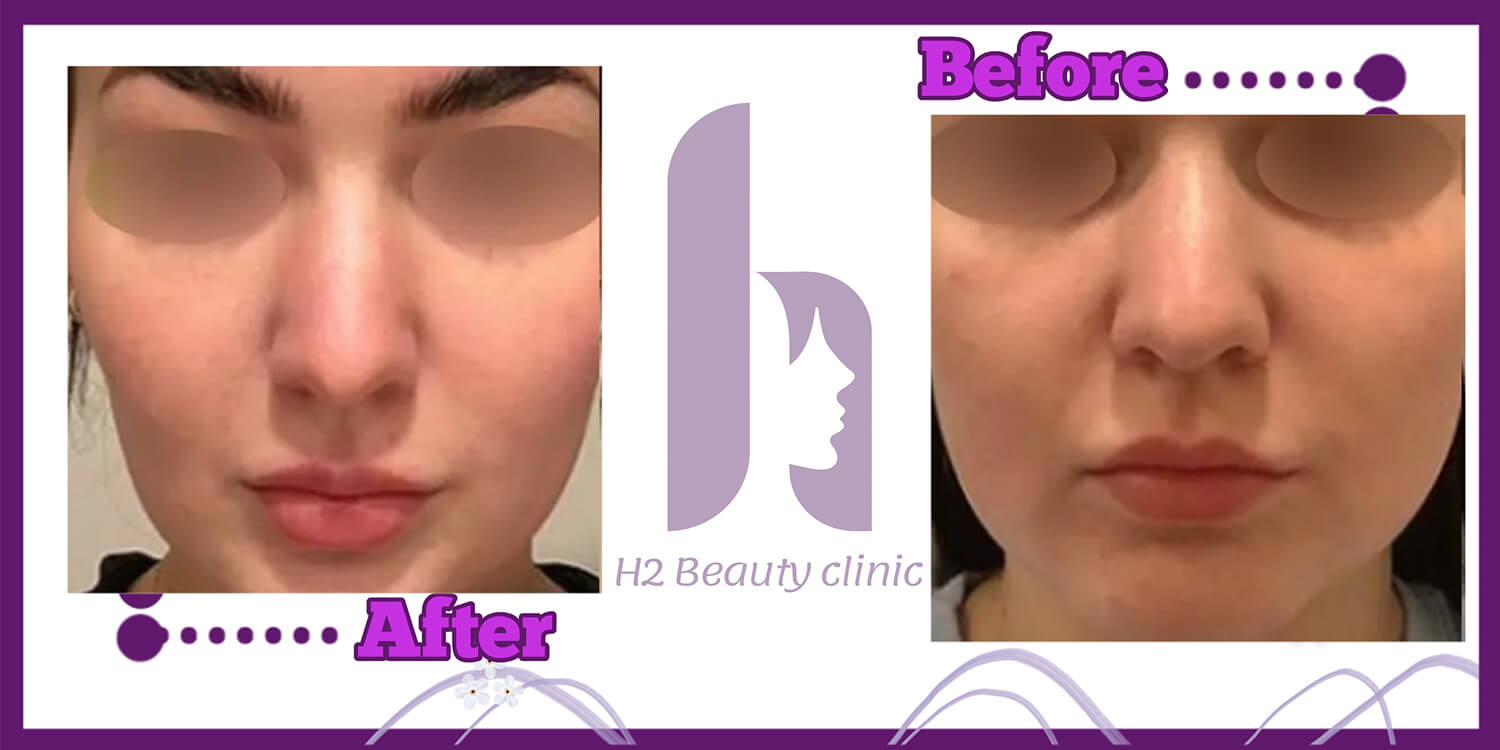

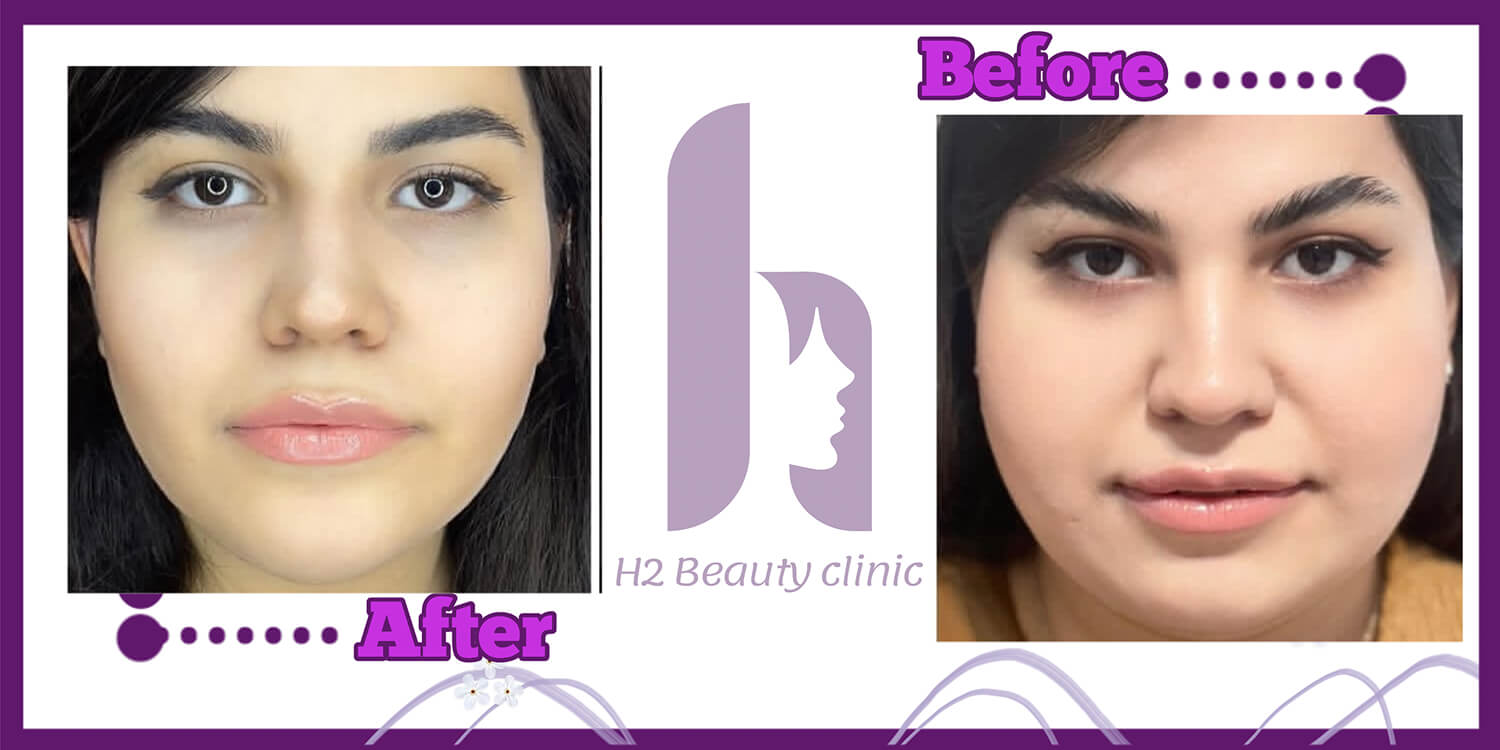

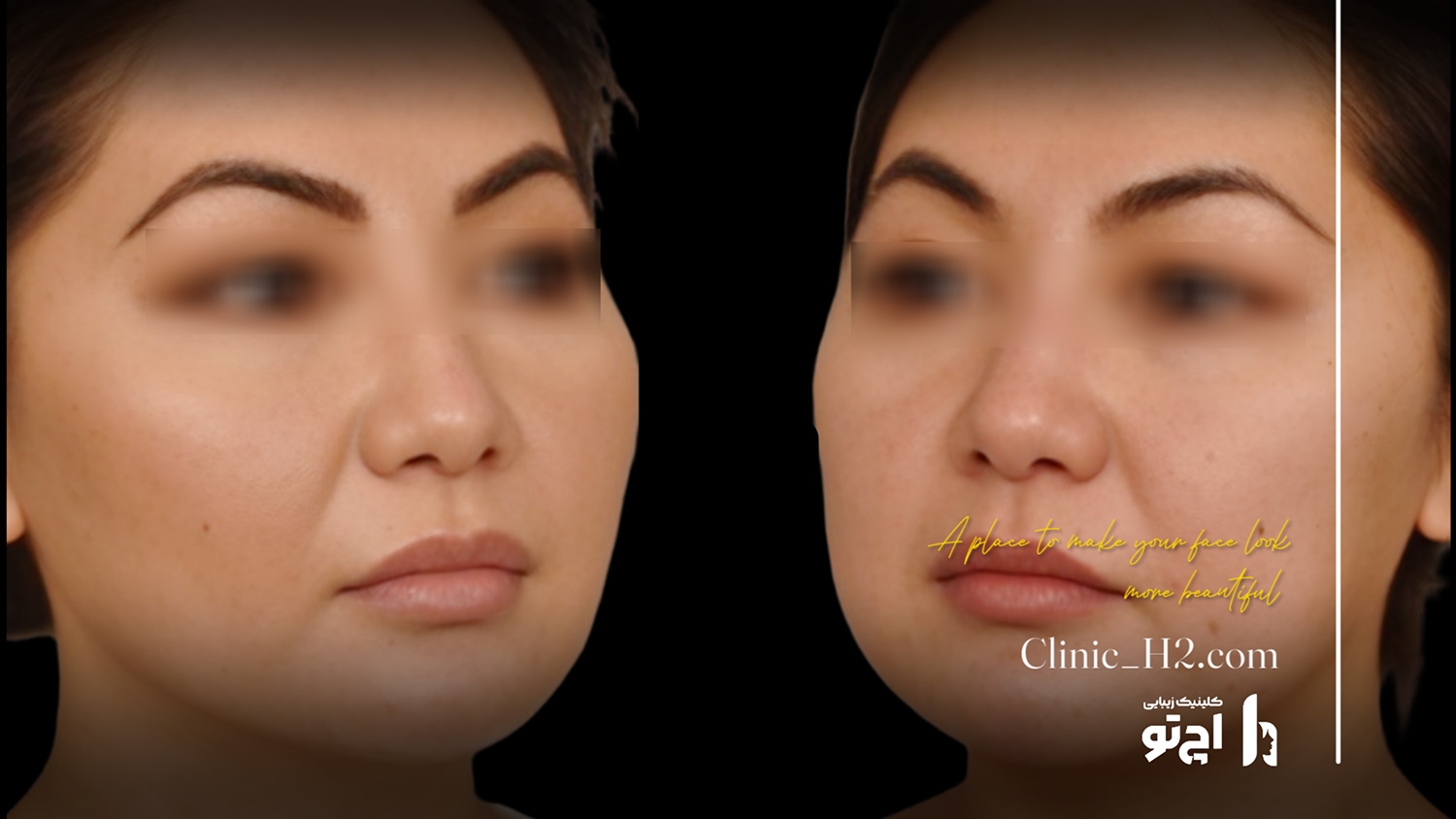

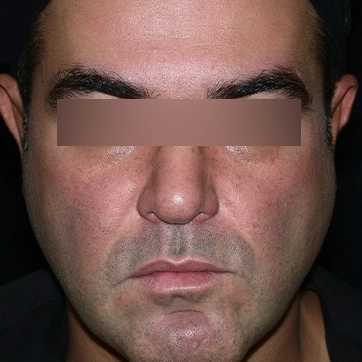
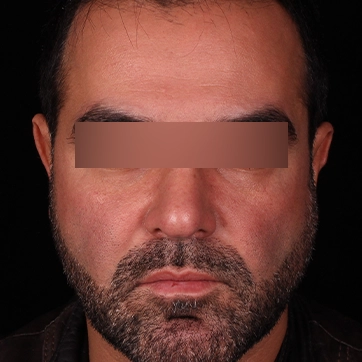


More labelled examples are available in the H2 gallery and Dr Arash Najaf Beygi’s buccal fat portfolio. Review multiple patients with similar facial structure, not only the most dramatic photograph. The images above do not identify patients as Hamintour patients or establish a commercial relationship with the provider. You can also browse Hamintour Medical’s broader examples.
About Hamintour Medical and the support package
Hamintour Medical is an Iran-based medical travel coordinator. It can help you identify potential providers, arrange introductions and appointments, obtain an initial review by the relevant clinician, organize flights and accommodation on request, coordinate airport and local transfers, arrange language support and help you stay in contact with the provider after returning home. You can select only the services you need. Ask for a written list of what is included and what is charged separately.
Hamintour is not a hospital, clinic or treating medical team. It does not diagnose, prescribe, operate or guarantee a result. A licensed treating professional and facility must make the medical decisions, explain risks, obtain consent and provide treatment. Our role is to make the comparison and logistics easier to understand, while keeping you in direct contact with the people responsible for your care. Read more about Hamintour Medical and its Iran medical travel guides.
Frequently asked questions
Will removing buccal fat make my whole face slimmer?
It targets deep fat in the lower cheek. It does not treat every source of facial fullness, and some people are better served by no surgery or a different procedure.
Can buccal fat removal be reversed?
The removed fat is not simply put back. Corrective procedures may be possible in some situations, but their results are uncertain. Discuss long-term facial volume before deciding.
Does it leave a visible scar?
The usual incision is inside the mouth, so there is no planned external skin scar. Healing and complications still need attention.
Is the published price a final quote?
No. The approximate $1,200–$2,200 public range is a planning reference. Get a written, itemized USD quote from the provider for your case.
How long must I remain in Iran?
Your surgeon should set the minimum stay after consultation and confirm it again after the operation and early review. Keep travel plans flexible.
What if a surgeon advises against the operation?
Ask why and consider a second qualified opinion if needed. A recommendation to avoid unnecessary fat removal can protect the long-term appearance of a naturally narrow face.
Who decides whether I qualify for surgery?
The treating surgeon and licensed facility make the medical decision after assessing your health and anatomy. Hamintour coordinates communication and travel arrangements.