

A careful guide for international families
Cleft Lip and Palate Repair in Iran
Cleft repair is reconstructive care, not a single cosmetic appointment. Children and adults may need coordinated surgery, feeding support, speech care, dental treatment and long-term review. This guide explains how to plan an informed consultation in Iran while keeping the patient’s safety and continuity of care at the centre.
Understand the care pathwayReview published cases
What cleft lip and palate repair means
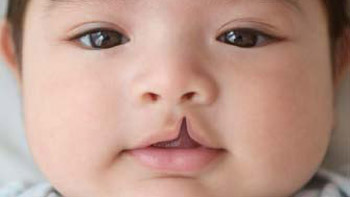
A cleft lip is an opening in the upper lip that may extend into the nose. A cleft palate is an opening in the roof of the mouth. A baby can have one or both, and the width and anatomy vary widely. Repair aims to support feeding, speech, hearing, facial growth and appearance over time. The U.S. National Library of Medicine explains that these are birth differences requiring surgical and developmental care, not a problem that can be assessed from a photograph alone.
Families often focus on the first visible operation, but the most useful question is: “What complete pathway will this child need?” A craniofacial team may include a plastic or maxillofacial surgeon, paediatrician, anaesthetist, speech and language specialist, orthodontist, dentist, audiologist, nurse and feeding specialist. Some children need a lip repair, a palate repair, later speech surgery, bone grafting or revision as the face grows. The schedule is individual and may be influenced by nutrition, airway, associated conditions and local clinical protocols.
Treatment pathway and timing
Many specialist programmes repair the lip during infancy and the palate later in early childhood, but exact timing varies. A surgeon may delay an operation when a baby is underweight, unwell or has an airway or anaesthesia concern. Older children and adults can still receive reconstructive treatment, though the goals and number of stages may differ. Ask the team to explain what they can complete during one visit and what must be done later.
Before surgery
Feeding and nutrition review, airway and medical assessment, hearing and dental history, photographs and a discussion of anaesthesia. Bring every previous operative note and scan.
Lip repair
The surgeon closes the lip and reshapes the muscle and nasal base as appropriate. Scar maturation takes time and further nasal or lip refinement may be considered later.
Palate repair
The surgeon closes the palate layers to separate the mouth and nose and support speech and feeding. A fistula or speech concern can require later assessment or another operation.
Developmental care
Hearing checks, speech therapy, dental care and orthodontics are part of the pathway. These services may be more important than a single surgical result.
Later revision
Some patients need lip, nose, scar, jaw or speech-related procedures as they grow. No provider can promise that one operation is the final stage.
Adult presentation
Adults may seek primary repair, revision, nasal reconstruction, scar improvement or speech-related care. The team should separate functional goals from appearance goals.
Children’s hospitals describe palate repair as an operation that may require overnight monitoring for pain, fluids and breathing. For example, Texas Children’s Hospital explains why feeding and airway observation matter after palate surgery. Ask the Iranian facility about its paediatric admission, intensive-care access and emergency transfer arrangements before booking.
Choosing a qualified team in Iran
Look for a named craniofacial or reconstructive surgeon and a facility that can care for the patient’s age and complexity. Ask for the surgeon’s full name, specialty, medical council number and direct registration profile in the Iran Medical Council member search. Verify that the person listed is the operating clinician. A gallery, social-media post or coordinator’s description cannot replace credential checks.
Ask whether the hospital has paediatric anaesthesia, overnight monitoring, blood-bank access, speech and feeding assessment, dental and orthodontic referral, hearing testing and emergency transfer. Ask who will provide each service after discharge and whether those professionals are available in English. If the operation is for a child, request an age-appropriate feeding and pain plan in writing.
During consultation, discuss the patient’s diagnosis, previous operations, breathing and sleep, feeding, weight gain, hearing, speech, dental development, allergies and medicines. Ask the surgeon to show comparable cases with the same type of cleft and an identified follow-up interval. You have the right to a second opinion. Hamintour can help organize communication; the clinical team must make the final decision.
Considering Iran for reconstructive care
Tehran offers access to several tertiary hospitals and specialist practices, while other Iranian cities may have experienced teams for particular cases. The correct choice is the facility that can provide the complete pathway, not simply the lowest quote or the most attractive photograph. Ask whether surgery can be coordinated with speech, hearing and dental services rather than treating the operation as a stand-alone visit.
International travel adds risks. Check your own government’s current Iran travel advice, entry requirements and insurance. The CDC medical tourism guidance advises travellers to plan follow-up before leaving home, carry records and understand the possibility of expensive care after returning. Children may need a parent, documents for both traveller and guardian, familiar feeding supplies and extra time for recovery.
Do not assume that a foreign hospital’s processes match those in your home country. Ask who will translate consent, how the team communicates urgent symptoms and how records will be transferred. A written plan for complications and local follow-up is part of safe planning.
Cleft repair costs and what a quote should show
Public English-language medical-tourism listings sometimes quote approximately $1,500–$4,000 per operation for cleft lip or palate repair in Iran. These figures are broad planning references, not audited prices, a Hamintour quotation or a promise for a particular patient. A child’s age, complexity, anaesthesia, hospital stay, tests, surgeon, revision needs and multidisciplinary services can change the total substantially.
| Quote line | Ask whether it includes | Why it matters |
|---|---|---|
| Surgeon and hospital | Named surgeon, operating facility, theatre and professional fees | Prevents a low headline number from hiding major exclusions. |
| Anaesthesia and admission | Paediatric anaesthesia, bed, monitoring, medicines and meals | Children may need overnight observation. |
| Assessment | Pre-op tests, imaging, feeding, speech, hearing or dental review | These services influence timing and safety. |
| Follow-up | Wound review, discharge summary and contact after travel | Repair is part of a longer pathway. |
| Travel support | Accommodation, transport, interpreter and extra nights | Recovery or a delayed flight can add costs. |
Price ranges are approximate and can become outdated. Confirm a written, itemized USD quotation directly with the treating facility. Hamintour can help request and compare quotes, but only the provider can set the clinical price.
Request Your Free Consultation
Get a personalized treatment plan from our elite medical experts.
Planning travel with a baby or child
Ask the treating team whether the patient is fit to fly before booking. Bring medical records, vaccination information, feeding equipment, medicines in original packaging and a written allergy list. Allow extra time for delays and for an unexpected admission. Arrange private transport and accommodation close to the hospital. A child who is feeding poorly, dehydrated or unwell should not be taken to the airport; seek medical advice locally.
Before travel, identify a paediatric emergency route at home and confirm who will review the child after returning. Agree how the Iranian team will share photographs, operative notes and medication instructions. The CDC recommends obtaining copies of records in English and arranging follow-up before travelling for care abroad.
What to send before a remote consultation
Prepare a short, accurate history rather than a promotional description. Include the child’s date of birth, type of cleft if known, feeding method, weight trend, breathing or sleep concerns, hearing tests, allergies, current medicines and every previous operation. Add discharge summaries, imaging and speech or dental reports. Use clear front, side and mouth photographs only when the family is comfortable sharing them through a secure channel. Do not send another child’s images or identifying documents unnecessarily.
Write down the family’s priorities: feeding, speech, nasal breathing, dental growth, scar appearance, symmetry or a later revision. These goals may not be solved by the same operation. Ask the team to state what can reasonably improve, what cannot be predicted and what will require another specialist. If the patient is an adult, include employment, smoking, pregnancy plans, previous anaesthesia problems and any jaw or orthodontic treatment.
Consent and communication
Consent should name the operation, the alternatives, expected benefits, material risks, anaesthesia plan, possible stages and follow-up. Ask for an interpreter who understands medical terms, not only a general travel guide. A parent or guardian may need documents proving authority to consent for a child. Confirm who may receive photographs and reports, how they are stored and how to withdraw permission for publication. You should have enough time to ask questions without pressure to pay immediately.
When an international trip may be the wrong choice
Delay travel when the patient is acutely unwell, undernourished, has an uncontrolled airway problem, lacks a safe escort or cannot access follow-up at home. A lower quoted price cannot compensate for an unsafe journey or a missing developmental team. Discuss the plan with the child’s local paediatrician or craniofacial clinician before booking flights.
Recovery and long-term follow-up
After lip repair, swelling, a healing incision and changes in feeding are expected to be monitored. After palate repair, the team may give special feeding instructions and restrict objects in the mouth. The exact plan depends on age and operation. Do not use generic online feeding advice in place of the treating team’s instructions. Ask for a written emergency number and a clear description of bleeding, breathing, dehydration or wound symptoms that require immediate review.
Speech, hearing and dental development need follow-up even when the incision looks good. A child may require speech therapy, ear care, orthodontics or later reconstructive surgery. Keep every report and send it to the home team. If a problem develops after returning, disclose the date and type of surgery and show the operative records.
Risks and warning signs
Possible complications include infection, bleeding, wound separation, fistula after palate repair, feeding difficulty, speech problems, dental or nasal growth concerns and the need for revision. Anaesthesia and travel-related risks also matter. The Cleveland Clinic overview explains that palate repair can require additional care when an opening persists. Ask the surgeon which complications are most relevant to this patient and what treatment is available in Iran and at home.
Seek urgent medical assessment for breathing difficulty, uncontrolled bleeding, blue lips, severe dehydration, high fever, rapidly worsening swelling or unusual sleepiness. Do not wait for a coordinator’s reply when a child may be seriously unwell.
Provider-published before-and-after examples
The following gallery is linked to the English before-and-after page of Dr Armin Akbari, a Tehran and Qazvin ENT and cleft surgeon. The photographs are examples selected and published by the provider; they are not an independent audit, a guarantee or evidence that a particular result is typical. Follow-up timing, associated procedures and patient age should be confirmed with the provider. Do not download or reuse a child’s photograph without permission.
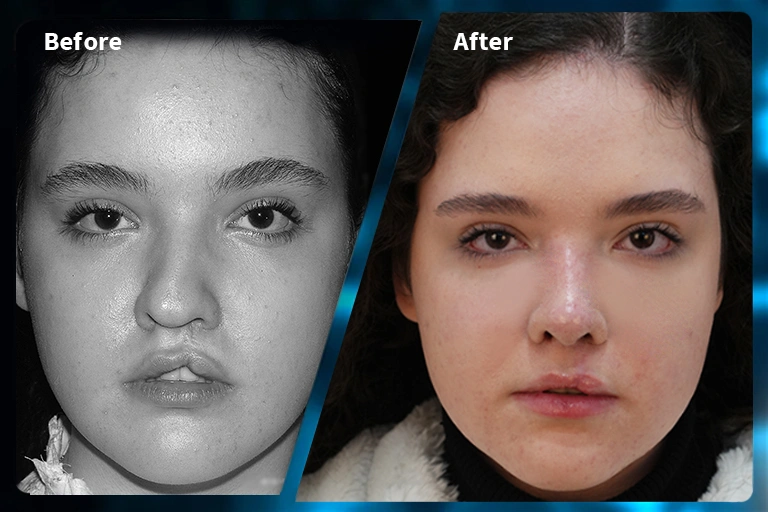
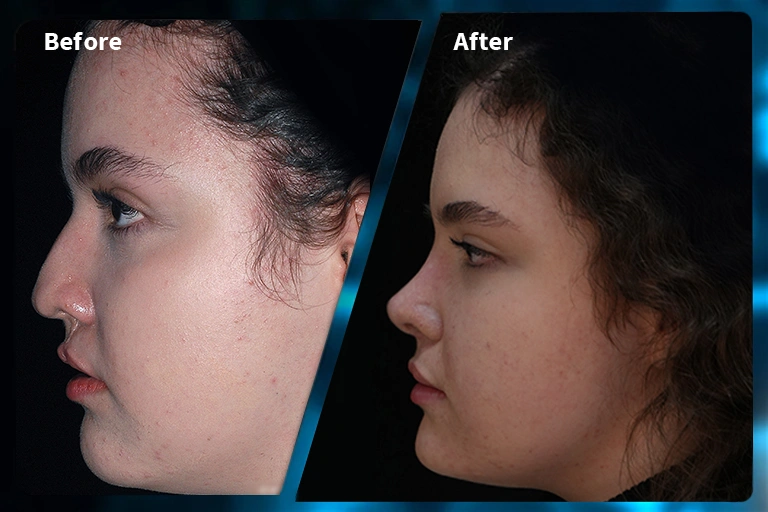
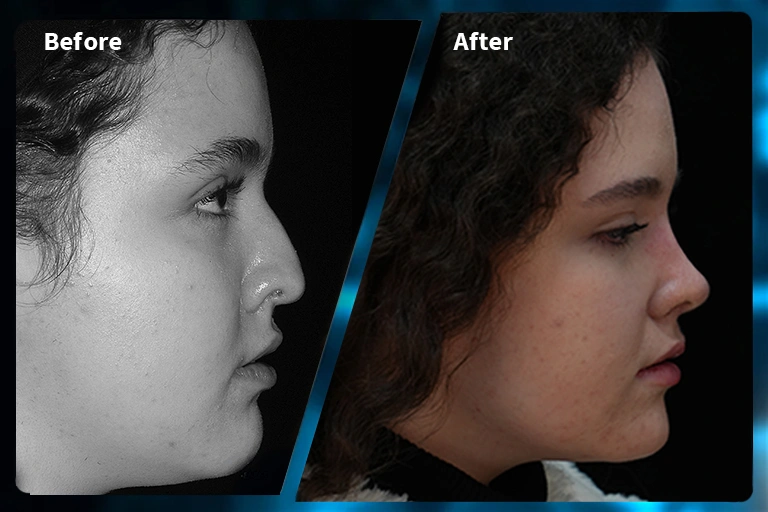
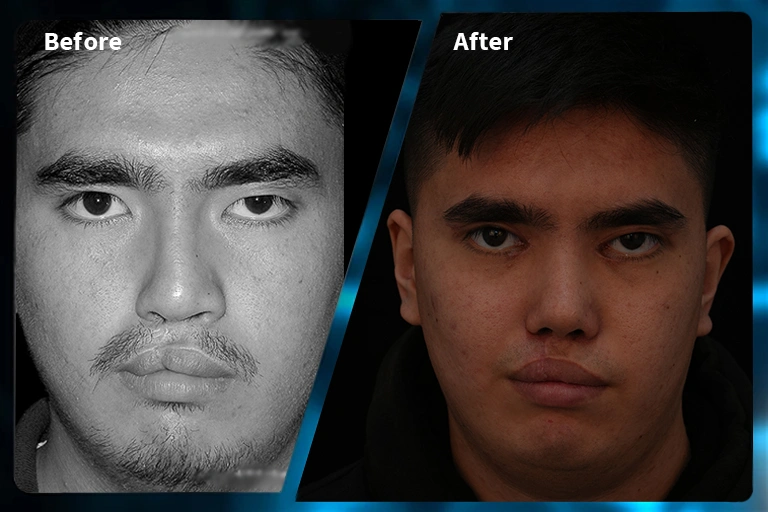
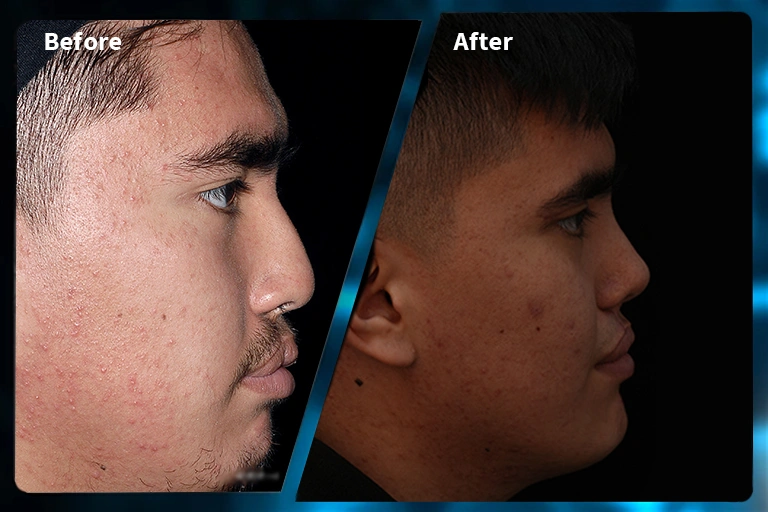
Because these are identifiable clinical photographs, use them only as a discussion aid and respect the provider’s copyright and consent terms. Ask for full-size originals, age, procedure, interval and any later treatment before comparing them with your child.
About Hamintour Medical
Hamintour Medical Tourism coordinates introductions, records, appointments, accommodation, transport, language support and communication for international patients. We do not diagnose, prescribe or perform surgery. The treating surgeon and licensed facility remain responsible for candidacy, consent, treatment, emergency care and the final quote. Contact us when you have records ready and want help arranging an informed consultation.
Frequently asked questions
Can cleft lip and palate surgery be completed in one visit?
Sometimes a planned operation is possible, but many patients need staged care and later developmental follow-up. The team must assess the diagnosis, age, nutrition and prior treatment.
What age is best for repair?
Timing varies by the type of cleft, health and local protocol. Do not choose a date from an internet article; ask a craniofacial team that has examined the patient.
Will surgery guarantee normal speech?
No. Speech depends on palate function, hearing, development, therapy and sometimes later surgery. Ask how speech will be assessed and supported.
Is a photograph enough for an online quote?
No. Photos may support a preliminary discussion, but they cannot assess airway, palate function, nutrition, hearing or anaesthesia risk.
How long should we remain in Iran?
The treating team should set the stay based on the operation and early review. Build in flexibility for delayed discharge or additional assessment.
What records should we take home?
Request the operative report, anaesthesia summary, medicines, discharge instructions, photographs and follow-up plan in English. Share them with the home team.