


An international patient’s guide
Brow Lift Surgery in Iran
A low brow can make the upper face look tired or heavy. The difficult part is knowing whether the brow, the eyelid, or both actually need treatment. This guide walks through that decision, the surgical options, realistic costs, recovery in Iran and provider-published photographs you can examine critically.
Compare approachesSee real cases
First, identify what is making the upper face look heavy
A brow lift, also called a forehead lift, repositions sagging brow and forehead tissues. It may soften the impression of hooded eyes when a low brow is pressing down over the upper lid. Yet extra upper-lid skin, true drooping of the eyelid margin and a low brow are different problems. A brow lift alone will not correct every eyelid concern. Before choosing a procedure, ask the surgeon to show you where your brow sits at rest, how much the upper eyelid itself contributes, and what will remain after the proposed operation. The American Society of Plastic Surgeons describes the brow lift’s aims and its relationship to eyelid surgery.
In the mirror, look straight ahead without raising your forehead. Notice whether your eyebrow sits unusually low, especially at the outer edge; whether there is loose eyelid skin independent of the brow; and whether the eyelid edge itself crosses the pupil. This simple observation can prepare you for a consultation, but it cannot establish a diagnosis. If vision is affected, seek an eye examination. Our eye treatment guide and eyelid surgery guide explain the neighboring questions.
A good candidate has a specific concern, understands that facial symmetry is never perfect, can allow adequate healing time, and is willing to discuss health conditions and medications openly. A person with dry eyes, prior facial surgery, significant hairline recession, smoking exposure or a history of poor scarring needs a particularly careful plan. Some people discover that they do not need surgery: observation, a different eyelid procedure or a temporary nonsurgical treatment may fit their goals better. Only a qualified treating clinician can decide after an examination.
Why consider Iran for a brow lift?
The practical reasons to explore Iran are access to facial surgery consultations, a range of techniques and the possibility of a lower quoted price than in some home markets. None of those points proves that a particular surgeon or clinic is right for you. Tehran gives international visitors a broad starting point for comparing providers and planning follow-up; a provider in another city can be considered when their documented experience fits the proposed procedure. Compare named clinicians and facilities rather than treating a country or a city as a quality guarantee.
Travel conditions matter as much as a promising surgical plan. Check your own government’s current Iran travel advice, your airline, entry requirements and insurance before paying deposits. Advisories can change, and the advice for your nationality may differ from someone else’s. A travel insurer may exclude elective surgery or travel contrary to official advice. Make a realistic plan for an extended stay if your surgeon postpones your flight. The CDC medical tourism guidance emphasizes continuity of care, infection risk and travel after surgery.
What can actually lift the brow?
Endoscopic lift
Several small incisions behind the hairline permit a surgeon to release and reposition forehead tissues using an endoscope. It can address a broader forehead and brow concern without a single long scalp incision. The surgeon still needs to explain fixation, scalp sensation and the expected effect on your hairline.
Temporal or lateral lift
A focused approach aims primarily at the outer brow. It may suit a lateral brow that has descended more than the inner brow. A small outer lift is not a substitute for a full forehead operation when the central brow and forehead need attention.
Open or hairline approach
A longer incision allows substantial access and may be considered for selected forehead or hairline patterns. Scar position, hair density, forehead height and possible numbness deserve detailed discussion. An incision near the hairline can behave differently from one hidden within the scalp.
The ASPS overview of open, endoscopic and temporal approaches is a useful starting point. Some surgeons also use a direct brow incision for selected patients, which trades more direct positioning for a potentially visible scar above the eyebrow. The right technique depends on anatomy and your priority, not on a label such as “scarless.” Every incision can leave a scar.
What about Botox, threads, eyelid surgery or a facelift?
Botulinum toxin can produce a limited, temporary change in brow position for some people; it is not equivalent to surgically repositioning descended tissues. Thread procedures differ again in effect and durability. Nonsurgical cosmetic treatments may be worth discussing if your concern is mild or you want to avoid an operation. Plastic surgery in Iran covers wider facial and body options. A facelift targets different structures; adding one should require a separate reason. Brow lift can be combined with blepharoplasty when examination supports both, but more surgery means a more complex recovery and bill.
Compare the approaches before requesting a quote
| Option | Usually addresses | Question to ask | Important limitation |
|---|---|---|---|
| Temporal lift | Outer brow descent | Will the central brow stay unchanged? | May not resolve central forehead heaviness. |
| Endoscopic lift | Broader brow and forehead position | Where are the incisions and fixation points? | Scalp numbness and hairline changes remain possible. |
| Hairline/open lift | Selected forehead and hairline patterns | Where will the long scar sit on my hairline? | Scar and healing demands may be greater. |
| Direct brow lift | Precisely localized brow ptosis | How noticeable is the scar likely to be? | Visible incision can be a decisive drawback. |
| Botulinum toxin | Small temporary positional change | What change is realistic in my anatomy? | Cannot replace surgery for substantial descent. |
Ask for photographs of patients with a similar brow position, hairline and skin quality, using matching angles and an identified follow-up interval. Compare the resting brow, not a raised expression. Discuss whether the proposed approach might make the brow too high, alter the arch or leave the eyelid concern untreated. The ASPS discussion of brow and forehead lifts explains why plans should be individualized.
How to choose a surgeon and facility in Iran
Request the surgeon’s full name, specialty, medical council number and a direct professional registration profile. Check that the profile belongs to the clinician who will actually operate. The Iran Medical Council member search is the official place to start; do not rely on a name match alone. Ask the facility for its legal name, address, operating-room arrangements, anesthesia team and a written emergency transfer plan. A provider’s attractive gallery is not evidence of licensure, volume, complication rate or operating privileges.
During consultation, ask who performs each step, which technique is proposed and why, where incisions will sit, whether the plan includes the upper eyelids, and what the alternative is if you decline surgery. Ask how the surgeon manages asymmetry, dry eyes, hairline elevation, numbness and revision. Request an itemized consent document in a language you understand, an English-language discharge summary and a named follow-up contact. The ASPS questions to ask a brow-lift surgeon can help you prepare. If a clinic refuses to name the operator or explain the facility, keep looking.
Compare at least two documented plans if time allows. A surgeon who proposes an eyelid operation, a forehead operation and a facelift in one conversation should explain the benefit and extra risk of each component separately. You should feel free to ask for a narrower plan or another opinion. A coordinator can help you organize records and appointments; it cannot independently certify a surgeon’s outcomes.
Brow lift cost in Iran: a practical USD budget
English-language Iran medical-travel listings publish approximate figures around $1,500–$2,500 for several brow or forehead lift approaches. Those are public asking prices, not audited transaction data, a Hamintour quotation or a promise that your own procedure falls in that range. Technique, anesthesia, facility, combined eyelid surgery and length of stay can change the total. A limited temporal procedure and a more extensive endoscopic or open operation should not be assumed to have identical costs.
| Budget item | Planning figure in USD | Check before you pay |
|---|---|---|
| Advertised brow/forehead lift procedure | Approximately $1,500–$2,500 | Which technique, surgeon, anesthesia and facility are included? |
| Preoperative tests and specialist review | Request an individual quote | Are tests performed at the same facility and charged separately? |
| Accommodation, transfers and interpreter | Request an individual quote | How many nights and trips are covered? |
| Extra procedure, revision or extended stay | Not included unless written | Who pays if the plan changes or complications occur? |
Procedure figures are approximate public listings from Iranian Surgery and Iran Treatments. They are neither verified patient invoices nor current provider quotes. For an exact USD estimate, send your information for a written, itemized quotation from the treating provider through Hamintour Medical. Compare only quotes with the same included services.
Do not let a small advertised number determine the decision. Ask whether surgeon fee, operating room, anesthesia, medications, post-op visits, companion accommodation and emergency care are included. Clarify the currency of payment, deposit terms, refund policy, bank or cash arrangements and what happens if the surgeon decides against surgery after examining you in person. Keep a contingency budget for extra nights. An insurer may not cover elective cosmetic surgery or complications abroad; check your policy directly.
Request Your Free Consultation
Get a personalized treatment plan from our elite medical experts.
Plan the medical trip around assessment, not a holiday schedule
Start with a remote review of your concern, health history, medicines and photographs. Ask the provider what must be checked in person and whether any tests are needed before travel. Discuss prescription medicines and supplements with your own clinician; do not stop them on the basis of a website. If you smoke, tell the surgeon honestly because wound healing may be affected. Arrange a companion if the care team recommends one, particularly for the first day after anesthesia.
| Stage | What to arrange |
|---|---|
| Before booking | Surgeon and facility identity, technique, itemized quote, travel advice, entry rules, insurance and a plan for follow-up at home. |
| Arrival and examination | In-person assessment, photographs, tests if prescribed, final consent and confirmation that surgery still makes sense. |
| Surgery day | Transport, anesthesia instructions, companion, discharge contact and written emergency directions. |
| Early recovery | Rest close to the facility, prescribed visits, wound review and extra accommodation if required. |
| Before departure | Surgeon’s fitness-to-fly decision, wound review, medication list, operative report and follow-up appointment after returning home. |
These stages are a planning framework, not a fixed day-by-day medical instruction. A surgeon may change or cancel the plan after examination. Avoid booking a nonrefundable departure date so close to surgery that a routine review becomes impossible. If you are also considering this page’s procedure, pause and compare the full plan rather than adding treatments casually.
Before departure, compare current advice from your government, the official entry guidance relevant to your passport and your airline. If you are not a UK national, use your own foreign ministry and Iranian consular channel as well; entry eligibility differs. Obtain the provider’s complete address and local emergency number before traveling.
Recovery in Iran and the flight home
Swelling and bruising around the forehead and eyes can be obvious in the early days; scars and the final brow position take longer to settle. Dressings, drainage, medications and activity restrictions depend on technique. Follow the surgeon’s written instructions rather than another patient’s timeline. The ASPS recovery guidance describes the need for wound care, monitoring and follow-up. Ask when stitches or fixation checks are due and who can see you if swelling changes suddenly.
A quiet recovery period is more useful than trying to sightsee immediately. Arrange a hotel with easy access, transport to reviews and help communicating symptoms. Avoid strenuous activity, sun exposure and cosmetic treatments until cleared. Ask specifically about hair washing, sleeping position, glasses, contact lenses and return to work; instructions vary. The CDC cites an ASPS recommendation to wait 7–10 days after cosmetic procedures to the face, eyelids or nose before flying, but that is general guidance, not clearance for your case. Long travel and surgery both raise clot concerns. Your treating surgeon must assess the actual timing.
Plan follow-up before you leave Iran and with a clinician at home if needed. Obtain records in English: operative note, anesthesia summary, medicines, implants or fixation materials if used, and an emergency contact. If symptoms arise after travel, tell the local clinician about the procedure and your travel. Do not wait for a remote reply when urgent care is needed.
Risks, trade-offs and when to seek help
There is no risk-free brow lift. The ASPS safety page lists bleeding, infection, asymmetry, scarring, hair loss around incisions, altered sensation, eye irritation or dryness, facial nerve injury, poor healing and possible revision among the risks. Anesthesia and blood clots also matter. The likelihood and management of a particular risk depend on your health and the operation; a website cannot give you an individual probability.
Discuss the result you would consider unacceptable before consent: an overly high or surprised-looking brow, uneven arches, a visible scar, raised hairline, lingering numbness or a brow that drops again. Ask which changes are expected during healing and which require review. A surgeon should be willing to discuss what they would do if the result does not meet the agreed plan and whether revision costs are covered. A photograph gallery shows selected appearances, not a complication register.
Seek urgent local medical assessment for severe or worsening pain, sudden vision change, rapidly increasing swelling, significant bleeding, fever with a concerning wound, breathing difficulty or chest pain. Contact the treating team as well, but do not make a coordinator your emergency service. For routine concerns, send dated photographs and follow the clinician’s advice. This page offers general information and does not replace personal medical evaluation.
Before-and-after brow and forehead lift cases
The photographs below are published by the named Iranian providers and displayed from the Hamintour image host. They are examples to help you ask better questions, not proof of a typical result, a complication rate or a Hamintour patient relationship. Two photographs show the same forehead-lift case from different angles; they are not two separate patients. The final two images document combined treatments, so the visible change cannot be attributed to a brow lift alone. Some originals contain Persian labels and different lighting or makeup. Ask each provider for original full-size files, procedure details and follow-up intervals before relying on a comparison.
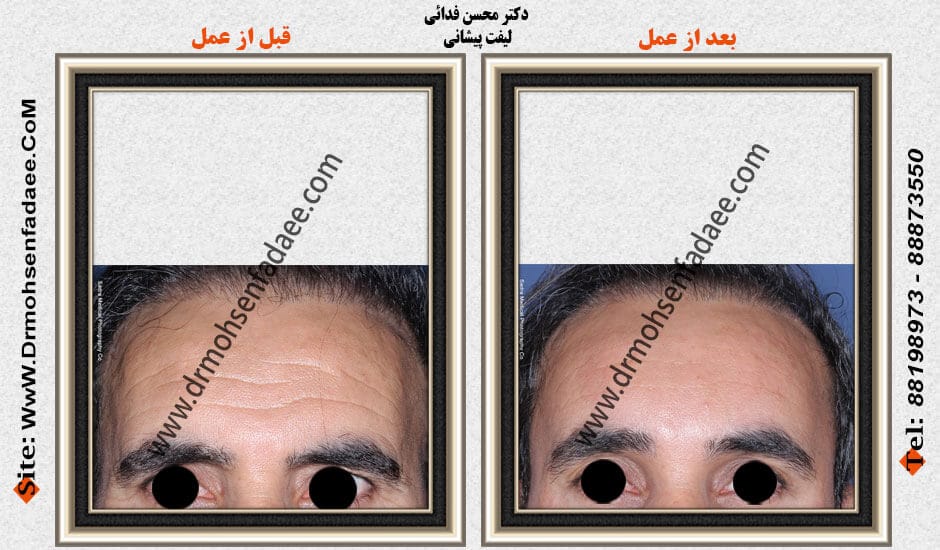

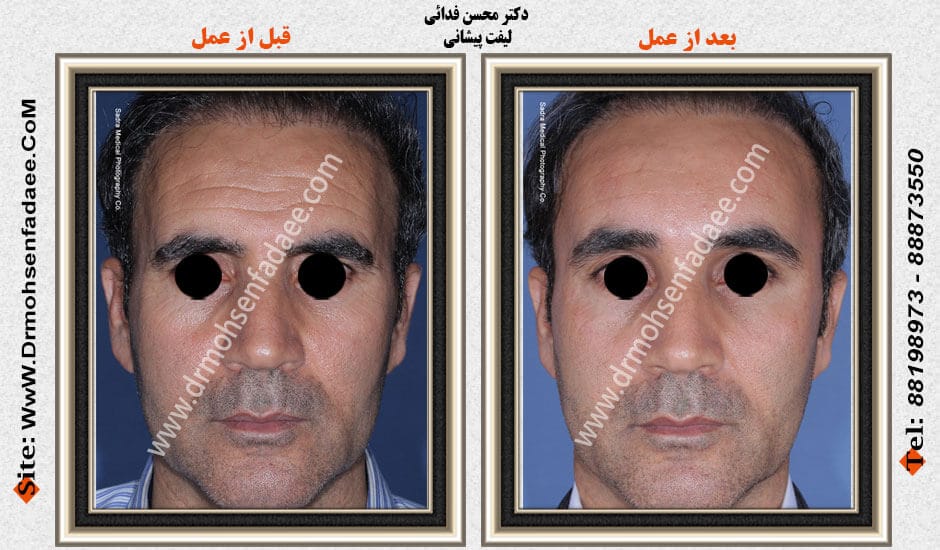

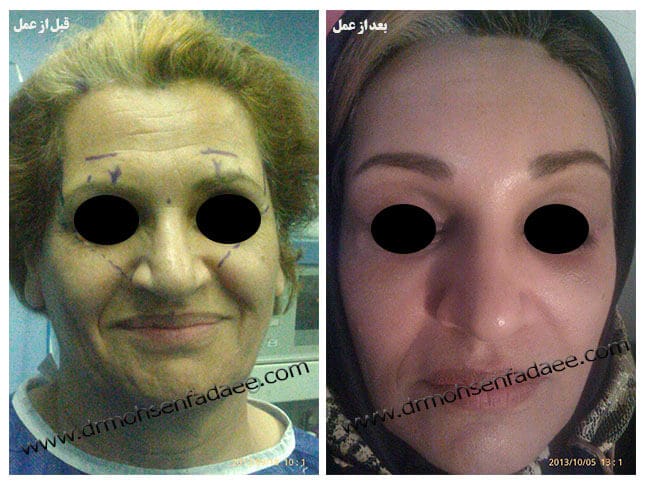

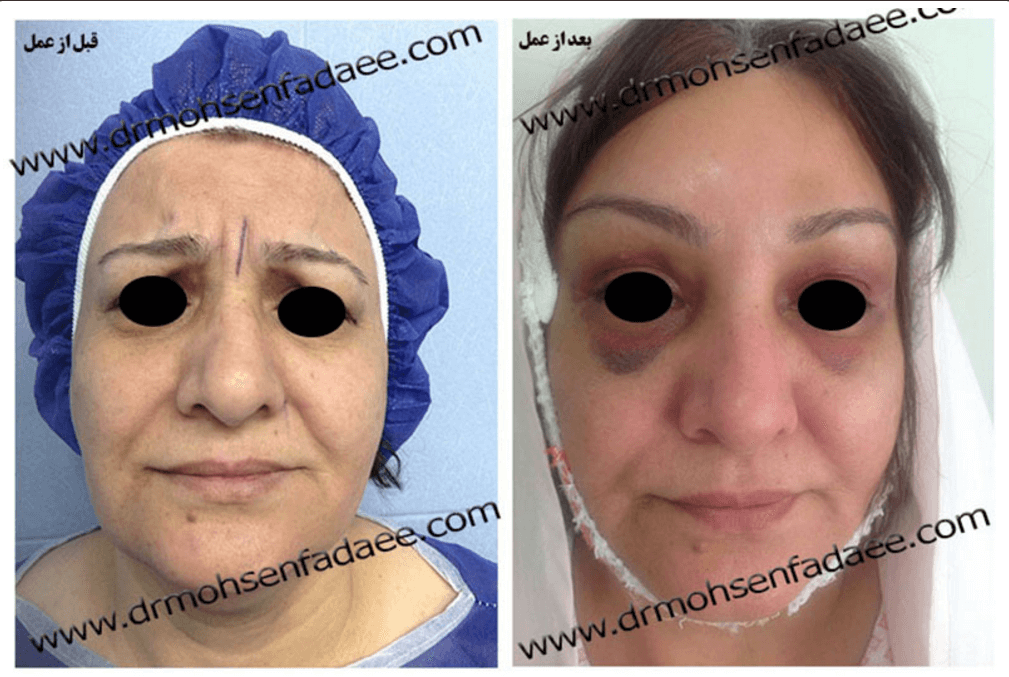

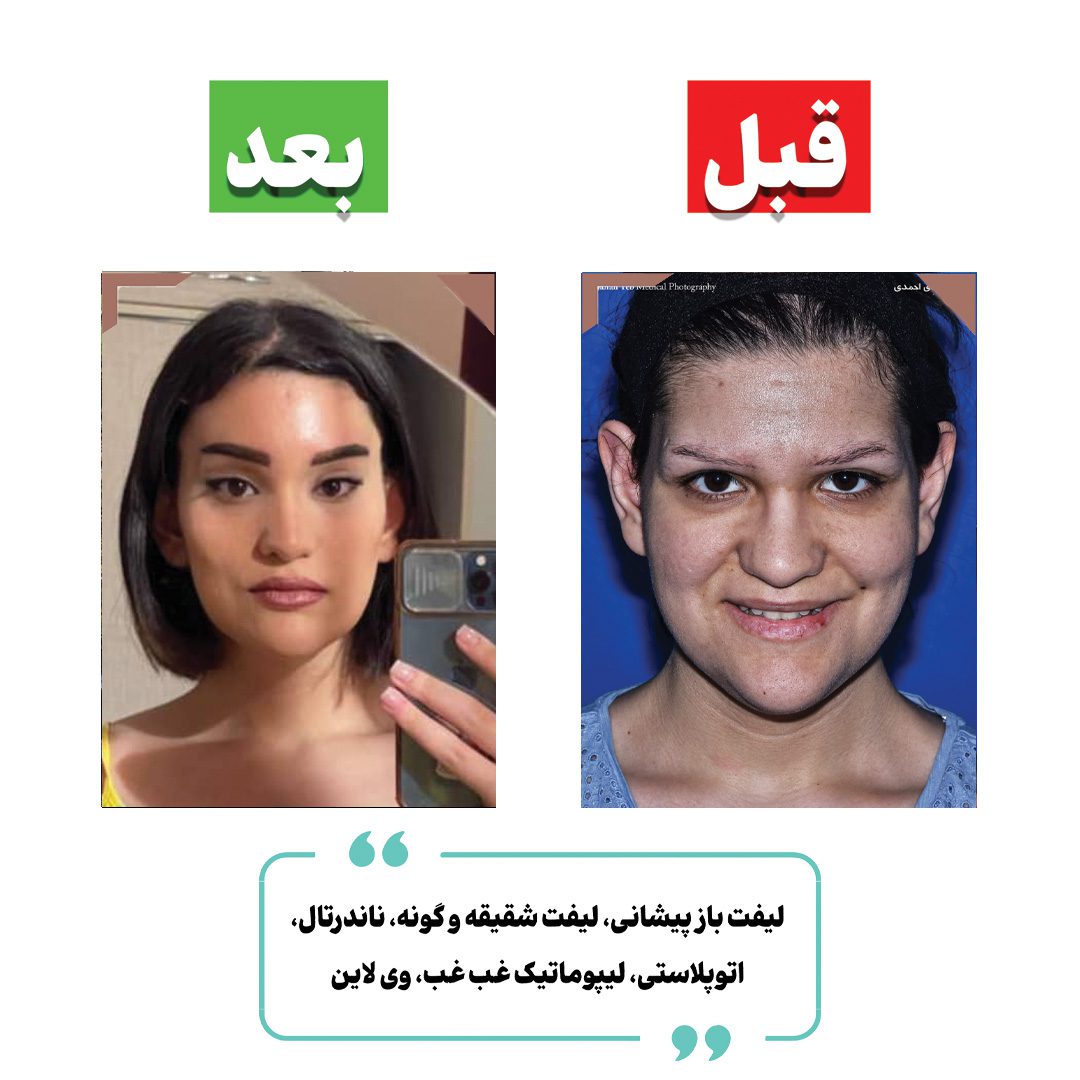

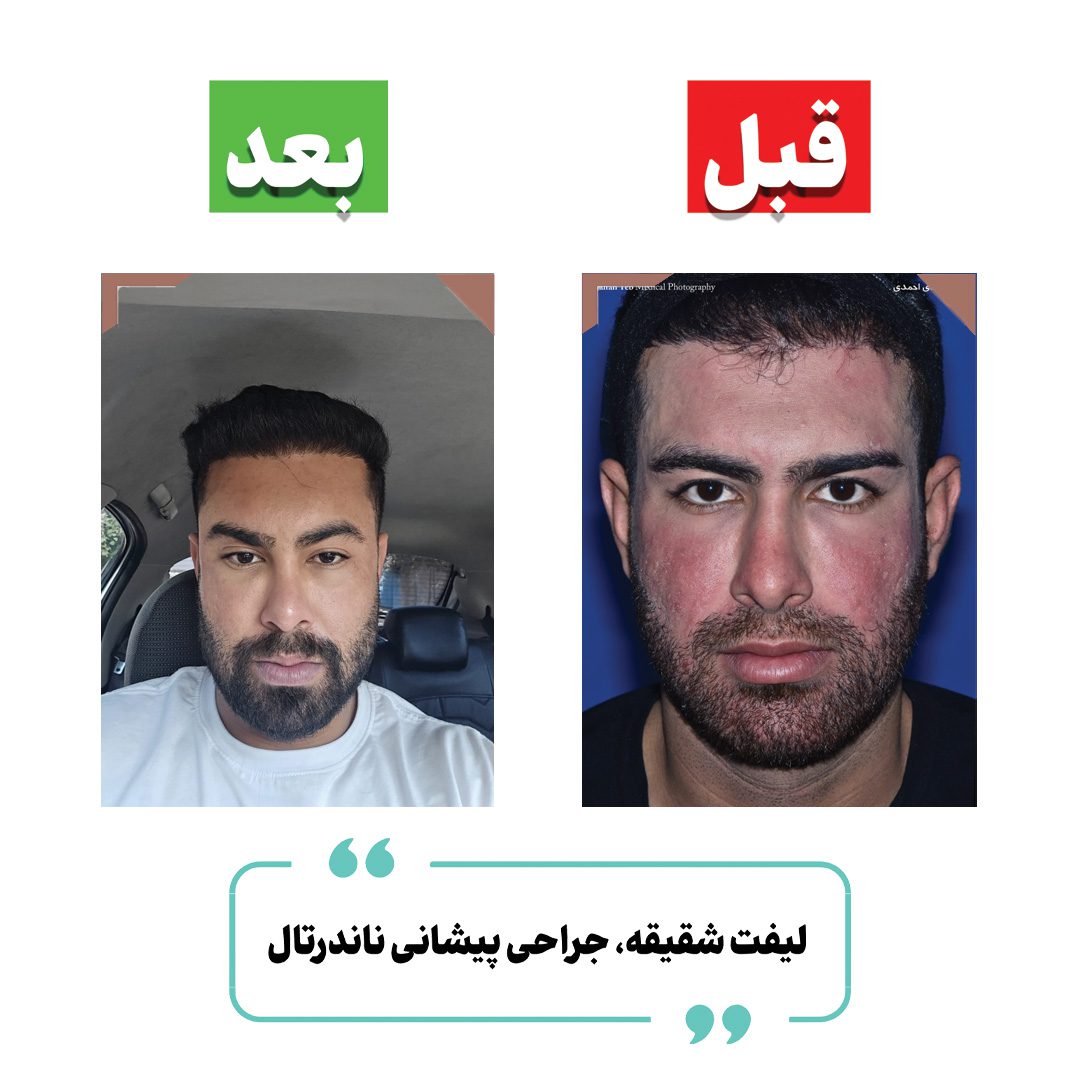

Source images are credited for identification, not independently audited by Hamintour. They do not establish the provider’s current registration, facility license, consent status or expected outcome. Request these details directly. Explore our before-and-after collection for other procedures.
About Hamintour Medical and what we coordinate
Hamintour Medical Tourism helps international patients connect with suitable Iranian providers and organize the practical parts of a medical trip. We can help arrange an initial review of your records by a relevant specialist, appointments, accommodation, airport transfers, local transport, interpretation where needed and communication during follow-up. Services depend on your chosen plan and should be confirmed in writing. You can also browse the Hamintour Medical Magazine for related patient guides.
Hamintour is a coordinator, not a hospital, clinic or medical practice. We do not diagnose, prescribe or operate. A licensed surgeon and treatment facility must confirm your candidacy, discuss alternatives and risks, set the final cost and deliver care. We aim to help you compare information calmly and keep the logistics clear, including after you go home. If you already have a surgeon in mind, ask us to help arrange the details around that choice.
Frequently asked questions
Will a brow lift fix loose upper-eyelid skin?
Sometimes a low brow contributes to apparent hooding, but loose eyelid skin and true lid droop may remain. The surgeon should examine each structure before recommending a brow lift, blepharoplasty or both.
Is an endoscopic lift always better than an open lift?
No. Incision choice depends on brow position, forehead height, hairline, skin, previous operations and desired change. Ask why a specific approach is being recommended for your anatomy.
Can a brow lift be done with Botox instead?
Botulinum toxin can offer a modest temporary change in selected patients. It cannot reposition substantially descended tissues like a surgical lift. A qualified clinician should explain the realistic result of each option.
How long do I need to stay in Iran?
Stay until the treating team completes the early reviews and says you can fly. CDC guidance cites a general 7–10 day interval after cosmetic facial procedures before flying, but complications or a combined operation can require more time.
Why do some photographs show a dramatic change around the eyes?
A published image may involve other procedures, different expressions, lighting or makeup. Two cases here are explicitly combined treatments. Ask the provider what was done and when each photograph was taken.
Can I get a guaranteed result or a fixed online quote?
No. Healing and facial anatomy vary. A remote estimate is preliminary. Ask the surgeon for an in-person assessment and a written quote stating inclusions, exclusions and change terms before consenting.
Who handles a problem after I return home?
Agree on a follow-up plan with the treating surgeon and a local clinician before travel. Keep English records and seek urgent local care for serious symptoms. Hamintour can help facilitate communication but cannot replace medical treatment.