


A measured guide to facial bone contouring
Forehead Contouring Surgery in Iran
Forehead contouring, brow-bone reduction and hairline lowering are different operations that are sometimes combined. This guide helps international patients understand what bone can safely be changed, why imaging matters, how to compare a Tehran treatment plan and how to budget without confusing a public estimate with a personal quote.
Understand the proceduresView documented cases
- What forehead contouring means
- Assessment and CT imaging
- Techniques and combinations
- Who may be a candidate?
- Why consider Iran?
- How to verify a surgeon
- Five providers to investigate
- Compare written surgical plans
- USD cost and inclusions
- Planning the medical trip
- Recovery and risks
- Before-and-after examples
- Related Hamintour guides
- Hamintour Medical services
- About Hamintour Medical
- FAQ
What forehead contouring actually changes
Forehead contouring reshapes the bony forehead and the supraorbital or brow ridge when those contours are prominent for the patient’s anatomy and goals. It is different from a brow lift, which repositions soft tissue and eyebrows, and different from forehead reduction, which advances a scalp hairline. Some patients need one procedure; others need a coordinated plan. Johns Hopkins Medicine explains that the frontal sinus and thickness of the bone influence whether a surgeon contours bone directly or reshapes the front wall of the sinus.
A consultation should therefore begin with anatomy, not a photograph or an online label such as “brow bone shaving.” The surgeon should assess the forehead in front, side and oblique views, examine the hairline and brow position, and discuss whether the goal is facial balance, treatment of a previous injury or gender-affirming facial surgery. A brow lift may be added when the soft-tissue brow is low; it does not make a bony ridge smaller by itself.
Why examination and imaging matter
The frontal sinus can sit behind the brow ridge. A surgeon needs to understand its anatomy, the thickness of the anterior table, vascular structures, nerve pathways and any previous trauma or implant before planning bone work. A CT scan may be recommended; the exact imaging protocol should be decided by the treating team. A peer-reviewed review of preoperative imaging in feminization cranioplasty explains that CT practice varies by surgeon and patient history, so imaging should not be described as mandatory for everyone. Do not send a generic scan to a clinician and assume it makes you a candidate.
Bring prior operations, allergies, medicines, smoking history, bleeding disorders and dental or sinus history. Tell the surgeon whether you have chronic sinus symptoms, headaches, numbness, facial trauma or a history of keloid scars. Ask who reads the scan, how the operation will be adapted to your anatomy and what the fallback plan is if the bone cannot safely be reduced as much as hoped.
The consent discussion should cover the incision, possible hairline change, fixation, drains, anaesthesia, hospital monitoring, expected swelling, revision options and the possibility that brow lift, hairline advancement or eyelid surgery would be separate procedures. The surgeon should distinguish an aesthetic preference from a medically necessary reconstruction.
Techniques and related procedures
Brow-ridge contouring
Selected bony prominences above the eyes may be reduced or reshaped. The safe amount depends on bone and sinus anatomy, not on a standard millimetre promise.
Frontal sinus setback
In some anatomies, the front wall is temporarily managed and repositioned. This is more involved than surface shaving and requires a team comfortable with the relevant anatomy.
Hairline lowering
A scalp advancement reduces forehead height by moving the hairline. It does not automatically reduce a brow ridge and may be unsuitable with limited scalp laxity or hair loss.
Brow lift
A temporal or endoscopic lift repositions soft tissues. It can complement bone contouring but adds another surgical objective and recovery consideration.
Upper-eyelid surgery
Blepharoplasty removes or repositions eyelid tissue when indicated. It should not be used to compensate for an unassessed bony or brow problem.
Other facial balancing
Nose, cheek, chin or jaw procedures may be discussed in facial feminization or reconstruction. Each should have a separate reason, risk and price.
Combining procedures can reduce repeated anaesthesia and travel, but it can also lengthen surgery and recovery. Ask for an itemized plan and what would be omitted if the safest approach is a staged operation. The American Society of Plastic Surgeons explains why brow lifting addresses soft tissue rather than the bone itself.
Who may be a candidate?
Candidacy depends on anatomy, health, expectations and access to follow-up. A person with a prominent brow ridge, forehead contour concern or reconstructive need may be assessed. Good planning requires realistic goals, stable health, a willingness to share medical history and the ability to remain in Iran for early review. A patient with uncontrolled illness, active infection, untreated sinus disease, unsafe travel conditions or an unrealistic demand for symmetry may need treatment delayed.
For gender-affirming surgery, the consultation should be respectful and individual. Forehead contouring is one part of a larger facial plan, not a test of identity. Ask about voice, social goals, hairline, brow position and whether other procedures are truly necessary. For reconstruction after trauma, bring operative records and imaging so the team understands what has already been changed.
Considering Iran for forehead contouring
Tehran provides access to several plastic and reconstructive practices and hospitals, which can make comparison easier. The country itself is not a quality guarantee. Evaluate the named surgeon, the operating facility, imaging and anaesthesia arrangements, emergency access and follow-up. A coordinator may help you compare information, but the medical team must determine whether the operation is safe.
Check your own government’s current Iran travel advice, entry requirements, airline rules and insurance before making a deposit. The CDC medical-tourism guidance recommends arranging follow-up, carrying records and understanding that complications abroad can create additional costs. Ask the provider for the exact hospital address and emergency route before arrival.
How to verify the surgeon and facility
Request the surgeon’s full name, specialty, medical council number and direct record in the Iran Medical Council member search. Check the name against the person who will operate, not only a clinic brand. Ask whether the facility has a licensed operating theatre, qualified anaesthesia, overnight monitoring, CT access and a plan for transferring a patient if a complication occurs.
Ask for comparable cases with a clear description of what was done and when photographs were taken. A social-media gallery may be useful for questions, but it is not an outcomes database. Ask who owns the images, whether the patient consented to publication and whether the result includes a brow lift, hairline advancement or other facial surgery. Do not accept “scarless,” “risk-free” or guaranteed claims.
Four bone-contouring practices and one reconstructive option in Tehran
These are research leads, not a ranking. The first four publish information about bony forehead or orbital-rim contouring. The fifth discusses forehead reconstruction with an implant, a different clinical question. The linked page beside each name is the specific evidence for including that option. A published service page does not verify current registration, operating privileges, patient outcomes or an appointment for your case.
Dr Mehdi Ahmadi
His Tehran practice publishes a page specifically about surgical reduction of a prominent forehead bone, including consultation and combined procedures. His portfolio contains labelled examples, some involving multiple operations. Iran Medical Council profile (No. 108819). Ask which component of a proposed plan is bone work.
Dr Mohsen Fadaee
His Tehran practice has a dedicated brow-bone contouring service page and a separate forehead bone surgery explanation. Iran Medical Council profile (No. 63822; listed as Mohsen Fadaei Araghi). Ask whether the proposed technique changes the frontal sinus wall and where the incision would sit.
Dr Ali Alizadeh
His practice describes selected forehead bossing correction after imaging and a risk-benefit discussion. The site identifies facial plastic surgery training. Iran Medical Council profile (No. 146383). Confirm the operating facility and the number of comparable bony cases directly.
Dr Ali Parand
His Tehran practice publishes a page specifically about orbital-rim bone contouring. This is relevant to the bone around the eye; it does not, by itself, establish what forehead or frontal-sinus technique he would recommend for you. Iran Medical Council profile (No. 81822). Ask whether he evaluates your exact concern.
Dr Shahabeddin Azizi
His Tehran clinic publishes a specific page on forehead reconstruction with a custom implant after trauma, tumour surgery or congenital difference. This is an augmentation and reconstruction option, not evidence that he offers elective brow-bone reduction. The clinic lists its Tehran locations. Iran Medical Council profile (No. 136244). Ask whether the proposed procedure matches your anatomy.
Each of the five registration links above points to that doctor’s individual record in the Iran Medical Council directory. The directory confirms name, registration number and listed specialty; it does not verify performance of the particular operation, hospital privileges, outcomes or current availability. Confirm those separately with the treating facility.
Compare written plans before choosing a provider
A useful surgical proposal describes the anatomical finding, the intended change, the technique, and the limits of that technique. Ask each surgeon to identify whether the concern is the brow ridge, the height of the hairline, eyebrow position, a hollow above the ridge or a defect from injury. Those problems may look similar in one photograph but call for different operations. If CT is recommended, ask which finding in the scan changes the plan. A description such as “forehead reshaping” alone is too broad to compare fairly.
| Question for the surgeon | What a useful answer should identify |
|---|---|
| What exactly will be changed? | Bone, frontal sinus wall, hairline, brow soft tissue, implant or a defined combination. |
| Where will the incision be? | Its position, likely scar visibility and any possible effect on scalp hair or sensation. |
| Who performs each step? | The named operating surgeon, anaesthesia team, hospital and any assisting specialist. |
| What if the planned reduction is unsafe? | A conservative alternative, staging option or a decision not to operate. |
| What happens after discharge? | Review appointments, urgent contact route, fit-to-fly assessment and records for home care. |
Ask for the proposed operation in a language you understand before paying a deposit. If a package combines forehead bone work with a brow lift, eyelid surgery or rhinoplasty, request separate reasons and separate prices for each component. A combined photograph cannot prove which step produced the visible change. If two surgeons recommend different methods, ask them to explain the difference in sinus anatomy, risk and expected contour instead of choosing by price alone.
It is reasonable to pause when a provider will not name the operating hospital, cannot explain the CT findings, offers only heavily edited results or presses you to make an immediate decision. A second opinion can be especially useful if previous forehead surgery, an implant, sinus disease or facial trauma makes the anatomy harder to assess. The CDC medical-tourism guide also recommends planning continuity of care and obtaining records before treatment abroad.
Forehead contouring cost in Iran
English-language Iran medical-tourism listings place public estimates in a wide range, commonly about $2,000–$5,000 for forehead contouring or brow-bone reduction. These figures are approximate planning references, not verified invoices or a Hamintour quotation. A CT scan, surgeon, facility, anaesthesia, complexity, combined procedures and length of stay can change the total.
| Item | Ask whether it is included | Why it changes the budget |
|---|---|---|
| Imaging and consultation | CT, specialist review and pre-op tests | Anatomy must be assessed before a final plan. |
| Operating care | Surgeon, theatre, anaesthesia and hospital stay | A complex sinus-related plan may require more resources. |
| Combined procedures | Brow lift, hairline or eyelid work | Each added procedure adds time, risk and follow-up. |
| Travel and recovery | Hotel, transfers, interpreter and extra nights | Flight timing may change after review. |
| Aftercare | Wound review, records and emergency contact | Continuity matters after returning home. |
The public figures above reflect three English-language operator listings: Iran Health Agency publishes $2,000–$4,000 for facial bone contouring, AveHeal lists an approximately $2,300 average for forehead contouring, and AriaMedTour publishes $4,000–$5,000 for brow-bone reduction. These are differently scoped offers from medical-tourism operators, not an independent price audit or a market median. Their names are provided without outbound links because this page does not refer patients to competing coordinators. Request a written, itemized USD quotation for your own case before booking.
Request Your Free Consultation
Get a personalized treatment plan from our elite medical experts.
Planning the trip
Send a concise medical history, current photographs and any scan requested by the surgeon before booking flights. Keep the schedule flexible. Plan a companion, private transport, easy access to the hospital and enough recovery time. Ask whether your medication can be carried across borders and keep prescriptions in original packaging. Confirm who will translate consent and discharge instructions.
Before departure, obtain the operative report, anaesthesia record, medicines, imaging and a follow-up plan in English. Agree who will review you after returning home. Do not plan strenuous sightseeing during early recovery. If your symptoms worsen, seek local medical care rather than waiting for a coordinator to diagnose the problem.
Recovery, risks and warning signs
Swelling, bruising, numbness and a tight forehead are common early experiences, but the exact course varies. The incision may be hidden in the hairline yet still heal visibly. Potential risks include infection, bleeding, nerve injury, sinus or forehead contour problems, hair loss around the incision, asymmetry, poor healing, anaesthesia complications and revision surgery. Ask which risks apply to your CT findings and what the surgeon would do if the contour is not as planned.
Seek urgent care for breathing difficulty, uncontrolled bleeding, sudden vision change, severe worsening pain, fever with a concerning wound, rapidly growing swelling, clear fluid from the nose or neurological symptoms. Keep the treating team’s emergency number, but do not rely on a remote coordinator for emergency treatment. The Johns Hopkins overview reinforces that frontal sinus anatomy is central to safe planning.
Published before-and-after examples
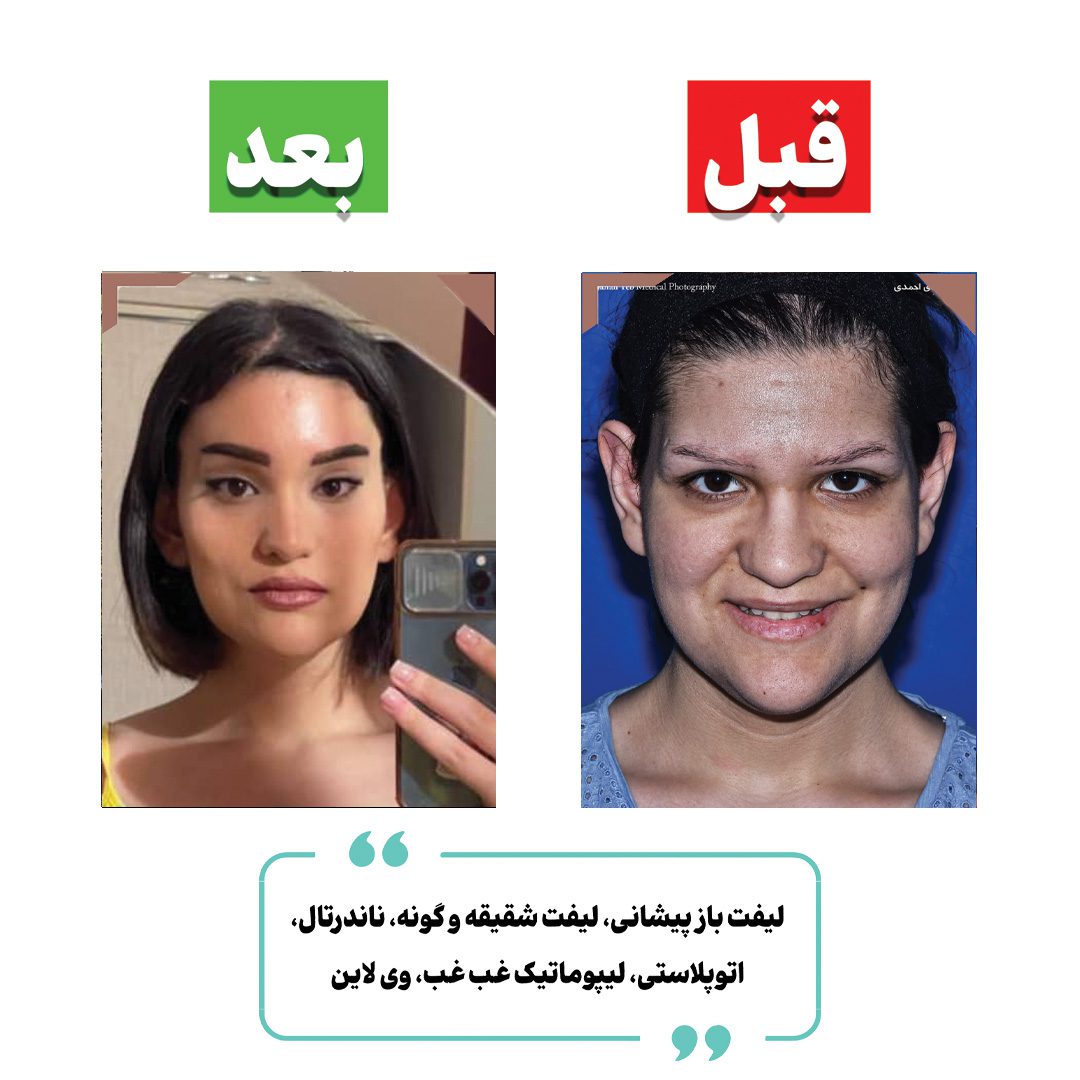
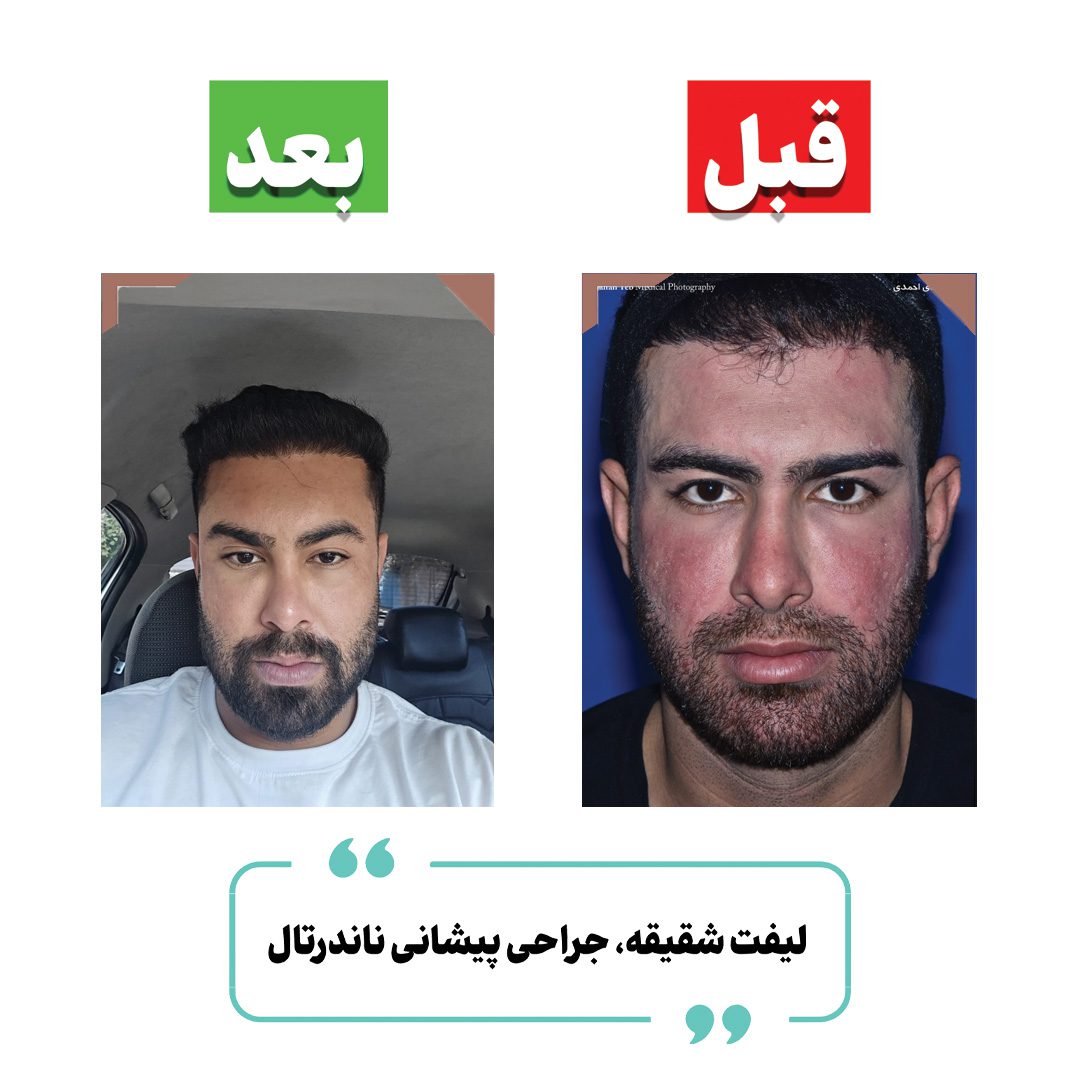
These images are provider-published examples from Dr Mehdi Ahmadi’s portfolio and are displayed from the Hamintour media host. In both original composites the after view is on the left and the before view is on the right; the display window focuses on the photographs and English labels identify their order. The captions in the original images describe combined procedures such as temporal lift and forehead contouring. They do not isolate the effect of bone work, prove typical results or represent Hamintour patients. Confirm the operation, patient consent and follow-up interval with the provider.


What Hamintour Medical can coordinate
After you share your questions and relevant history through a channel you trust, Hamintour can help identify suitable providers to contact and arrange an initial specialist review. We can organize appointments, send records to the chosen clinician with your permission and request a written proposal. If you decide to travel, coordination can include flights on request, accommodation suited to recovery, airport pickup, local transfers, interpretation and help staying in contact with the clinical team after you return home. Availability and inclusions should be confirmed in your individual itinerary.
A travel package should list who provides every medical and nonmedical service, what is included in the price and what would cost extra. The surgeon and facility must answer medical questions and decide whether to proceed after examination. Hamintour can relay questions and organize the journey, but it cannot replace consent with the surgeon, prescribe aftercare or guarantee that you will be fit to fly on a particular day.
About Hamintour Medical
Hamintour Medical Tourism helps international patients organize records, specialist introductions, appointments, accommodation, transport, language support and communication. Hamintour is not a hospital, clinic or medical practice; it does not diagnose, prescribe or perform surgery. The treating surgeon and licensed facility decide candidacy, consent, treatment and the final price.
Frequently asked questions
Is forehead contouring the same as a brow lift?
No. Contouring changes bone; a brow lift repositions soft tissue. They may be combined only when examination supports both.
Do I need a CT scan?
The treating surgeon decides. Because the frontal sinus and bone thickness can affect the plan, imaging is commonly discussed for bony contouring.
Can a clinic guarantee a feminine or masculine result?
No. Facial proportions and healing vary. A qualified team should discuss goals and limits without promising a social or identity outcome.
How much does it cost?
Public listings commonly show roughly $2,000–$5,000, but a written case-specific quote is required. Combined procedures and hospital care may add substantially.
How long should I stay?
Ask the surgeon to set a minimum based on the operation and early review. Keep the return flight flexible in case swelling, wound review or additional tests require more time.
What should I do if I feel unwell after returning home?
Seek local urgent care for serious symptoms, disclose the surgery and travel, and send your operative records to the treating team. A coordinator cannot replace emergency medical assessment.